
Taj Trapezium Zone: Supreme Court Orders Fresh Meeting of CEC and TTZ Body After Internal Discord Over Manufac
Summary
- The Supreme Court ordered a fresh meeting between the Central Empowered Committee and the Taj Trapezium Zone Authority.
- This meeting is to re-evaluate the proposed Integrated Manufacturing Cluster in Agra, located within the eco-sensitive Taj Trapezium Zone.
- The directive followed internal disagreement, specifically a CEC member's reservations, over previously granted conditional clearance for the project.
- Attorney General R Venkataramani highlighted that conditional tree-felling permission was recommended, but meeting minutes were not properly circulated.
- The Court mandated a joint comprehensive report from the CEC and TTZ Authority within two weeks to resolve the issues.
Supreme Court Mandates New Review for Agra Manufacturing Hub
Lawyers advising on industrial projects in such zones must recognize that even conditional permissions can be subject to rigorous scrutiny and potential reversal if internal consensus among approving authorities is lacking, emphasizing the need for meticulous compliance and robust internal agreement to avoid project delays or challenges.
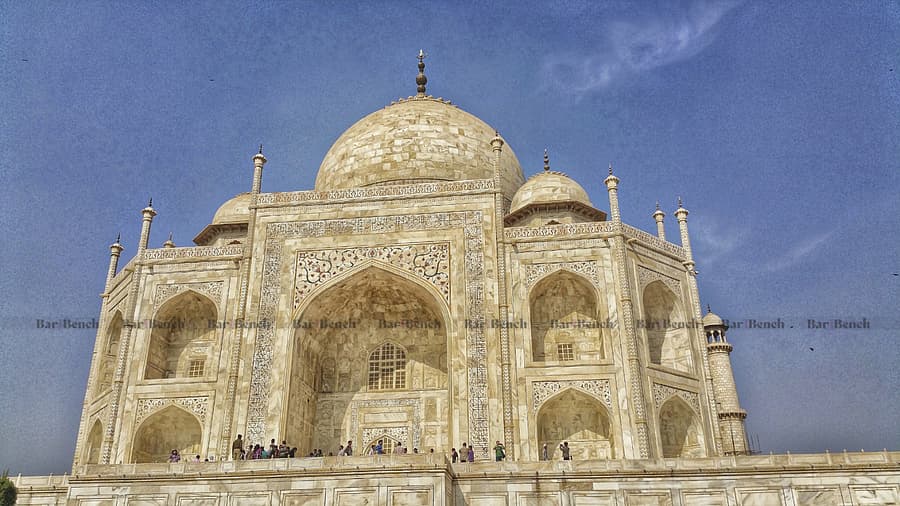
The Supreme Court of India has ordered a fresh meeting between the Central Empowered Committee (CEC) and the Taj Trapezium Zone (TTZ) Authority to re-evaluate the proposed Integrated Manufacturing Cluster in Agra. This directive came after the Court was informed of significant internal discord regarding the environmental clearance previously granted to the industrial project. The proposed cluster is situated within the 10,400 square kilometer eco-sensitive zone surrounding the Taj Mahal, a region known as the Taj Trapezium Zone.
A bench comprising Chief Justice of India Surya Kant and Justices Joymalya Bagchi and V Mohana issued the order, emphasizing the necessity for the two bodies to convene again. The Court's instruction explicitly stated the need to "iron out the glitches" and produce a "joint comprehensive report" within a two-week timeframe. This judicial intervention highlights the stringent oversight applied to development projects in environmentally sensitive areas, particularly those impacting iconic heritage sites.
Internal Discord Triggers Judicial Intervention
The impetus for the Supreme Court's intervention stemmed from a clear lack of consensus within the regulatory bodies themselves. While representatives from both the CEC and the TTZ Authority had initially met on September 22, where they decided to grant conditional permission for the manufacturing cluster, this agreement proved to be fragile. The Court noted that a member of the CEC, AK Mohanty, subsequently sent an email on November 6, articulating strong reservations about the decision that was purportedly reached during the September meeting.
Attorney General R Venkataramani, representing the government, acknowledged the internal discrepancies when addressing the Court. He informed the bench that although the CEC had recommended conditional permission for tree-felling, the minutes from the crucial September meeting had not been properly circulated. Venkataramani suggested that a fresh meeting of the CEC TTZ Authority was indeed warranted to resolve these differences and present a unified report back to the Supreme Court.
Upholding Environmental Integrity in the Taj Trapezium Zone
This development underscores the critical role of the Supreme Court in safeguarding India's environmental heritage, especially concerning the Taj Mahal eco-sensitive zone dispute. The Court's insistence on a renewed, consensual review process for the Integrated Manufacturing Cluster Agra demonstrates its commitment to ensuring that environmental clearances are not merely procedural but reflect a robust and unified assessment by expert bodies. The directive for a fresh meeting is a clear signal that internal disagreements within regulatory committees can lead to judicial re-evaluation of project approvals.
The requirement for a joint comprehensive report within two weeks places significant pressure on the CEC and TTZ Authority to achieve internal alignment. This judicial oversight serves as a crucial check on development projects within the sensitive Taj Trapezium Zone, reinforcing the principle that environmental protection, particularly around a UNESCO World Heritage Site, takes precedence. Lawyers advising on industrial projects in such zones must recognize that even conditional permissions can be subject to rigorous scrutiny and potential reversal if internal consensus among approving authorities is lacking, emphasizing the need for meticulous compliance and robust internal agreement to avoid project delays or challenges.
Practical Implications
Lawyers advising on industrial projects within India's eco-sensitive zones, particularly the Taj Trapezium Zone, must be aware of the Supreme Court's stringent oversight and the potential for judicial intervention to re-evaluate environmental clearances, even due to internal discord within regulatory bodies. This underscores the need for meticulous compliance and robust internal consensus among approving authorities to avoid project delays or challenges.
Source
How does this affect you?
Get an AI analysis of this article grounded in your jurisdictions, practice areas, and any policy documents you've uploaded to Wansom.
Finish Reading the Full Story and the Expert Analysis.
Get the latest legal & regulatory intelligence in India
Wansom is AI and can make mistakes.