
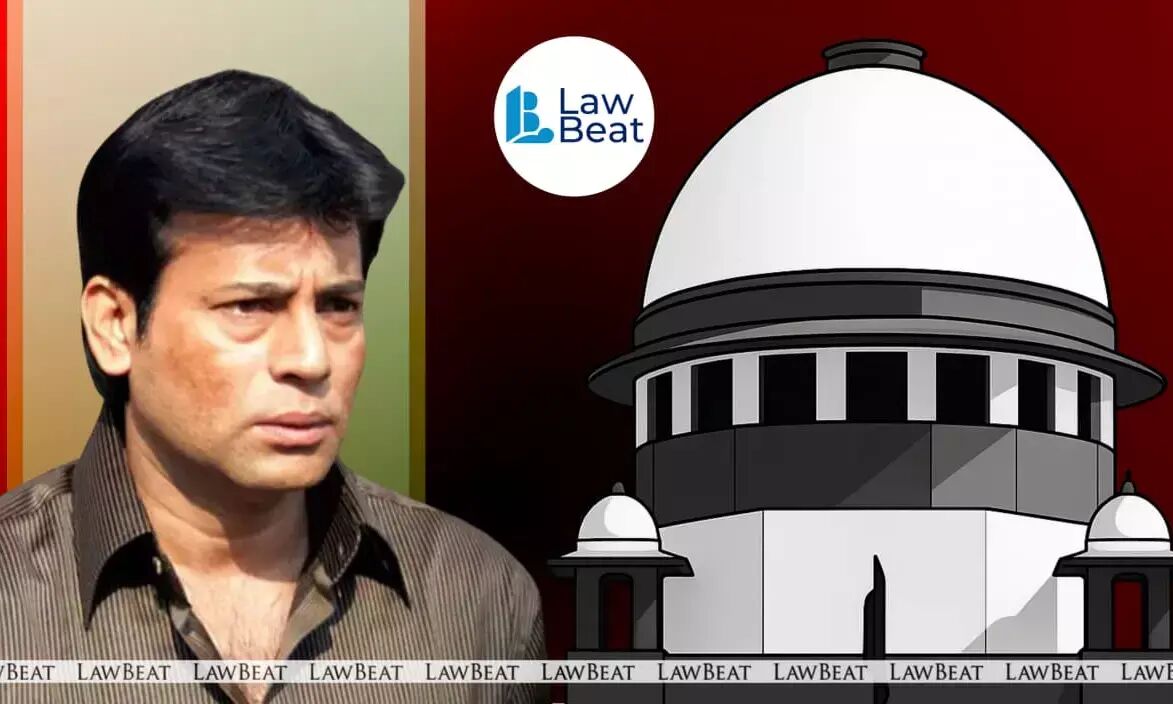
Supreme Court Dismisses Abu Salem Release Plea in 1993 Blasts Case
Summary
- The Supreme Court dismissed Abu Salem's plea for release in the 1993 Bombay blasts case.
- Salem claimed he had completed 25 years of imprisonment, relying on a 2022 Supreme Court ruling.
- The Court upheld the Bombay High Court's decision, declining to interfere with its rejection of Salem's claim.
- India had assured Portugal during Salem's 2005 extradition that his imprisonment would not exceed 25 years.
- A 2022 Supreme Court judgment directed that Salem's incarceration should not exceed 25 years, counting from November 11, 2005.
Supreme Court Dismisses Release Plea
This ruling reinforces that a prior judicial observation, even from the Supreme Court, does not automatically translate into an immediate right to release without the proper procedural steps being taken.
The Supreme Court of India has rejected a petition filed by Abu Salem, a convict in the 1993 Bombay blasts case, who sought his release from prison. The apex court's decision, delivered by a bench comprising Justices Vikram Nath and Sandeep Mehta, upheld a prior ruling by the Bombay High Court that had similarly dismissed Salem's claim of having completed 25 years of incarceration. This recent dismissal means that Salem's argument for early release, predicated on reaching a quarter-century behind bars, has not found favor with the nation's highest judicial authority.
Justice Vikram Nath, in pronouncing the order, explicitly stated, "Consequently, the present appeal stands dismissed, accordingly." This definitive pronouncement underscores the Court's stance against interfering with the High Court's judgment. Salem's appeal was based on his interpretation of prior Supreme Court observations concerning his sentence, which he argued entitled him to immediate freedom. However, the bench declined to intervene, effectively closing this avenue for his release.
The Case Background and Extradition
Abu Salem is currently serving a life sentence for his involvement in the 1993 Bombay blasts case, one of India's most significant terror-related criminal proceedings. His journey to Indian custody began with his extradition from Portugal in 2005. This extradition was contingent upon specific assurances provided by the Indian government to Portuguese authorities, primarily that Salem would not face the death penalty and would not be imprisoned for more than 25 years. These assurances were crucial, aligning with Portugal’s domestic legal framework and international obligations concerning extradition.
Following his return to India, Salem was convicted and sentenced to life imprisonment in 2017 for his role in the Mumbai serial blasts. Prior to this recent Supreme Court dismisses Abu Salem release plea, Salem had made several attempts to secure his release. Notably, in February, the Court had declined to entertain a similar plea from him, directing him instead to pursue his remedies before the Bombay High Court, which was already seized of the matter. Salem had indeed approached the Bombay High Court, seeking early release under the terms of his extradition, though he acknowledged at that time that he had not yet completed the 25-year sentence as mandated by the Supreme Court in line with international assurances.
Precedent on Extradition Assurances
A pivotal legal development in this ongoing saga was the Supreme Court's 2022 ruling in *Abu Salem v State of Maharashtra*. In this landmark judgment, a bench of Justices Sanjay Kishan Kaul and MM Sundresh had explicitly directed that Salem's period of incarceration should not exceed 25 years, with the count commencing from his extradition date on November 11, 2005. The Court had emphasized that the Central government was bound to honor its assurance to Portugal by releasing Salem upon the completion of this 25-year term.
Furthermore, the 2022 ruling stipulated that the Central government should advise the President of India to exercise powers under Article 72 of the Constitution, ensuring the national commitment regarding Salem's sentence was upheld. Salem's challenge to his life sentence, arguing it violated the 25-year cap agreed upon during his extradition, formed the basis of this 2022 judgment. His counsel, Advocate Rishi Malhotra, had contended that Portuguese law deems life imprisonment or sentences beyond 25 years unconstitutional, thus necessitating India's adherence to its original assurance. Salem, along with Monika Bedi, had been arrested in Portugal on September 18, 2002, before their extradition to India, which was granted for Salem in connection with the Pradeep Jain murder case, among others.
Clarifying the Application of Directives
The recent Supreme Court dismissal of Abu Salem's release plea offers crucial clarity on the practical application of extradition assurances, particularly concerning sentence caps. While the 2022 ruling in *Abu Salem v State of Maharashtra* clearly established a 25-year limit on his incarceration, the latest decision indicates that this directive is not self-executing for immediate release. Instead, it underscores that specific legal pathways, such as the President's power under Article 72, must be formally invoked and followed for such a release to occur.
This ruling reinforces that a prior judicial observation, even from the Supreme Court, does not automatically translate into an immediate right to release without the proper procedural steps being taken. The Court's refusal to interfere with the High Court's decision, despite Salem's reliance on the 2022 judgment, highlights that simply claiming to have completed the stipulated period is insufficient without the executive action previously outlined. This stance clarifies that while India is bound by its extradition assurances to Portugal, the mechanism for fulfilling these commitments at the appropriate time requires a structured legal and executive process, rather than a direct judicial order for release based solely on the passage of time.
Practical Implications
This ruling clarifies the Supreme Court's stance on the practical application of extradition assurances regarding sentence caps, indicating that previous directives are not self-executing and require specific legal pathways for release, which were not met by Abu Salem's plea.
Source
How does this affect you?
Get an AI analysis of this article grounded in your jurisdictions, practice areas, and any policy documents you've uploaded to Wansom.
Finish Reading the Full Story and the Expert Analysis.
Get the latest legal & regulatory intelligence in India
Wansom is AI and can make mistakes.