
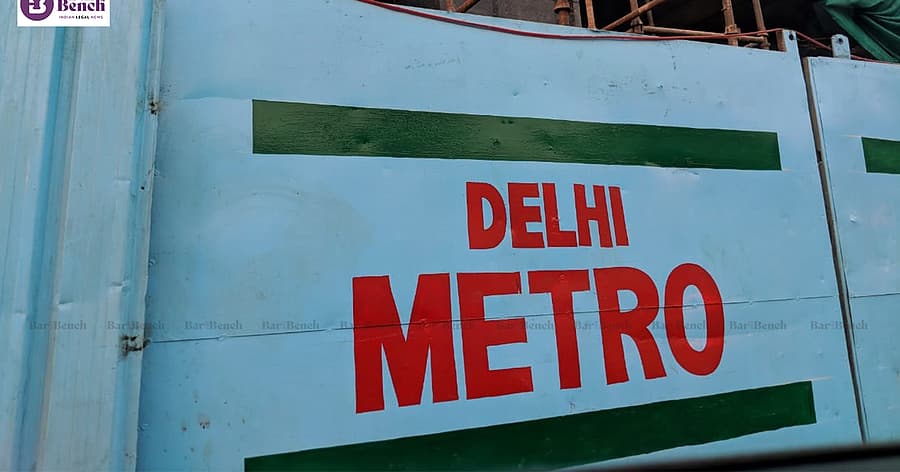
Supreme Court: Halts Delhi Metro Protest Blockade Plan
Summary
- The Supreme Court prohibited the complete closure of Delhi metro services on October 10.
- Authorities had planned the shutdown to prevent Cockroach Janta Party (CJP) protesters from reaching the capital.
- The Court ruled that an entire city cannot be shut down due to protests, citing hardship to citizens.
- Solicitor General Tushar Mehta assured the Court that metro services would be regulated, not completely stopped.
- The Court mandated wide publicity for the regulated metro schedule to minimize public inconvenience.
Judicial Intervention on Public Transport
The justices underscored the principle that an entire metropolitan area cannot be brought to a standstill solely for the purpose of managing anticipated protests.
On a recent Friday, the Supreme Court of India intervened decisively to prevent the complete cessation of Delhi metro services, which had been slated for October 10. This significant judicial action addressed plans by city authorities to implement a total shutdown of metro stations throughout Delhi. The proposed measure was explicitly designed to obstruct participants in the Cockroach Janta Party (CJP)-led protests from converging on the national capital on that specific date. The Court's order unequivocally prohibited a full blockade of the Delhi Metro, thereby ensuring the continuity of essential public transport regulation within the city and preventing a widespread Supreme Court Delhi Metro protest blockade. This ruling highlighted the judiciary's role in balancing public order concerns with the daily needs of a vast urban population.
Upholding Citizen Convenience and Limiting State Power
The judicial bench, which included Chief Justice of India (CJI) Surya Kant, along with Justices Joymalya Bagchi and V Mohana, expressed profound objections to the proposed closure of metro stations. The Court emphatically stated that such drastic measures, akin to a complete Delhi road blockade or a comprehensive public transport shutdown, would impose immense and unacceptable hardship upon ordinary citizens. The justices underscored the principle that an entire metropolitan area cannot be brought to a standstill solely for the purpose of managing anticipated protests. This firm stance by the Supreme Court of India metro services ruling highlights a critical balance between maintaining public order and safeguarding the fundamental right of citizens to unhindered movement and access to services, even in times of civil unrest. The bench's concern was primarily focused on the disproportionate impact such a blanket ban would have on the lives of countless commuters.
Ensuring Regulated Access and Transparent Communication
Following the Court's strong admonition, Solicitor General Tushar Mehta presented an assurance, committing to impress upon the relevant authorities the necessity of re-evaluating their prohibition. His submission outlined a plan to facilitate the movement of metro trains and other railway services, albeit in a suitably regulated manner, rather than a complete halt. The primary objective of this approach was to mitigate widespread inconvenience for the residents of Delhi and the broader public. Consequently, the Supreme Court issued a definitive directive, explicitly stating that there should be no absolute prohibition on the operation of metro trains. Furthermore, the court mandated that authorities provide extensive public notice regarding their revised decision concerning the regulated movement of metro services. This crucial step aims to ensure commuters are thoroughly informed, thereby preventing further disruption and inconvenience. This ruling, often referred to as the CJI Surya Kant metro ruling, establishes a significant precedent for public transport regulation India, emphasizing transparency and minimizing public burden during protest management.
Practical Implications
This ruling clarifies the Supreme Court's stance on the limits of state authority to completely shut down public services like the Delhi Metro during protests, emphasizing the need to minimize inconvenience to citizens. Lawyers advising on public order, protest management, or challenging excessive state restrictions on movement should note this precedent as it sets a benchmark for permissible state action during civil unrest.
Source
How does this affect you?
Get an AI analysis of this article grounded in your jurisdictions, practice areas, and any policy documents you've uploaded to Wansom.
Finish Reading the Full Story and the Expert Analysis.
Get the latest legal & regulatory intelligence in India
Wansom is AI and can make mistakes.