
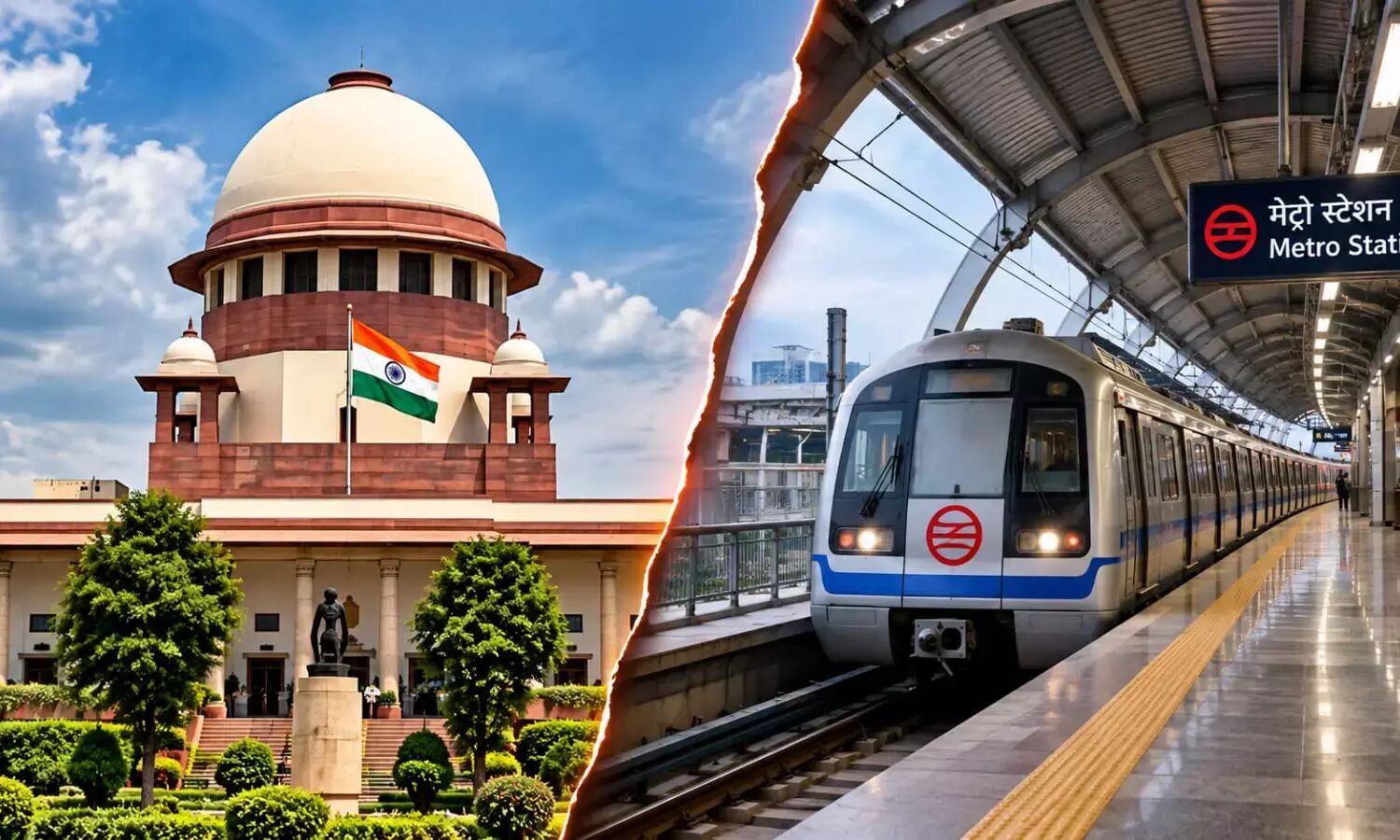
Supreme Court: Delhi Metro Shutdown Draws Contempt Plea
Summary
- A contempt petition has been filed in the Supreme Court against the central government for allegedly violating an order regarding metro and train services.
- The petition claims 57 Delhi Metro stations were shut down and trains cancelled, causing severe public inconvenience and stranding travelers.
- Union Home Secretary Govind Mohan, Delhi Police Commissioner Anurag Kumar, and DMRC chairperson D Thara are named as contemnors in the plea.
- The Supreme Court had previously ordered the government to ensure suitable transit operations and publish a traffic advisory for public convenience.
- The government defended its actions as necessary for law and order ahead of unpermitted Cockroach Janta Party protests scheduled for October 10.
Allegations of Contempt Over Metro Shutdown
The petitioners contend that this constitutes a deliberate refusal to comply with judicial authority, undermining the Supreme Court's mandate.
A contempt petition has been lodged with the Supreme Court, asserting that the central government has disregarded a prior judicial directive concerning public transit services. The plea specifically highlights the closure of 57 Delhi Metro stations and the cancellation of numerous Delhi-bound trains, which were scheduled to terminate at New Delhi and Hazrat Nizamuddin stations. These actions, according to the petitioner, have severely hampered daily life across the National Capital Territory, leaving many essential travelers stranded.
The petition, filed by advocate Shailendra Mani Tripathi through AOR Chand Qureshi, names Union Home Secretary Govind Mohan, Delhi Police Commissioner Anurag Kumar, and DMRC chairperson D Thara as individuals in contempt of court. It explicitly states that despite a clear court order mandating public convenience, no traffic advisory was published in newspapers, and the decision to halt metro and train services remained unchanged. The petitioners contend that this constitutes a deliberate refusal to comply with judicial authority, undermining the Supreme Court's mandate.
The Supreme Court's Directive
The contempt plea stems from the Supreme Court's order issued on October 9, which instructed the government to make a decision regarding the operation of Metro trains and other rail services in a "suitable and regulated manner." This directive was part of an earlier petition brought by CPI(M) General Secretary MA Baby. Crucially, the October 9 order also stipulated that a traffic advisory must be published in both newspapers and online platforms.
The purpose of this advisory was to ensure the smooth movement of vehicles and to prevent any hardship or inconvenience to the public traveling within the city. The Supreme Court had emphasized that this order should be issued on October 9 itself, guaranteeing widespread publicity and clarity on the prevailing circumstances. The current petition argues that these specific requirements were not met, leading to the widespread disruption experienced by commuters.
Government's Defense and Judicial Scrutiny
During the Supreme Court's hearing on the matter, the Centre defended its decision to impose transit restrictions, asserting that the safety of citizens could not be jeopardized and that such measures were vital for maintaining law and order in the capital. Chief Justice of India Surya Kant, however, urged the Centre to consider easing these restrictions to minimize the impact on the daily lives of residents.
Solicitor General Tushar Mehta assured the bench that he would discuss the issue with the government, while also requesting that enforcement agencies be granted some flexibility in their operations. Following these arguments, the Court directed the Centre to re-evaluate its stance and make a revised determination on the matter, balancing public safety with public convenience.
Context of Impending Protests
The transit restrictions were implemented in anticipation of protests planned by the Cockroach Janta Party (CJP), scheduled for October 10. These demonstrations were organized against Chief Election Commissioner Gyanesh Kumar concerning the SIR row, and notably, had not received the necessary official permissions. Solicitor General Tushar Mehta provided context by referencing past CJP protests, including one on June 20 related to the NEET Paper leak.
Mehta informed the court that while permission was initially granted for the June 20 protest with an undertaking to vacate within a day, it ultimately extended for 17 days, resulting in multiple penal violations. He highlighted that protesters marched to Parliament, a "sovereign place," and over 200 police officers sustained injuries. He clarified that the current restrictions, including any internet bans or city closures, were confined to a specific area, particularly around Raisina Road, and were proportionate responses, citing incidents of alleged molestation and abuse against female police officers during an unpermitted protest on October 9.
Practical Implications
This development highlights the Supreme Court's enforcement of its own orders against government bodies regarding public services during protests. Lawyers should advise clients on the potential for contempt proceedings against officials who fail to comply with judicial directives, especially when public convenience and fundamental rights are impacted.
Source
How does this affect you?
Get an AI analysis of this article grounded in your jurisdictions, practice areas, and any policy documents you've uploaded to Wansom.
Finish Reading the Full Story and the Expert Analysis.
Get the latest legal & regulatory intelligence in India
Wansom is AI and can make mistakes.