
Supreme Court: Hindu Succession Act Partition Decree Nullity Without Necessary Party
Summary
- The Supreme Court ruled that a legal heir entitled to ancestral property under Section 6 of the Hindu Succession Act is a necessary party to a partition suit.
- A compromise decree passed without including such a necessary party is considered a nullity.
- Excluded heirs can challenge such a decree, as the bar under Order XXIII Rule 3A of the CPC does not apply to them.
- The ruling stemmed from an appeal by Geeta Bai and others, who were excluded from a partition suit concerning their one-fourth share in ancestral property.
- The case highlighted the importance of the 2005 amendment to the Hindu Succession Act, which granted daughters equal property rights.
Supreme Court Upholds Rights of Excluded Heirs in Partition Suits
The Supreme Court has unequivocally declared that a legal heir, who is entitled to a share in ancestral property under Section 6 of the Hindu Succession Act, 1956, constitutes a necessary party to any partition suit.
The Supreme Court of India has delivered a significant ruling affirming that any legal heir with an entitlement to a share in ancestral property, as defined by Section 6 of the Hindu Succession Act, 1956, must be considered a necessary party in a partition suit. The apex court explicitly stated that a compromise decree issued in partition proceedings, if it fails to include such a crucial party, is rendered a nullity in the eyes of the law.
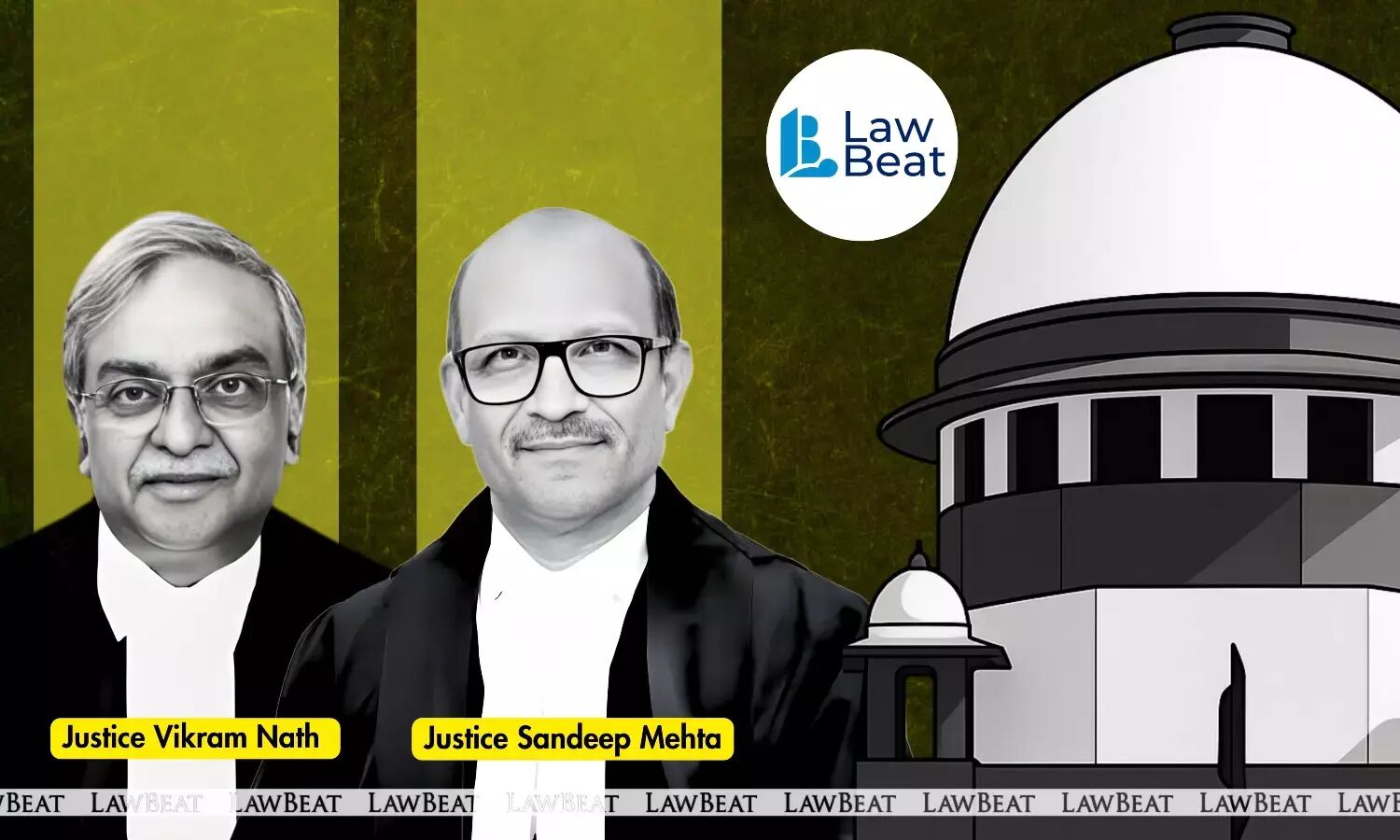
Furthermore, the Court clarified that the procedural bar stipulated under Order XXIII Rule 3A of the Code of Civil Procedure (CPC) does not prevent an excluded necessary party from challenging such a compromise decree. This provision typically prohibits a separate suit to contest a compromise decree, but the Supreme Court determined it does not apply when a party was never impleaded in the original proceedings and the decree was obtained without their knowledge. The bench, comprising Justices Vikram Nath and Sandeep Mehta, emphasized that such individuals cannot be treated as mere strangers to the litigation, thus preserving their right to challenge the decree.
Legal Framework for Ancestral Property Rights
The legal foundation for this ruling rests on Section 6 of the Hindu Succession Act, 1956, which governs the inheritance of joint family property, specifically Mitakshara coparcenary property. A pivotal amendment to this Act in 2005 granted daughters equal property rights to sons, significantly expanding the pool of potential necessary parties in partition suits involving ancestral assets.
Order XXIII Rule 3A of the CPC generally acts as a safeguard against frivolous challenges to compromise decrees, aiming to ensure finality in settled disputes. However, the Supreme Court's interpretation carves out a crucial exception: when a party whose presence is indispensable to the suit's proper adjudication is deliberately or inadvertently excluded, the sanctity of the compromise decree is undermined. The Court's decision underscores that the procedural bar cannot override the fundamental right of a legally entitled heir to claim their share, especially when they were kept out of the judicial process entirely.
The Specific Dispute Leading to the Ruling
The Supreme Court's pronouncement arose from an appeal filed by Geeta Bai and others, who sought to claim a one-fourth share in a disputed property. These appellants were the legal heirs of Late Smt Ballo Bai, who was the daughter of Late Shri Tikaram Singh. Their challenge targeted a Telangana High Court order from May 28, 2025, which had previously rejected their applications to recall a compromise decree, citing the bar under Order XXIII Rule 3A of the CPC.
The appellants had submitted three interlocutory applications to the high court: one requesting the recall of a compromise decree dated September 23, 2020; another seeking their impleadment as proper and necessary parties in a suit originally filed in 2000; and a third to prevent the existing parties from alienating the property or creating third-party rights. The core of their argument was that Ballo Bai, as Tikaram Singh's daughter, was entitled to an undivided one-fourth share in the property under the 2005 amended Section 6 of the Hindu Succession Act, 1956.
Chronology of Exclusion and Compromise
The ancestral property dispute originated in 2000 when Late Dhan Singh, a son of Tikaram Singh, initiated a partition suit. He named his brother, Late Satyanarayan Singh, and the legal heirs of another brother, Late Sheetal Singh, as defendants. Crucially, Late Ballo Bai, Dhan Singh's sister and Tikaram Singh's daughter, was not included as a defendant in this initial suit. The trial court ultimately dismissed Dhan Singh's suit on June 30, 2009.
Following the dismissal, the legal heirs of Late Dhan Singh filed an appeal. During this appellate stage, Ballo Bai had passed away, but her legal heirs were again not impleaded as respondents. Subsequently, the appellants (Dhan Singh's legal heirs) and the respondents in the appeal reached a compromise agreement to proportionately divide the suit property. This compromise was accepted by the high court, which then issued a judgment and decree on September 23, 2020. The appellants before the Supreme Court contended that Ballo Bai's brothers had, during her lifetime, promised her and her heirs an equal share in the property, a promise that was not honored in the subsequent legal proceedings or the compromise decree.
Practical Implications
Lawyers advising on or litigating ancestral property partition suits under the Hindu Succession Act must meticulously identify and implead all legal heirs, especially those entitled to a share under Section 6, as necessary parties. Failure to do so renders any compromise decree a nullity, and such decrees can be challenged by excluded heirs, bypassing the bar of Order XXIII Rule 3A CPC.
Source
How does this affect you?
Get an AI analysis of this article grounded in your jurisdictions, practice areas, and any policy documents you've uploaded to Wansom.
Finish Reading the Full Story and the Expert Analysis.
Get the latest legal & regulatory intelligence in India
Wansom is AI and can make mistakes.