
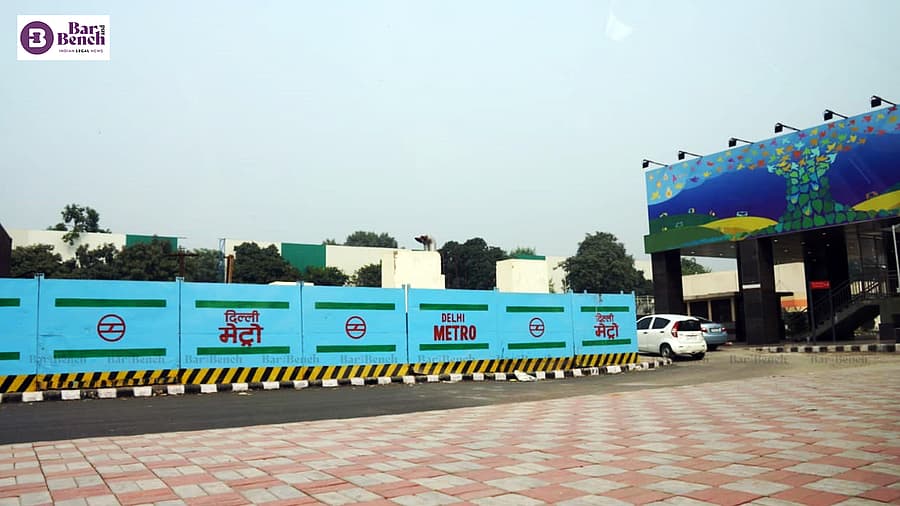
Supreme Court: Delhi Metro Contempt Plea Filed Over Station Closures
Summary
- A contempt petition has been filed in the Supreme Court regarding the alleged closure of Delhi Metro stations.
- The petition claims DMRC stations were shut despite a Supreme Court order against a complete public transport shutdown for protests.
- Advocate Shailendra Mani Tripathi named Union Home Secretary Govind Mohan, Delhi Police Commissioner Anurag Kumar, and DMRC Chairperson Srinivas Katikithala in the plea.
- The petitioner personally observed closures at GTB Nagar and Vishwavidyalaya stations on October 9.
- The plea seeks personal appearances from the officials to explain their alleged wilful disobedience.
Escalating Legal Challenge Over Metro Closures
This development serves as a critical reminder for legal counsel advising government agencies and public corporations like DMRC regarding the serious implications of non-compliance with Supreme Court orders, particularly those concerning public access and fundamental rights during protests.
The Supreme Court is now facing a contempt of court petition, which alleges that Delhi Metro stations were shut down despite a clear directive from the Court. This legal action stems from the closure of public transport services ahead of planned demonstrations by the Cockroach Janta Party (CJP) at Jantar Mantar. The petitioner contends that the Delhi Metro Rail Corporation (DMRC) and other authorities disregarded an October 9 order that specifically prohibited a complete cessation of public transit.
Advocate Shailendra Mani Tripathi initiated this contempt petition, seeking legal action against several high-ranking officials. Named in the plea are Union Home Secretary Govind Mohan, Delhi Police Commissioner Anurag Kumar, and DMRC Chairperson Srinivas Katikithala. Tripathi asserts that these officials engaged in "wilful disobedience" of the Supreme Court's instructions, leading to significant disruption for the public. The petition highlights a critical challenge to the authority of judicial pronouncements, especially concerning public access during protest events.
Allegations of Non-Compliance
Central to the **Supreme Court Delhi Metro contempt plea** is the allegation that DMRC announced the closure of entry and exit gates at 45 Metro stations. This directive was reportedly in effect from 9 PM on October 9 until 6 PM on October 10. Tripathi, the petitioner, personally verified these closures, visiting GTB Nagar and Vishwavidyalaya Metro stations around 9:30 PM on October 9. At GTB Nagar, he observed that gates 1 and 2 were completely closed, while gate 3 only permitted regulated exits. He further claims to have video-recorded the closure of gate 2 as evidence.
Further observations by Tripathi included the Vishwavidyalaya station, where the entry gate was allegedly shut, with only the exit gate remaining operational. The petition also extends its scope beyond just station closures, citing continued train cancellations and a perceived failure by authorities to adequately publicize any revised transport arrangements. When Tripathi visited Jantar Mantar around 8:30 PM, he noted the absence of protesters, with only police and paramilitary personnel present, suggesting the transport shutdowns effectively prevented public assembly.
Implications for Public Officials
The filing of the **Shailendra Mani Tripathi contempt petition** underscores the serious ramifications for public officials who are perceived to disregard judicial orders. The plea specifically requests that the named officials — Govind Mohan, Anurag Kumar, and Srinivas Katikithala — be directed to appear personally before the Supreme Court to provide an explanation for their actions. This demand for personal accountability highlights the gravity of contempt proceedings, which can carry significant legal consequences for individuals found to be in wilful breach of court directives.
This development serves as a critical reminder for legal counsel advising government agencies and public corporations like DMRC regarding the serious implications of non-compliance with Supreme Court orders, particularly those concerning public access and fundamental rights during protests. It highlights the personal liability risk for officials named in contempt proceedings. The case, involving allegations against high-ranking figures such as Union Home Secretary Govind Mohan, Delhi Police Commissioner Anurag Kumar, and DMRC Chairperson Srinivas Katikithala, sets a precedent for how judicial authority is upheld in matters of public order and fundamental freedoms.
Practical Implications
This development serves as a critical reminder for legal counsel advising government agencies and public corporations (like DMRC) regarding the serious implications of non-compliance with Supreme Court orders, particularly those concerning public access and fundamental rights during protests. It highlights the personal liability risk for officials named in contempt proceedings.
Source
How does this affect you?
Get an AI analysis of this article grounded in your jurisdictions, practice areas, and any policy documents you've uploaded to Wansom.
Finish Reading the Full Story and the Expert Analysis.
Get the latest legal & regulatory intelligence in India
Wansom is AI and can make mistakes.