
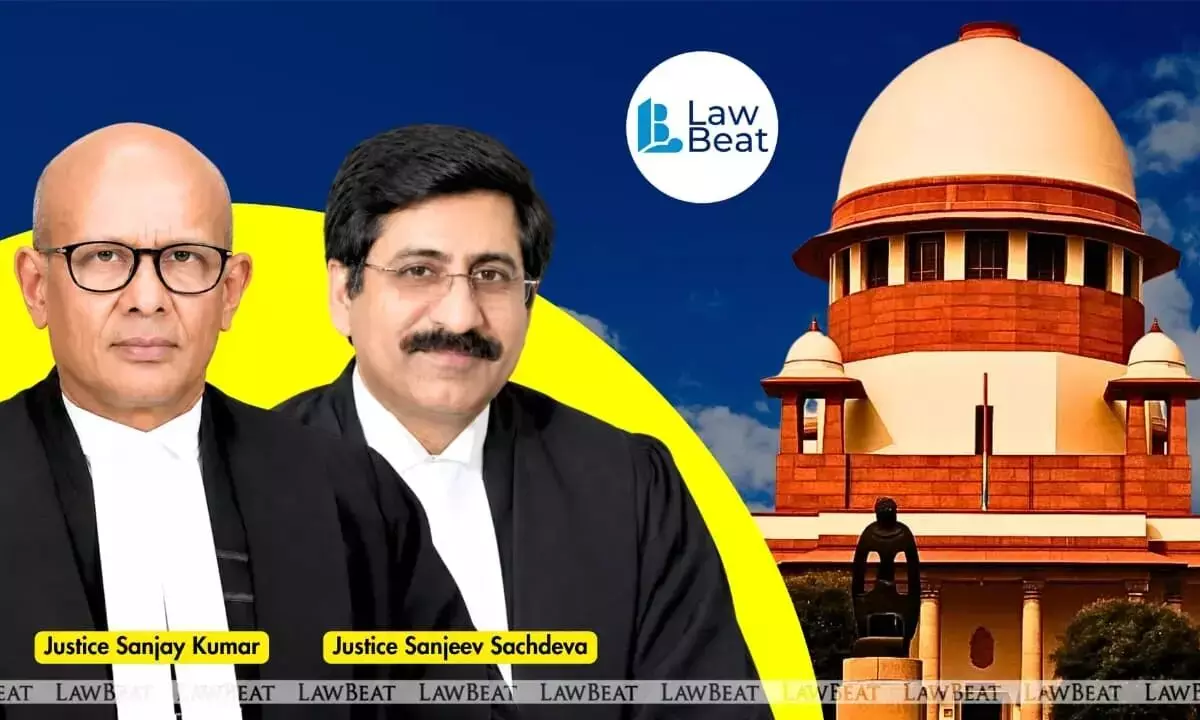
Supreme Court: Cancels IPS Officer Lokayukta Bail, Orders Surrender
Summary
- The Supreme Court revoked the anticipatory bail of an IPS officer in a Lokayukta corruption case.
- Justices Sanjay Kumar and Sanjeev Sachdeva ordered the officer to surrender within three weeks.
- The decision followed a successful appeal by the Karnataka Lokayuktha Police.
- The Court found the High Court erred by preventing custodial interrogation, which was deemed necessary for deeper examination of evidence.
- The Supreme Court emphasized that uniformed officers cannot claim special treatment compared to ordinary citizens in such cases.
The Supreme Court's Mandate
The bench further articulated a crucial principle: a uniformed officer, despite their position, cannot assert an entitlement to treatment different from that accorded to any ordinary citizen when facing serious allegations.
The Supreme Court of India recently issued a significant directive, overturning the anticipatory bail previously granted to an Indian Police Service (IPS) officer embroiled in a Lokayukta corruption case. This pivotal decision, handed down by a bench comprising Justices Sanjay Kumar and Sanjeev Sachdeva, mandates the officer's surrender to authorities within a three-week timeframe. The ruling effectively cancels the IPS officer's Lokayukta bail, signaling a firm stance against corruption within public service.
This judicial intervention followed a successful appeal lodged by the Karnataka Lokayuktha Police. The police force had challenged the High Court's earlier decision, arguing that it had prematurely curtailed the investigative process. The Supreme Court's allowance of this appeal underscores the judiciary's commitment to ensuring thorough probes into allegations of misconduct by high-ranking officials.
Judicial Reasoning and Custodial Interrogation
Central to the Supreme Court's judgment was its finding that the High Court had erred by precluding the possibility of custodial interrogation. The apex court determined that the evidence and material gathered by the prosecution warranted a more extensive and in-depth examination, which could only be achieved through direct questioning while in custody. This emphasis on custodial interrogation for public servants, particularly in corruption cases, highlights the judiciary's view that such a process is often indispensable for uncovering the full truth.
The bench further articulated a crucial principle: a uniformed officer, despite their position, cannot assert an entitlement to treatment different from that accorded to any ordinary citizen when facing serious allegations. This statement directly addresses the notion that an IPS officer corruption case bail might be treated with undue leniency due to the individual's status. The Supreme Court clarified that the uniform does not confer immunity from the standard investigative procedures, thereby reinforcing the principle of equality before the law.
Broader Implications for Public Servants
This ruling carries substantial implications for the landscape of anticipatory bail for public servants in India, especially for those in uniformed services. It establishes a higher threshold for obtaining pre-arrest bail in cases involving corruption, suggesting that courts will be less inclined to grant such relief when the prosecution presents material indicating a need for deeper inquiry. The decision reinforces that the status of a public servant, including an IPS officer, does not automatically qualify them for anticipatory bail, particularly when allegations of corruption are involved.
The Supreme Court's directive serves as a clear signal that the integrity of public office takes precedence, and thorough investigation, including custodial interrogation, will be prioritized over an individual's desire to avoid arrest. This judgment is likely to influence future rulings concerning anticipatory bail for public servants across India, ensuring that those entrusted with public duty are held to stringent standards of accountability.
Practical Implications
This ruling clarifies the Supreme Court's stance on anticipatory bail for public servants, particularly uniformed officers, in corruption cases. Lawyers advising such clients must note that the bar for obtaining anticipatory bail is significantly higher, and custodial interrogation is likely to be prioritized, as uniformed status does not grant special immunity from such proceedings.
Source
How does this affect you?
Get an AI analysis of this article grounded in your jurisdictions, practice areas, and any policy documents you've uploaded to Wansom.
Finish Reading the Full Story and the Expert Analysis.
Wansom is AI and can make mistakes.