
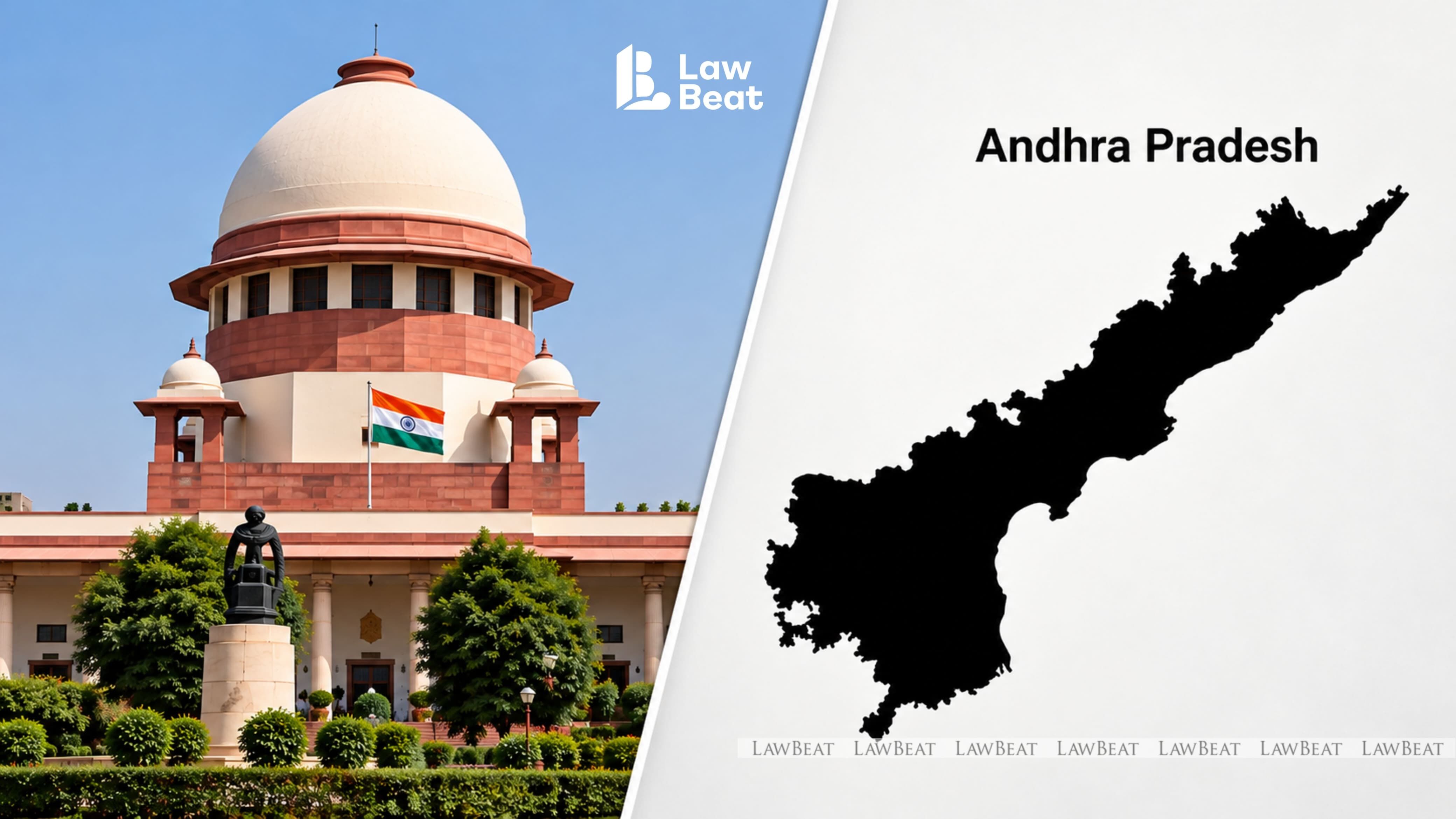
Supreme Court: Andhra Pradesh BC Quota Dismissal Affirmed
Summary
- The Supreme Court dismissed Andhra Pradesh's appeal against the invalidation of a 34% Backward Classes quota in local body elections.
- This decision upheld the High Court's ruling that the quota breached the 50% reservation ceiling.
- The apex court questioned the legal basis and validity of the Unified Family Survey data used by the state to justify the reservation.
- The High Court had previously struck down two government orders for exceeding the 50% limit and lacking sufficient empirical data.
- The ruling reinforces the necessity for state governments to provide robust, legally sound empirical data for reservation policies.
The Supreme Court's Decision
This ruling serves as a stark reminder that state governments must ensure strict adherence to established reservation limits and base any quotas on legally recognized and robust empirical data.
The Supreme Court of India recently dismissed an appeal by the State of Andhra Pradesh, thereby upholding a High Court judgment that had invalidated a 34% reservation for Backward Classes (BC) in local body elections. This significant ruling, delivered by a bench comprising Justices Dipankar Datta and Sheel Nagu, effectively put an end to the state government's efforts to revive the quota. The High Court had previously struck down two government orders that sought to implement these reservations, citing a breach of the established 50% reservation ceiling on total quotas. The case, formally known as Andhra Pradesh v. Thandava Yogesh, underscores the judiciary's strict stance on reservation policies.
During the proceedings, the apex court focused intently on the empirical data presented by the state to justify the quota. Senior Advocate Mukul Rohatgi, representing Andhra Pradesh, faced rigorous questioning regarding the legal foundation of the information used. The court's primary concern revolved around the validity and legal basis of the Unified Family Survey data, which the state had relied upon to determine the extent of the reservation. This Supreme Court Andhra Pradesh BC quota dismissal highlights the critical need for states to provide robust and legally sound justifications for any reservation policies.
Scrutiny of Empirical Data
A central point of contention during the Supreme Court hearing was the lack of a clear legal framework for the data underpinning the 34% BC quota. Justice Datta specifically challenged the state's counsel, asking, "First show us under what law this family survey is made," and further demanded an explanation for why the data should be considered for this purpose, along with its legal basis. The court observed that a commission's report, which was supposedly submitted, had not been accepted by the state government and remained pending. The bench clarified that the validity of the commission itself was not under review, as it had not been challenged in the proceedings.
Despite Senior Advocate Rohatgi's request for additional time to present the report and his reference to a Rajasthan case involving a 57% reservation, the Supreme Court maintained its focus on the fundamental issue of data legitimacy. The court reiterated its demand for a clear legal basis for relying on the Unified Family Survey data. This rigorous examination underscores the judiciary's commitment to ensuring that reservation policies are not based on arbitrary or unsubstantiated information, reinforcing the principle that empirical data used for such purposes must have a clear statutory or constitutional backing. The Unified Family Survey data validity was thus a pivotal factor in the court's decision.
Upholding the 50% Ceiling and Legal Precedent
The Supreme Court's decision affirmed the Andhra Pradesh High Court's ruling from October 1, which had found the state's two government orders to be unsustainable. These orders, G.O.Ms.No.105 dated August 20, 2026, and G.O.Rt.No.1065 dated August 19, 2026, aimed to restore or implement 34% and 33.33% BC reservations, respectively, across various local body elections India, including Panchayat Raj Institutions and Municipal bodies. The High Court had explicitly directed the State Government and the State Election Commission to initiate the election process within six weeks following its judgment.
The High Court's judgment was rooted in the well-established legal principle that total vertical reservation for Scheduled Castes (SCs), Scheduled Tribes (STs), and Backward Classes (BCs) must not exceed the 50% reservation ceiling India. Citing precedents such as Vikas Kishanrao Gawali v. State of Maharashtra and Janhit Abhiyan v. Union of India, the High Court emphasized that any deviation from this ceiling requires substantial empirical data and figures to justify such an exception. Crucially, the High Court concluded that the Unified Family Survey data, upon which the state relied, could not form a valid basis for declaring reservations for Backward Classes, finding "no empirical data as envisaged and required" to support reservations beyond the 50% limit. This ruling serves as a stark reminder that state governments must ensure strict adherence to established reservation limits and base any quotas on legally recognized and robust empirical data.
Practical Implications
Lawyers advising state governments or local bodies on reservation policies must ensure strict adherence to the 50% reservation ceiling and base any quotas on legally recognized empirical data, as informal surveys or data without a clear legal basis will not withstand judicial scrutiny. This ruling reinforces the critical importance of robust, legally sound data for justifying reservation policies.
Source
How does this affect you?
Get an AI analysis of this article grounded in your jurisdictions, practice areas, and any policy documents you've uploaded to Wansom.
Finish Reading the Full Story and the Expert Analysis.
Get the latest legal & regulatory intelligence in India
Wansom is AI and can make mistakes.