
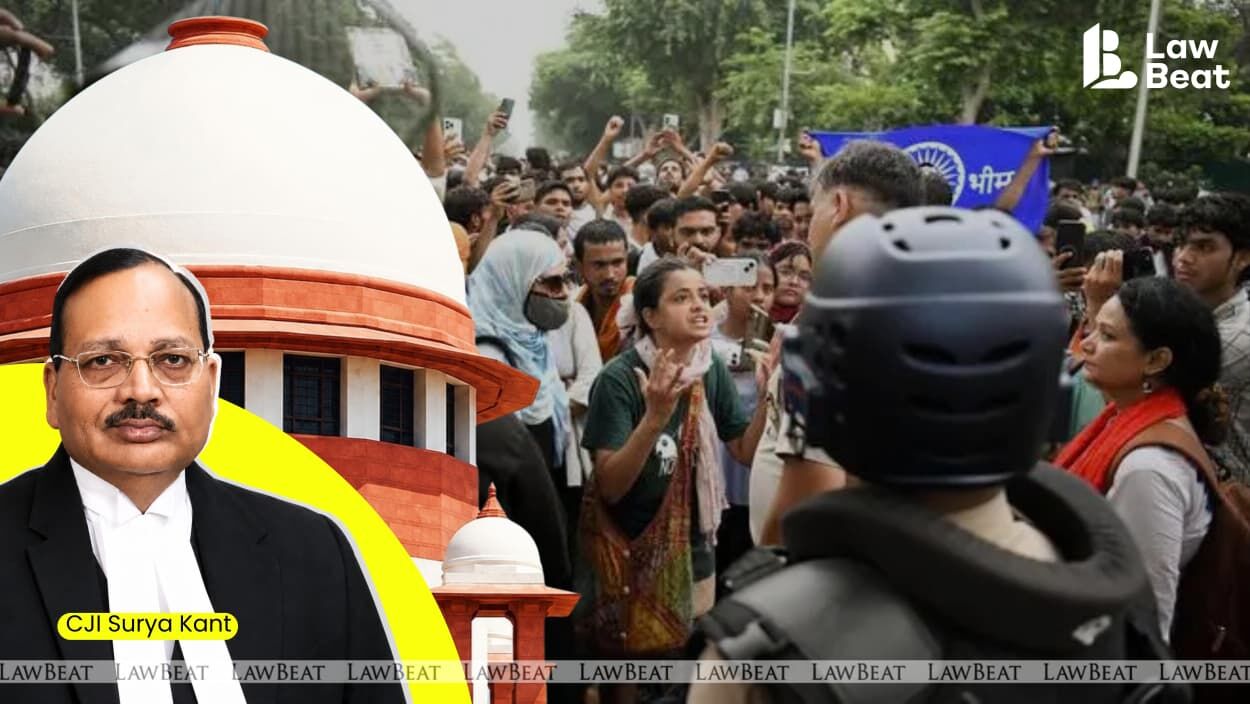
Supreme Court: Addresses 14-Year-Old NEET Protest Intimidation
Summary
- The Supreme Court expressed serious concern over the intimidation of a 14-year-old girl involved in NEET paper leak protests.
- An FIR was registered against the minor, while alleged assaulters remained at large, prompting judicial scrutiny.
- The Court directed immediate action on a specific FIR at Parliament Street Police Station and ordered police protection for the girl and her family by Uttar Pradesh Police.
- CJI Surya Kant emphasized that violence against a child cannot be taken lightly, and no one involved should be protected.
- This incident contrasts with previous Supreme Court directives to quash FIRs against NEET protestors based on government assurances, highlighting ongoing judicial oversight.
Supreme Court Intervenes in Minor's Intimidation Case
Such matters cannot be taken lightly, and no one should be protected if violence against a child is involved, particularly when those accused of such acts are at liberty and attempting to pressure the child or her family to abandon criminal proceedings.
The Supreme Court has voiced significant apprehension regarding the alleged intimidation of a 14-year-old girl who participated in the NEET paper leak protests. This development highlights the Court's firm stance on protecting minors from intimidation and wrongful prosecution in protest-related incidents. The issue came to light when a young counsel informed a bench led by Chief Justice of India (CJI) Surya Kant that an FIR had been registered against the minor, even as individuals allegedly involved in assaulting and intimidating her remained at large. This situation, the counsel argued, appeared to contradict previous directives from the India Supreme Court concerning protest-related cases.
The counsel further detailed that the girl's residence had been subjected to stone-pelting, offering to provide additional video evidence to the police. The minor's plight gained public attention after an individual named Swatantra Bhardwaj reportedly claimed on social media that he had physically assaulted the girl's father during the protests. This sequence of events, involving a Supreme Court 14-year-old NEET protest intimidation, prompted a strong reaction from the judiciary.
CJI Surya Kant underscored the gravity of the situation, stating unequivocally that such matters cannot be treated lightly. He emphasized that no one should be shielded if violence against a child is involved, particularly when those accused of such acts are at liberty and attempting to pressure the child or her family to abandon criminal proceedings. The Court's immediate concern was to ensure the protection of the minor and uphold the integrity of the legal process, especially given the registration of an India Supreme Court minor FIR against the victim herself.
Directives for Protection and Investigation
Responding to the urgent submissions, Justice Joymalya Bagchi directly addressed Solicitor General Tushar Mehta, who was present in court. Justice Bagchi highlighted a specific FIR lodged at the Parliament Street Police Station, which detailed allegations of miscreants threatening, harassing, intimidating, and committing acts of violence against the minor. The Court issued clear directives for immediate action to be taken on this particular Parliament Street Police Station minor case, requiring a comprehensive report to be filed promptly.
Crucially, the Supreme Court mandated that police protection and appropriate security measures must be extended to the victim and her family by the Uttar Pradesh Police. This protection is to be provided irrespective of their current or chosen place of residence. Solicitor General Tushar Mehta assured the bench that he would thoroughly examine the entire matter and ensure that all necessary actions, as dictated by the facts of the case, would be undertaken. This judicial intervention underscores the Court's readiness to direct police action, including providing protection to victims and their families, especially when FIRs are registered against minors while alleged perpetrators remain at large.
Broader Context of NEET Protest FIRs
This recent incident occurs within a broader context of Supreme Court engagement with NEET paper leak protest victim rights and related legal actions. Previously, on September 1, 2026, the Supreme Court had quashed FIRs registered against individuals involved in the NEET paper leak protests, following assurances from the government. Solicitor General Tushar Mehta had informed the CJI Surya Kant-led bench that the government was committed to three key assurances: first, not pursuing FIRs filed against protestors between July 20-25; second, refraining from filing any future FIRs against protestors; and third, providing compensation to students who tragically committed suicide.
However, the Solicitor General also informed the Court that Delhi Police had identified 2873 individuals with serious criminal antecedents, as per the NCRB database, who were prima facie reported to be at the protest site. He clarified that fresh FIRs would be registered against these individuals, not for their participation in the protest itself, but for other offenses. This distinction is vital in understanding the Court's nuanced approach to protest-related cases. Earlier, the Supreme Court had also granted state governments the liberty to withdraw FIRs registered against protestors involved in the recent NEET paper leak demonstrations across various parts of the country, further illustrating the judicial scrutiny over such cases.
Judicial Scrutiny and Accountability
The strong remarks from CJI Surya Kant NEET protest concerns reflect the judiciary's unwavering commitment to safeguarding vulnerable individuals, particularly minors, from intimidation and violence. The Chief Justice's assertion that "nobody should be protected" if violence against a child is involved sends a clear message about the Court's zero-tolerance policy towards such acts. This stance is particularly relevant when alleged perpetrators are free and attempting to browbeat victims or their families into not pursuing criminal proceedings.
The Court's proactive directives, including the order for police protection and immediate action on the Parliament Street Police Station minor case, demonstrate its resolve to ensure accountability and justice. Lawyers should be aware of the Court's readiness to intervene and direct police action, especially when the rights of minors are at stake in protest-related incidents. The emphasis on investigating the FIR against the minor while simultaneously ensuring her protection underscores the complex legal and humanitarian considerations at play.
Practical Implications
This development highlights the Supreme Court's firm stance on protecting minors from intimidation and wrongful prosecution in protest-related incidents. Lawyers should be aware of the Court's readiness to intervene and direct police action, including providing protection to victims and their families, especially when FIRs are registered against minors while alleged perpetrators remain at large.
Source
Source: Original reporting via Live Law
How does this affect you?
Get an AI analysis of this article grounded in your jurisdictions, practice areas, and any policy documents you've uploaded to Wansom.
Finish Reading the Full Story and the Expert Analysis.
Get the latest legal & regulatory intelligence in India
Wansom is AI and can make mistakes.