
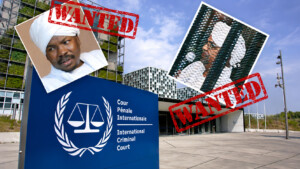
Sudanese Civil Society Urges ICC Arrests of Al Bashir, Haroun
Dozens of Sudanese civil society organisations and human rights groups recently urged the international community to secure the arrest and transfer of ICC indictees Ahmed Haroun and Omar Al Bashir, following Haroun's high-profile media appearance in a four-hour podcast interview.
This development highlights the persistent challenges in enforcing international criminal justice, particularly concerning high-profile indictees who remain at large despite long-standing arrest warrants. For practitioners in international law and human rights, it underscores the critical role of civil society in advocating for accountability and the implementation of international legal obligations. The memorandum, addressed to influential international bodies such as the UN Security Council, the UN Secretary-General, the European Commission, and the ICC Prosecutor, demonstrates the continued diplomatic and political pressure exerted to compel states to cooperate with the International Criminal Court. It also brings into sharp focus the tension between national sovereignty and the imperative of international justice, especially when national authorities are accused of obstructing justice, as is the case with General Abdelfattah El Burhan.
The legal context for this situation is rooted in the Rome Statute of the International Criminal Court, which grants the ICC jurisdiction over grave international crimes, including genocide, crimes against humanity, and war crimes. Although Sudan is not a state party to the Rome Statute, the situation in Darfur was referred to the ICC by UN Security Council Resolution 1593 (2005), thereby obligating Sudan to cooperate with the Court. Ahmed Haroun faces 20 counts of crimes against humanity and 22 counts of war crimes allegedly committed in Darfur in 2003 and 2004, with an arrest warrant issued in April 2007. Omar Al Bashir is similarly wanted for war crimes, crimes against humanity, and genocide. The signatories' accusation that Haroun used his platform to discredit the December revolution and advocate for military rule further complicates the political landscape surrounding these legal demands.
Key parties involved include the Sudanese civil society organisations, human rights groups, and public figures who authored the memorandum. The recipients of this formal appeal are senior international officials from the UN Security Council, the UN Secretary-General, the European Commission, the US Secretary of State, the UN High Commissioner for Human Rights, the ICC Prosecutor, and the President of the African Commission on Human and Peoples’ Rights. The central figures of the ICC warrants are Ahmed Haroun, a former leader of the now-dissolved National Congress Party, and Omar Al Bashir, the former dictator of Sudan. General Abdelfattah El Burhan, the de facto head of state and commander-in-chief of Sudan, is also a key party, as he is held responsible by the signatories for obstructing justice.
Attorneys advising international organisations, governments, or businesses with interests in Sudan should closely monitor these developments, as the ongoing pressure for accountability could lead to renewed diplomatic efforts, sanctions, or other international measures. Businesses operating in the region should be particularly aware of the political instability and the international community's focus on human rights and justice, which can impact investment decisions and reputational risk. Legal professionals specialising in international criminal law should track the effectiveness of such advocacy campaigns and the evolving dynamics of state cooperation with the ICC. The outcome of this matter, specifically regarding the arrest and transfer of Haroun and Al Bashir, is not yet reported.
How does this affect you?
Get an AI analysis of this article grounded in your jurisdictions, practice areas, and any policy documents you've uploaded to Wansom.
Finish Reading the Full Story and the Expert Analysis.
Get the latest legal & regulatory intelligence in Sudan
Wansom is AI and can make mistakes.