
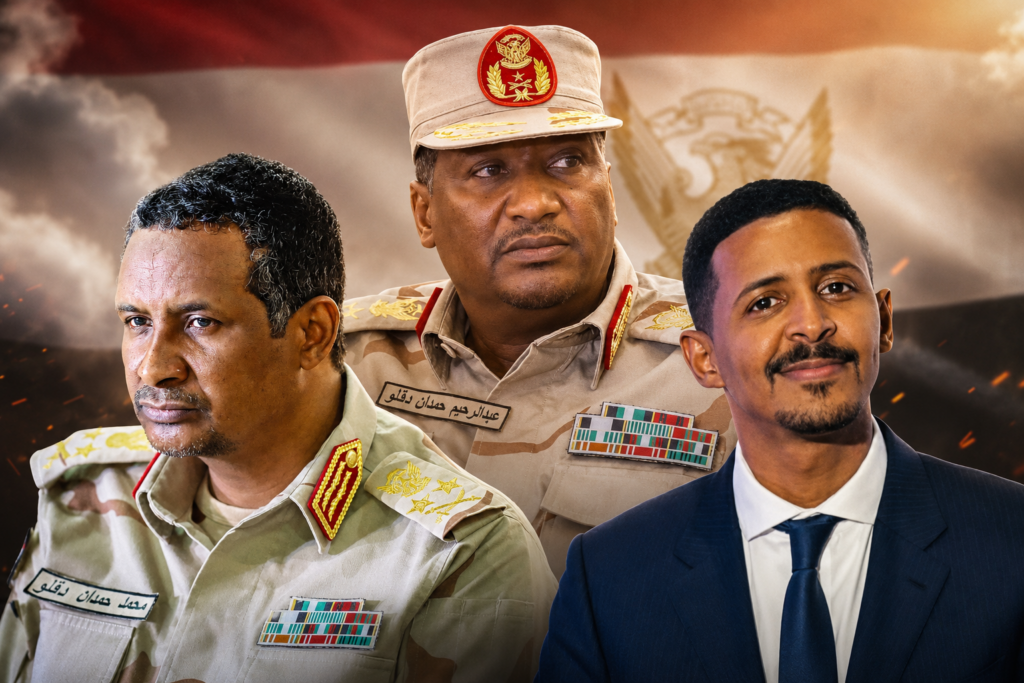
Sudan Court: Hemedti, 13 Others Sentenced to Death, Assets Seized
Sudan's Counter-Terrorism and State Crimes Court in Port Sudan, on Wednesday, November 18, 2026, issued a death sentence in absentia against Mohamed Hamdan Dagalo ("Hemedti") and 13 other commanders, including his brothers, along with imposing fines, ordering property confiscation, and recommending citizenship withdrawal, in connection with the destruction and looting of the National Medical Supplies Fund's properties during the war that began in April 2023.
The court's ruling, delivered by Judge Emad Mohamed Ibrahim, specifically sentenced Hemedti, his brothers Abd al-Rahim and al-Quni, and eleven other individuals to death by hanging. In addition to the capital punishment, the defendants were collectively fined 100 million Sudanese pounds, with a one-year prison term stipulated for non-payment, and their money, movable assets, and real estate were ordered confiscated in favor of the Sudanese government. The court also mandated that the convicted parties jointly and severally repay $396.2 million to the National Medical Supplies Fund, representing the value of damages and losses incurred by the Fund's warehouses and properties across several states, and recommended the withdrawal of their passports. This comprehensive judgment addresses severe allegations of economic sabotage and destruction of vital public resources amidst the ongoing conflict.
This judgment carries significant legal and political implications for Sudan, particularly in the context of the ongoing civil war. For legal practitioners, it highlights the Sudanese judiciary's assertion of authority and its approach to accountability for alleged war-related crimes, even against high-profile figures currently outside the court's physical jurisdiction. The *in absentia* nature of the death sentence, coupled with extensive financial penalties and asset confiscation, sets a precedent for how the Sudanese state intends to pursue justice and restitution for damages incurred during the conflict. Businesses and individuals with assets or interests in Sudan, or those potentially linked to the named individuals, should be acutely aware of the far-reaching implications for asset tracing, recovery, and potential international legal challenges or enforcement actions.
The legal context for this ruling is rooted in Sudan's anti-terrorism and state crimes legislation, which grants specialized courts like the Counter-Terrorism and State Crimes Court broad jurisdiction over offenses deemed to threaten national security and public order. The Sudanese legal system, while primarily civil law, incorporates elements of Sharia law and allows for *in absentia* trials, even for capital offenses, though such proceedings often raise due process concerns under international human rights standards. The National Medical Supplies Fund, as a critical state entity responsible for public health infrastructure, underscores the gravity of the alleged offenses, which are framed as direct attacks on the state's capacity to provide essential services. The court's recommendation for citizenship withdrawal further indicates the severe punitive measures being considered against those deemed to have acted against the state's interests.
Attorneys and legal professionals should closely monitor the practical enforceability of this judgment, particularly regarding the confiscation of assets and the recovery of the substantial restitution amount. Given the *in absentia* nature of the ruling and the ongoing conflict, enforcement will likely depend on future political developments, international cooperation, and the potential apprehension of the convicted individuals. Practitioners advising clients with business interests in Sudan or those involved in international asset recovery should assess the risks and opportunities presented by such judgments, including potential challenges to their legitimacy or enforceability in other jurisdictions. Furthermore, this case signals a broader trend of legal actions being pursued by the Sudanese government against its adversaries, which could lead to further prosecutions and complex legal battles in the future.
How does this affect you?
Get an AI analysis of this article grounded in your jurisdictions, practice areas, and any policy documents you've uploaded to Wansom.
Finish Reading the Full Story and the Expert Analysis.
Get the latest legal & regulatory intelligence in Sudan
Wansom is AI and can make mistakes.