
Sudan Attorney General: UN Reports Prompt Drone Investigation Into Civilian Deaths
Summary
- The UN Human Rights Office documented at least 1,120 civilian deaths from drone attacks in Sudan during the first six months of 2026, representing 80% of all documented civilian fatalities.
- International pressure led to a temporary positive effect in El Obeid and a decline in drone attacks in July, though the overall situation remains critical.
- Sudan's Attorney General, Intisar Abdelaal, is leading a national investigation into alleged Rapid Support Forces attacks, specifically focusing on "strategic drones" and the targeting of civilians and vital facilities.
- These alleged attacks, which targeted health facilities, residential areas, and commercial establishments, are being investigated as terrorist acts and breaches of international humanitarian law.
- The conflict has expanded geographically, with civilians facing extrajudicial killings, sexual violence, arbitrary detention, and severe restrictions on water supplies.
Escalating Conflict and Civilian Toll
Sudan's Attorney General, Intisar Abdelaal, is spearheading a national investigation into alleged drone attacks by the Rapid Support Forces, focusing on the targeting of civilians and vital infrastructure.
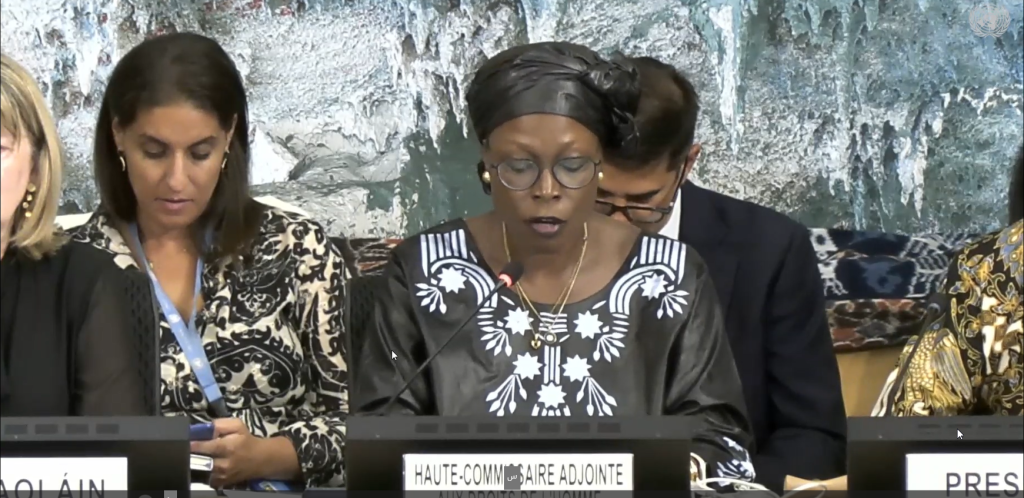
The United Nations Deputy High Commissioner for Human Rights, Awa Dabo, recently highlighted the dire humanitarian situation in Sudan, noting a temporary positive impact from international pressure on El Obeid, though the overall crisis remains critical. Speaking at the 63rd session of the Human Rights Council in Geneva, Ms. Dabo revealed alarming statistics regarding the conflict's toll on civilians.
According to data compiled by the Office of the UN High Commissioner for Human Rights, at least 1,120 civilian fatalities resulted from drone attacks across Sudan during the initial six months of 2026. This figure represents a significant portion, accounting for 80 percent, of all civilian deaths documented by the UN human rights office during that period. Encouragingly, Ms. Dabo noted a decline in drone attack incidents in July, attributing this reduction to the sustained international pressure exerted on the warring parties.
Beyond the aerial assaults, the conflict's violence has expanded geographically, now encompassing South Kordofan, Blue Nile, and North Darfur, in addition to existing hotspots. Civilians in these areas are enduring a litany of severe human rights abuses, including extrajudicial killings, various forms of sexual and physical violence, arbitrary detention, abductions, and widespread looting. These widespread violations underscore the profound and escalating humanitarian catastrophe gripping the nation.
Strategic Targets and Humanitarian Crisis
The ongoing struggle for dominance between the Sudanese Armed Forces (SAF) and the Rapid Support Forces (RSF) is primarily centered on controlling vital supply routes that connect key cities such as North Kordofan, El Obeid, and Khartoum. This strategic competition has profound implications for civilian populations caught in the crossfire.
In August, ground offensives intensified in the southern and eastern regions, leading to severe restrictions on access to essential water supplies for many communities. As a direct consequence of this intense fighting, large numbers of civilians are seeking refuge in El Obeid, where they encounter significant resource shortages and a growing atmosphere of distrust towards newly arriving populations.
The humanitarian response is further hampered by persistent hostility faced by aid workers operating in the affected regions. Compounding these challenges are deep-seated tensions between various communities, which Ms. Dabo indicated are being exacerbated by hate speech. In certain localities, leaders of the Rapid Support Forces are actively fueling these divisions and shifting alliances, thereby intensifying inter-communal violence and instability.
National Inquiry into IHL Violations
In a significant development for domestic accountability, Sudan's Attorney General, Intisar Abdelaal, who also heads the National Investigation Committee, has reported substantial progress in her committee's work. The committee is actively monitoring and gathering evidence pertaining to attacks allegedly carried out by the Rapid Support Forces.
A core focus of these investigations is the use of what Ms. Abdelaal described as "strategic drones," alongside the alleged deliberate targeting of both vital facilities and civilian populations. The Attorney General has unequivocally characterized these alleged attacks as terrorist acts, violations, crimes, and clear breaches of international humanitarian law, signaling the gravity with which these incidents are being treated by the Sudanese legal system.
The scope of the alleged targeting is extensive, encompassing critical infrastructure and civilian life. Identified primary targets include health facilities, essential infrastructure and services, civilian centers, and even cemeteries. Furthermore, the investigations are examining alleged attacks on residential neighborhoods, clubs, hotels, banks, factories, and commercial shops, indicating a broad pattern of harm to civilian life and property.
Implications for Accountability
The parallel reporting from the UN and the domestic investigative efforts underscore the urgent need for accountability in Sudan. The findings presented by the UN Deputy High Commissioner for Human Rights, detailing widespread civilian deaths from drone attacks and other abuses, provide a stark backdrop to the national committee's work.
Sudan's Attorney General, Intisar Abdelaal, is spearheading a national investigation into alleged drone attacks by the Rapid Support Forces, focusing on the targeting of civilians and vital infrastructure. This domestic inquiry, particularly its emphasis on "strategic drones" and the classification of these acts as breaches of international humanitarian law, represents a critical step towards addressing the severe violations occurring within the conflict. The meticulous gathering of evidence on specific targets, from hospitals to homes, is crucial for building robust cases that could lead to domestic prosecutions and inform potential future international accountability mechanisms.
Practical Implications
Lawyers and compliance officers should closely monitor the Sudanese Attorney General's ongoing investigations into alleged International Humanitarian Law violations, particularly concerning drone attacks and targeting of civilian infrastructure, as these could lead to domestic prosecutions or inform future international accountability efforts.
Source
How does this affect you?
Get an AI analysis of this article grounded in your jurisdictions, practice areas, and any policy documents you've uploaded to Wansom.
Finish Reading the Full Story and the Expert Analysis.
Wansom is AI and can make mistakes.