
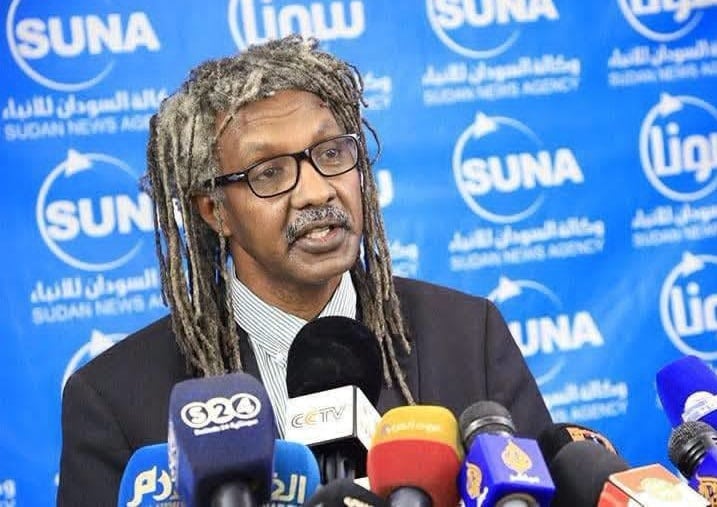
رئيس لجنة تحقيق مجزرة القيادة العامة ينضم لحوار الانقلاب السوداني
Summary
- Ismail Al-Taj, who headed the independent committee investigating the June 3, 2019, violations, has joined a political dialogue.
- His committee, formed on October 20, 2019, was mandated to investigate incidents around the General Command and states within a strict three-to-six-month timeframe.
- Al-Taj was previously criticized for perceived inaction and offering "distorting justifications" for the committee's lack of progress.
- He now leads the legal committee for a dialogue called by the October 25, 2021, coup leader, an individual his original committee was meant to investigate.
- The political dialogue is described as "drawn and directed" by the coup leader and the military de facto authority.
A Shifting Role in Sudan's Political Landscape
This creates a profound conflict of interest, as the former chief investigator now serves as a key legal figure within a process initiated by a potential subject of his prior inquiry.
The head of the independent committee tasked with investigating the June 3, 2019, violations, Ismail Al-Taj, has recently assumed a prominent role within a political dialogue initiated by the leader of the October 25, 2021, coup. This development sees the individual, previously characterized by perceived inaction in his investigative duties, now leading the legal committee for a dialogue orchestrated by the very authority he was mandated to scrutinize. The transformation from an investigator of alleged atrocities to a key facilitator of a military-backed political process has drawn significant attention.
For months following its establishment, the committee's head was described as failing to fulfill his responsibilities, offering what were termed "distorting justifications" for the lack of progress. This perceived delay occurred despite clear stipulations regarding the committee's operational timeline. Now, this same figure, who once oversaw the inquiry into the General Command massacre, has become a central participant in the ongoing political discussions, marking a significant shift in his public and professional engagement.
The Unfulfilled Mandate of an Investigation
The independent investigation committee was formally constituted on October 20, 2019, with a clear and critical mandate: to thoroughly investigate the violations that transpired on June 3, 2019. These incidents occurred in the vicinity of the General Command of the Armed Forces and across various states, necessitating a comprehensive and impartial inquiry. The decision establishing the committee explicitly granted it a three-month period to complete its work, with a provision for a single extension of an additional three months.
Despite these defined parameters and the gravity of its mission, the committee's head, Ismail Al-Taj, was observed to be 'procrastinating' in the execution of his duties for an extended period. His explanations for the committee's lack of progress were characterized as attempts to distort the reality of the situation. The failure to deliver on the initial investigative mandate, within the stipulated timeframe, stands in stark contrast to his subsequent engagement in the new political framework.
Conflict of Interest in a Directed Dialogue
The political dialogue in question was convened by the leader responsible for the October 25, 2021, coup, an individual who, by virtue of his position and actions, would logically fall within the scope of the very investigations Ismail Al-Taj's committee was established to conduct concerning the General Command massacre. This creates a profound conflict of interest, as the former chief investigator now serves as a key legal figure within a process initiated by a potential subject of his prior inquiry.
Furthermore, the nature of this dialogue is described as being "drawn and directed" by the coup leader and the prevailing military de facto authority. This characterization suggests a controlled environment for the discussions, raising questions about their independence and impartiality. Ismail Al-Taj's new role as the head of the legal committee for this politically guided process places him at the heart of an initiative shaped by the very forces whose actions he was once tasked with examining.
Broader Implications for Accountability
This particular development is viewed within a broader pattern of behavior attributed to totalitarian military regimes in Sudan. Such systems are frequently criticized for their adeptness at manipulating facts, fostering a culture of impunity, and systematically eroding the foundations of civil society, transparency, and accountability. These regimes are said to employ sophisticated mechanisms designed to distort narratives and dismantle civic structures.
The article highlights that there are individuals willing to participate in these processes of distortion and erosion. The transformation of the head of the investigation committee into a leading figure in a military-directed dialogue is presented as an example of this phenomenon, drawing a parallel to Kafka's "The Metamorphosis" to describe a "cognitive metamorphosis." This shift underscores concerns about the integrity of justice and the prospects for genuine accountability in Sudan.
Source
How does this affect you?
Get an AI analysis of this article grounded in your jurisdictions, practice areas, and any policy documents you've uploaded to Wansom.
Finish Reading the Full Story and the Expert Analysis.
Get the latest legal & regulatory intelligence in Sudan
Wansom is AI and can make mistakes.