
SPLM-IO Rejects South Sudan Election Delay: Calls NEC Move Unlawful
Summary
- The SPLM-IO Interim Leadership has rejected the National Elections Commission's decision to postpone South Sudan's general elections from December 22, 2026, to February 11, 2027.
- The party described the postponement as unlawful, unilateral, and deceptive, arguing that the NEC failed to provide sufficient legal grounds for the change.
- The NEC cited provisions of the amended Election Act and Article 189 of the Transitional Constitution, but the SPLM-IO stated that the conditions for postponement were not met.
- The SPLM-IO warned it might reconsider its participation if its concerns regarding the legality and preparation of the elections are not resolved.
- The party called for inclusive political dialogue and public disclosure of the legal basis for the election date change.
The Election Postponement and Rejection
The SPLM-IO will not endorse or engage in an electoral exercise that is inadequately prepared, legally questionable, or incapable of yielding legitimate democratic outcomes.
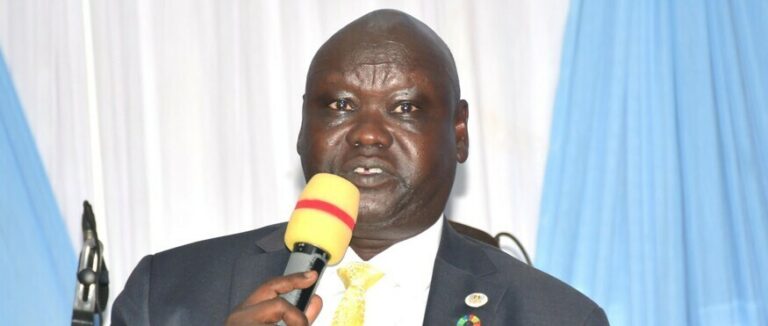
The SPLM-IO Interim Leadership in Juba, under the guidance of Caretaker Peacebuilding Minister Stephen Par Kuol, recently voiced strong opposition to the National Elections Commission's (NEC) decision to delay general elections. The commission moved the scheduled date from December 22, 2026, to February 11, 2027, effectively postponing the polls by nearly two months. The SPLM-IO, recognized as one of South Sudan's registered political entities, characterized this revised timetable as unlawful and indicated a potential reevaluation of its participation in the upcoming electoral process.
This rejection marks the fourth instance of a political party opposing the NEC's adjusted schedule. Previously, parties led by Kornelio Kon, the African National Congress (ANC), and the Union of Sudan African Parties (USAP) had also expressed their disapproval. Lasuba Loduro Wongo, the Deputy Chairperson of the SPLM-IO Interim Leadership, speaking from Juba, emphasized that the NEC had failed to present adequate legal justification for altering the election date. He explicitly stated that the SPLM-IO categorically rejects the change from the original December 22, 2026, timeframe, labeling the NEC's decision as unilateral, deceptive, and unlawful.
Legal Grounds and Constitutional Scrutiny
The National Elections Commission had cited specific provisions within the amended Election Act, namely Sections 57(1)(c) and 60(1), as the basis for its decision to postpone the elections. These sections permit such delays under particular circumstances, including situations of imminent danger that render polling impossible or the declaration of a state of emergency as outlined in Article 189 of the Transitional Constitution. However, the SPLM-IO, through its Deputy Chairperson Lasuba Loduro Wongo, contended that neither of these stipulated conditions had been met. Wongo asserted that there was no existing imminent threat or any official declaration of a state of emergency that could legitimately warrant a change to the established election date.
Furthermore, Wongo accused the NEC of overstepping its authority by intervening in electoral laws, describing this action as a significant error. The SPLM-IO maintains that the commission's establishment under the 2018 peace agreement necessitates consultation with all signatory parties, thereby questioning the NEC's power to make such unilateral decisions. The party has demanded that the commission publicly clarify the legal rationale behind the calendar change and disclose details of any consultations conducted prior to its announcement.
Conditions for Participation and Broader Implications
Despite their strong rejection of the revised election timetable, the SPLM-IO affirmed its commitment to participating in the elections, provided the entire process adheres strictly to legal frameworks. Lasuba Loduro Wongo clarified that the party is not against elections themselves but insists on the rule of law, which he underscored as fundamental for maintaining peace and stability in the nation. The party's expanded leadership had previously deliberated on the revised timetable during a consultative meeting on November 16, involving political bureau members, national leadership advisers, and state chairpersons.
Wongo called upon President Salva Kiir to initiate an inclusive political dialogue, bringing together all parties to the 2018 revitalized peace agreement, alongside the NEC, the Political Parties Council, and other pertinent institutions. The SPLM-IO stressed that elections in a post-conflict society like South Sudan must be built upon broad political consensus, mutual trust, and confidence among all political stakeholders, emphasizing that such elections are far more than a mere administrative exercise. The party also raised concerns regarding restrictions on the movement of some SPLM-IO Interim Leadership members, urging resolution without impacting voter registration or the election schedule, while affirming support for voter registration efforts.
The Threat of Boycott
The SPLM-IO issued a stark warning that it might reconsider its participation if its concerns remain unaddressed. The party's position is unequivocal: it will not endorse or engage in an electoral exercise that is inadequately prepared, legally questionable, or incapable of yielding legitimate democratic outcomes. This stance underscores the critical importance the SPLM-IO places on the integrity and legality of the electoral process, linking it directly to the potential for a boycott.
Practical Implications
Lawyers advising political parties or involved in South Sudan electoral processes must monitor the legal challenges to the National Elections Commission's revised timetable, as the SPLM-IO's rejection raises questions about the legality of the postponement and potential for a boycott, impacting electoral compliance and constitutional challenges.
Source
How does this affect you?
Get an AI analysis of this article grounded in your jurisdictions, practice areas, and any policy documents you've uploaded to Wansom.
Finish Reading the Full Story and the Expert Analysis.
Get the latest legal & regulatory intelligence in South Sudan
Wansom is AI and can make mistakes.