
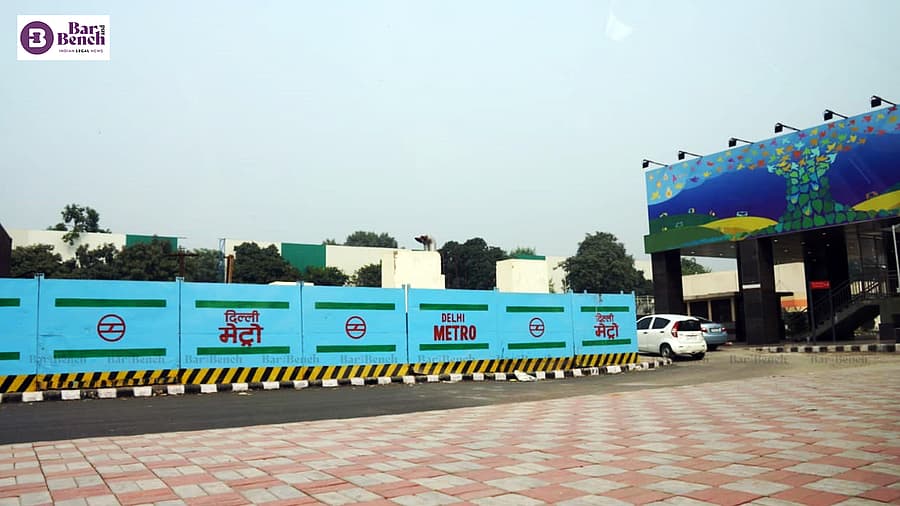
Supreme Court: Sparsh Kant Nayak Delhi Metro Closure Constitutional Challenge to Executive Power
Summary
- The Supreme Court is examining a plea challenging the constitutional legality of closing 17 Delhi Metro stations during CJP student protests in July.
- The plea questions whether executive authorities can restrict public utility access without specific statutory provisions or formal orders.
- The DMRC cited security reasons for the closures, which included stations like Janpath and Rajiv Chowk, announced via X updates.
- Justice Joymalya Bagchi noted that courts typically defer to the executive on law-and-order, but can intervene if discretion is exercised disproportionately.
- This case could clarify the limits of executive power to restrict public access to essential services during civil unrest.
Supreme Court to Examine Metro Closure Legality
This case could significantly clarify the boundaries of executive power to restrict public access to essential services, especially during periods of civil unrest.
India's highest court has initiated proceedings to scrutinize the constitutional implications of the Delhi Metro's decision to close multiple stations during student protests. The Supreme Court, on a recent Thursday, formally requested responses from key governmental and public utility entities, including the Central government, the Delhi Police, the Delhi Metro Rail Corporation (DMRC), and the Delhi government. This action stems from a plea filed by Sparsh Kant Nayak, which challenges the legality of restricting public access to essential services without clear legal backing.
The petition, titled *Sparsh Kant Nayak v. Union of India and Ors.*, specifically questions the closure of seventeen Delhi Metro stations in July. These closures occurred amidst student demonstrations organized by the Cockroach Janata Party (CJP), prompting concerns about the extent of executive authority in managing public utilities during periods of civil unrest. The DMRC had publicly attributed these closures to security concerns, communicating the service disruptions through updates on the social media platform X.
Among the stations affected by the Sparsh Kant Nayak Delhi Metro closure on July 20 were Janpath, Rajiv Chowk, Patel Chowk, Central Secretariat, and Seva Teerth. These particular stations were announced as closed until further notice, highlighting the significant disruption to daily commutes and public life. The Supreme Court's intervention underscores the gravity of the constitutional questions raised regarding such executive actions.
Constitutional Challenge to Executive Power
At the heart of the legal challenge is a fundamental question concerning executive power public utility restriction: can executive authorities direct the shutdown of public infrastructure, thereby limiting citizen access, in the absence of a specific statutory provision or a formal, explicit order? This query forms the core of the DMRC station closure constitutional plea, seeking clarity on the legal framework governing such decisions.
The Supreme Court bench, comprising Chief Justice of India Surya Kant and Justices Joymalya Bagchi and V Mohana, is presiding over this significant matter. During the proceedings, Justice Bagchi offered a crucial observation, acknowledging that courts typically grant deference to executive bodies when dealing with matters of law and order. However, he emphasized that judicial intervention becomes necessary when executive discretion is exercised in a disproportionate manner.
Justice Bagchi further remarked that the concept of Standard Operating Procedures (SOPs) often proves to be a 'mirage' in such situations, implying that stated protocols may not always adequately guide or constrain executive actions. This highlights the court's intent to examine the precise manner in which discretion was applied in the context of the CJP protests metro shutdown legality, particularly to determine if the executive's response was indeed disproportionate.
Why This Case Matters
This Supreme Court Delhi Metro station challenge holds substantial implications beyond the immediate issue of metro closures. It represents a critical opportunity for the judiciary to delineate the precise limits of executive power, especially when such power impacts fundamental rights like freedom of movement and access to public services. The ruling could establish a significant precedent for how public utilities are managed during protests and other public order situations across India.
The case will force a deeper examination into the balance between maintaining public order and safeguarding constitutional liberties. The court's eventual decision on whether the executive can restrict public access to essential services without explicit legal backing will shape future policy and practice. It will also provide guidance on what constitutes disproportionate executive discretion India, offering a clearer framework for accountability and oversight in governmental actions affecting the populace.
Practical Implications
Lawyers advising on public order, constitutional rights, or infrastructure management should monitor this case as it could clarify the limits of executive power to restrict public access to utilities during protests, setting a precedent for future actions and potentially impacting compliance requirements for public service providers.
Source
How does this affect you?
Get an AI analysis of this article grounded in your jurisdictions, practice areas, and any policy documents you've uploaded to Wansom.
Finish Reading the Full Story and the Expert Analysis.
Get the latest legal & regulatory intelligence in India
Wansom is AI and can make mistakes.