
MWCT Urges TNLA: South Sudan Wildlife Laws Land Policy Integration Crucial
Summary
- South Sudan's Ministry of Wildlife Conservation and Tourism urged the Transitional National Legislative Assembly to integrate wildlife protection laws into the national land policy, which was finalized in April 2026.
- The call specifically advocates for incorporating the Wildlife Conservation and Protected Areas Act, 2026, into future land legislation to safeguard protected areas and wildlife corridors.
- The Ministry's Land Use Planning Committee, established in March, aims to enhance land-use planning, protected area governance, and inter-institutional coordination.
- Parliamentary representatives called for broader consultations, including a multi-ministerial workshop, to clarify responsibilities and improve coordination on land use.
- Discussions also covered the operationalization of the recently passed Wildlife Act, concerns over illegal wildlife trade, and the need to domestically implement international agreements like CITES.
Call for Integrated Land Policy
The long-term viability of protected areas, wildlife corridors, and essential buffer zones is directly contingent upon land policies and legislation that explicitly acknowledge and safeguard their status and management requirements.
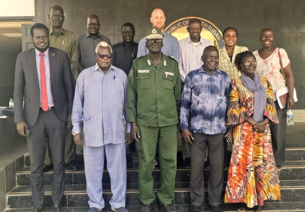
South Sudan's Ministry of Wildlife Conservation and Tourism (MWCT) has formally urged the Transitional National Legislative Assembly (TNLA) to ensure that the nation's wildlife protection statutes are comprehensively incorporated into the national land policy, which was finalized in April 2026, and all related land legislation. This critical appeal was made during a recent meeting where the MWCT's Land Use Planning Committee convened with the TNLA Standing Specialized Committee on Wildlife Conservation. Representatives from African Parks also participated in the discussions.
Bennet Bojo Nicholas, Secretary General of the MWCT's Land Use Planning Committee, articulated the ministry's position, emphasizing that the long-term viability of protected areas, wildlife corridors, and essential buffer zones is directly contingent upon land policies and legislation that explicitly acknowledge and safeguard their status and management requirements. He specifically requested parliamentary advocacy for the appropriate integration of the Wildlife Conservation and Protected Areas Act, 2026, into the developing Land Policy and subsequent legal frameworks governing land use planning South Sudan.
Strategic Importance of Wildlife Land
Beyond legislative integration, the MWCT's Land Use Planning Committee highlighted the necessity for enhanced coordination among various governmental bodies involved in mining, infrastructure development, agriculture, and general land development. This coordination is particularly crucial in areas where such activities could impact protected zones, wildlife populations, and surrounding communities. The committee, which was established in March via a ministerial order, aims to bolster land-use planning, improve governance of protected areas, advance wildlife conservation, and foster better collaboration between government institutions and local communities.
Martin Ring Malek, Deputy Chairperson of the MWCT's Land Use Committee, underscored the economic and ecological imperative of clearly identifying and allocating land for wildlife. He noted that such demarcation is vital not only for animal protection but also for supporting South Sudan's broader economy. Malek also pointed out existing challenges, such as communities occasionally encroaching upon protected areas, which leads to friction between local populations and wildlife authorities, advocating for closer cooperation between the two committees to mitigate these issues.
Legislative Engagement and Consultations
Responding to the ministry's call, Wilson Lodiong, Chairperson of the TNLA Standing Specialized Committee on Wildlife Conservation, advocated for extensive consultations on land use. He stressed a holistic view, stating that land belongs to both animals and people, and that water resources are an integral part of the land. To clarify responsibilities and improve inter-ministerial coordination, Lodiong proposed a two-to-three-day workshop involving the Ministries of Mining, Agriculture, Forestry and Wildlife, Water and Irrigation, alongside other relevant stakeholders.
Furthermore, Lodiong urged consultations with communities and authorities situated around key wildlife areas, including Nimule, Badingilo, Boma, and the Jonglei landscape. He confirmed that the national Land Policy has been finalized. Timmy Berke, Coordinator at African Parks South Sudan, reiterated his organization's commitment to providing ongoing support to both the MWCT and the parliamentary committee, acknowledging the recently passed Wildlife Act in February and its significant implications for diverse land uses.
Strengthening Enforcement and Compliance
The discussions extended to broader issues concerning wildlife governance, with parliamentarians requesting updates on the regulations currently being developed to operationalize the Wildlife Act. Significant concerns were also voiced regarding illegal wildlife killing, trade, and export, particularly in instances where influential individuals or security personnel might be implicated. Members of parliament emphasized their crucial oversight role and the need for stronger coordination with the MWCT to enhance enforcement efforts.
Additionally, parliament requested that relevant international wildlife agreements, such as CITES, be formally introduced through appropriate domestic legislative processes. This measure aims to ensure that South Sudan's international commitments regarding wildlife conservation are accurately reflected and implemented within its national legal framework, thereby strengthening South Sudan environmental law.
Practical Implications
Lawyers and compliance officers in South Sudan should closely monitor the finalization of the national Land Policy. Its integration of wildlife conservation provisions will likely introduce new land use restrictions, compliance obligations, and environmental impact considerations for clients involved in development, mining, agriculture, or infrastructure projects.
Source
How does this affect you?
Get an AI analysis of this article grounded in your jurisdictions, practice areas, and any policy documents you've uploaded to Wansom.
Finish Reading the Full Story and the Expert Analysis.
Wansom is AI and can make mistakes.