
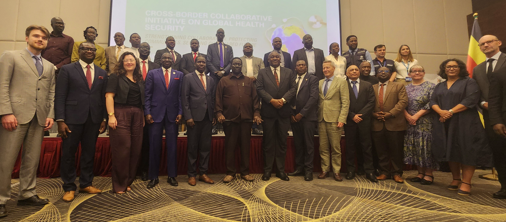
South Sudan, Uganda: Formalize Cross-Border Health Security MOU
Summary
- South Sudan and Uganda recently signed a Memorandum of Understanding (MOU) to enhance cross-border health security and public health cooperation.
- The agreement establishes a framework for joint surveillance, information sharing, and coordinated responses to disease outbreaks along their shared border.
- Officials cited the recent Ebola threat and the trans-boundary nature of infectious diseases as key motivators for institutionalizing this cooperation.
- Uganda shared insights from its recent Ebola outbreak, which involved 20 confirmed cases and was contained after 73 days.
- A joint implementation plan is now required to define clear priorities, responsibilities, timelines, and resource allocation for the agreement's operationalization.
A New Era for Cross-Border Health Security
This landmark agreement aims to transition the bilateral health relationship between the two nations from informal goodwill to a structured, institutionalized system for rapid, joint action against public health threats.
The governments of South Sudan and Uganda have recently formalized a crucial agreement aimed at bolstering their collaborative efforts against disease outbreaks and other public health crises. Signed in Juba by the health ministers of both nations, this Memorandum of Understanding (MOU) establishes a comprehensive framework designed to enhance cross-border cooperation. The primary objective is to facilitate joint surveillance, improve information sharing, and ensure a coordinated approach to preparedness and response for health emergencies along their shared frontier.
South Sudan's Health Minister, Luke Thompson Thoan Teny, emphasized the transformative nature of this agreement. He articulated that the MOU signifies a significant shift, moving the bilateral health relationship from a foundation of general goodwill and communication towards a more structured and institutionalized system capable of rapid, joint action. This strategic move acknowledges the inherent challenges posed by infectious diseases, which inherently disregard national boundaries, making isolated national responses increasingly ineffective in the face of potential regional emergencies.
This landmark agreement aims to transition the bilateral health relationship between the two nations from informal goodwill to a structured, institutionalized system for rapid, joint action against public health threats. It underscores a shared understanding that effective health security necessitates a unified front, particularly in regions prone to the rapid spread of pathogens.
Institutionalizing Joint Disease Response
The newly signed South Sudan Uganda cross-border health security MOU outlines several specific mechanisms to operationalize this enhanced cooperation. Key provisions include strengthening real-time epidemiological information sharing between the two countries, ensuring mutual notification of disease outbreaks, and implementing joint contact tracing initiatives. Furthermore, the agreement mandates coordinated disease surveillance efforts across the border region.
Beyond information exchange, the cross-border disease outbreak agreement also facilitates practical cooperation in critical areas. This encompasses the transfer of biospecimens for diagnostic and research purposes, the implementation of harmonized health screening procedures at all points of entry, and the coordinated deployment of mobile health teams during emergency situations. These measures are designed to create a seamless and efficient response mechanism, minimizing delays and maximizing the impact of interventions against public health threats.
For businesses operating across the South Sudan-Uganda border, these provisions signal a future of more integrated public health management. The harmonized screening and increased data sharing will necessitate adjustments to operational procedures, supply chain management, and employee travel policies to ensure compliance and mitigate public health risks effectively.
Lessons from Past Outbreaks Drive Urgency
The impetus for this robust health security Memorandum of Understanding was significantly influenced by recent public health challenges, particularly the persistent threat of Ebola. South Sudan's Vice President, Hussein Abdelbagi Akol, who oversees the Service Delivery Cluster, highlighted that the recent Ebola threat vividly demonstrated the critical need for countries sharing borders to strengthen their joint preparedness efforts. He underscored the reality that pathogens do not recognize checkpoints or national boundaries, warning that the shared border must not become a conduit for public health emergencies, asserting that "Health security is national security."
Uganda's Health Minister, Chris Baryomunsi, echoed this sentiment, describing the MOU as more than a mere formal agreement but rather a new chapter in South Sudan Uganda public health cooperation. He drew upon Uganda's direct experience with an Ebola outbreak earlier this year, which underscored the vital importance of early coordination and cross-border preparedness. During that outbreak, Uganda recorded 20 confirmed Ebola cases, including 15 Congolese nationals, four health workers, and one driver. Eighteen patients were successfully treated, while two unfortunately succumbed to the disease, with the outbreak officially declared contained after 73 days.
Minister Baryomunsi affirmed Uganda's readiness to share the valuable lessons learned from its recent Ebola preparedness South Sudan Uganda experience with its neighbor and other nations facing similar risks. Vice President Akol further committed that the South Sudanese government would support measures to dismantle administrative barriers that could impede timely emergency health responses, emphasizing a commitment to practical implementation.
Charting the Path Forward
While the signing of the South Sudan Uganda cross-border health security MOU marks a significant milestone, both nations acknowledge that it is merely the initial step. Uganda's Health Minister Baryomunsi stressed the necessity of developing a comprehensive joint implementation plan. This plan, he urged, must clearly define priorities, assign responsibilities, establish timelines, and allocate necessary resources to ensure the agreement's effective operationalization. He also proposed the establishment of a regional standby health workforce, capable of rapid deployment during public health emergencies, drawing parallels to existing regional security arrangements.
Tolbert Geewleh Nyenswah, the Africa CDC South Sudan Country Director, noted the timeliness of the agreement, given the ongoing regional threat from Ebola and other infectious diseases. He detailed South Sudan's proactive preparedness measures, which include identifying 15 high-risk counties and 22 priority points of entry. Surveillance and response activities are currently organized through strategic hubs located in Western Equatoria, Central Equatoria, and Eastern Equatoria.
South Sudan's revised six-month preparedness plan, spanning from August to January, requires over $30 million to support essential components such as laboratories, medical supplies, logistics, surveillance, and the protection of health workers. Nyenswah urged authorities and partners to intensify preparedness efforts before the detection of the first case of an outbreak, emphasizing that preventing the initial generation of transmission remains the most effective strategy for joint epidemiological information sharing and control.
Practical Implications
Lawyers and compliance officers advising clients with cross-border operations between South Sudan and Uganda should monitor the forthcoming joint implementation plan. This agreement signals new harmonized health screening, coordinated emergency responses, and increased data sharing, which will necessitate adjustments to operational procedures, supply chain management, and employee travel policies to ensure compliance and mitigate public health risks.
Source
How does this affect you?
Get an AI analysis of this article grounded in your jurisdictions, practice areas, and any policy documents you've uploaded to Wansom.
Finish Reading the Full Story and the Expert Analysis.
Wansom is AI and can make mistakes.