
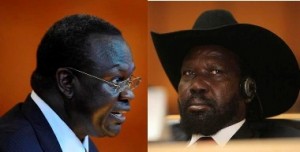
South Sudan: Opposition Urges Review of Peace Deal, Citing Constitutional Vacuum
Eight South Sudanese opposition groups and civil society organizations formally requested the regional bloc IGAD and the African Union Commission on September 23 to review the country's Revitalised Agreement on the Resolution of the Conflict in South Sudan (R-ARCSS) and convene an inclusive national political dialogue, asserting that the agreement had collapsed as a framework for governance.
This collective call from opposition and civil society groups signals a significant challenge to the legitimacy and efficacy of the current peace agreement and the transitional government in South Sudan. For legal practitioners, it underscores the deep political instability and the potential for a breakdown in the legal and constitutional order established by the R-ARCSS. It highlights concerns about the rule of law, democratic principles, and the integrity of the electoral process. The assertion of a "constitutional and political crisis" suggests that the legal framework governing the transition is perceived as failing, which can lead to increased legal disputes, challenges to government actions, and a volatile operating environment for businesses and international organizations.
The central legal instrument in question is the Revitalised Agreement on the Resolution of the Conflict in South Sudan (R-ARCSS), signed in 2018, which serves as the foundation for the country's transitional government and legal framework. The groups' concerns stem from recent amendments to the R-ARCSS in July and the National Elections Act, assented to by President Salva Kiir Mayardit on September 21. Specifically, they criticize the removal of the link between elections and the completion of a permanent constitution and national census, as well as amendments to the National Elections Act that would allow the incumbent president to remain in office during the electoral period while permitting the removal of the First Vice President and other Vice Presidents. These changes are argued to undermine the power-sharing structure enshrined in the R-ARCSS, which provides for a president, first vice-president, and other vice-presidents, and to violate the spirit of the agreement's commitments regarding security-sector unification, institutional reforms, transitional justice, and credible elections.
The key parties involved in this call for review include the eight South Sudanese opposition groups and civil society organizations (the signatories), IGAD Executive Secretary Workneh Gebeyehu, African Union Commission Chairperson Mahmoud Ali Youssouf (the recipients of the letter), President Salva Kiir Mayardit, the Revitalised Agreement on the Resolution of the Conflict in South Sudan (R-ARCSS), and the National Elections Act. The outcome of this appeal to IGAD and the African Union is not reported in the excerpt.
Attorneys advising clients in South Sudan must recognize the profound legal and political uncertainty stemming from the perceived collapse of the R-ARCSS and the contentious amendments to electoral laws. It is crucial to monitor the responses from IGAD, the African Union, and the South Sudanese government to these calls for review and dialogue. Practitioners should advise businesses on the heightened risks associated with an unstable political environment, including potential delays or challenges to elections, shifts in government policy, and increased civil unrest. Understanding the legal arguments surrounding the R-ARCSS and the National Elections Act is vital for assessing compliance risks and advocating for clients' interests in a rapidly evolving legal landscape. The demand for "minimum conditions for free, fair, peaceful" elections indicates that the legitimacy of any future electoral process will be heavily scrutinized, potentially leading to further legal and political challenges.
How does this affect you?
Get an AI analysis of this article grounded in your jurisdictions, practice areas, and any policy documents you've uploaded to Wansom.
Finish Reading the Full Story and the Expert Analysis.
Get the latest legal & regulatory intelligence in South Sudan
Wansom is AI and can make mistakes.