
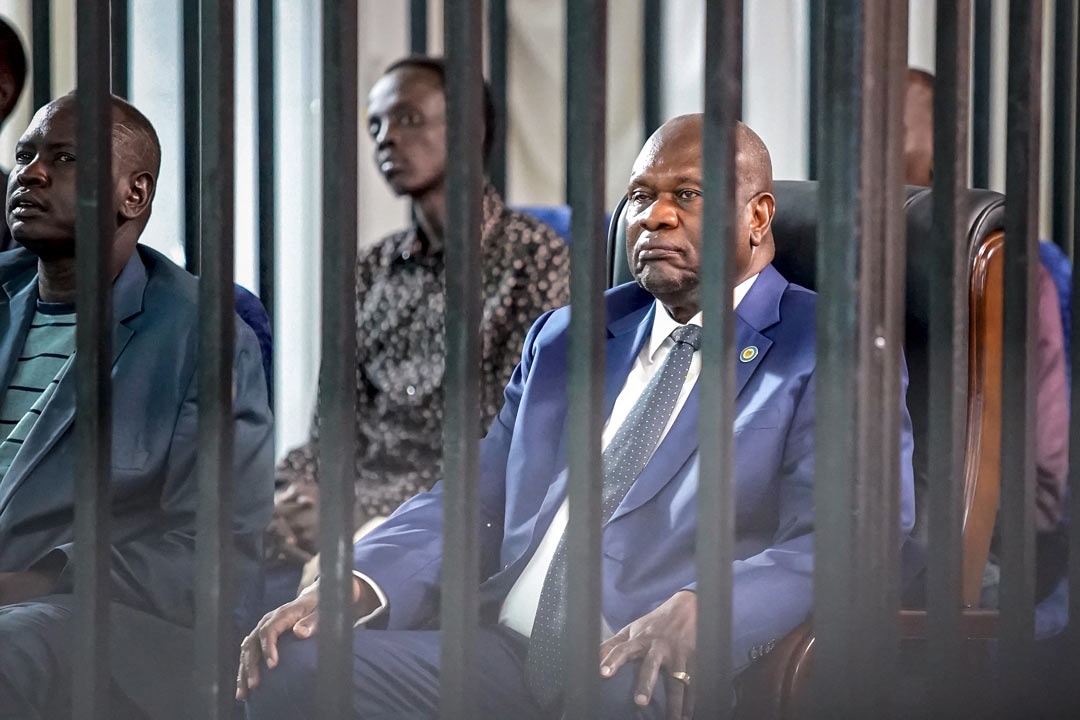
Riek Machar: South Sudan Malicious Prosecution Lacks Evidence
Summary
- The prosecution of Dr. Riek Machar Teny and seven co-accused is viewed as a test of South Sudan's justice system integrity against political interests.
- Central to the case is the alleged lack of credible evidence linking Dr. Machar to the command or control of the White Army in the March 2025 Nasir attack.
- Machar's defense describes the White Army as a decentralized, community-based force, challenging the prosecution's claims of command responsibility.
- Reports indicate the lead investigator admitted to a lack of material evidence connecting Machar to the White Army leader, weakening the alleged command link.
- The case raises concerns about fair trial guarantees, the handling of evidence, and the need for the court to remain independent of political pressure.
The Case Against Riek Machar
The state bears the responsibility of establishing individual criminal responsibility through admissible evidence, steering clear of reliance on ethnic association, political rivalry, or collective suspicion.
The ongoing prosecution of Dr. Riek Machar Teny and seven co-accused represents a significant challenge to the integrity of South Sudan's justice system. Critics contend that these criminal proceedings may serve as instruments for the ruling SPLM Party to eliminate political competitors, rather than uphold the rule of law. The central inquiry revolves around the absence of credible evidence linking Dr. Machar to the formation, command, financing, or effective control of the White Army during the March 2025 Nasir attack.
Dr. Machar has endured prolonged confinement, while his co-accused have also been detained. The state bears the responsibility of establishing individual criminal responsibility through admissible evidence, steering clear of reliance on ethnic association, political rivalry, or collective suspicion. Furthermore, any allegations of torture must be subjected to independent investigation, as detention alone does not substantiate torture, just as a criminal charge does not equate to guilt. This high-profile case raises serious questions about potential political persecution within the South Sudan justice system.
Evidentiary Challenges and Command Responsibility
A key aspect of the defense centers on the concept of command responsibility, which cannot be inferred solely from ethnic identity. In his reported testimony on October 26, 2026, Dr. Machar described the White Army as a decentralized, community-based force whose members organize locally, elect their own leaders, and operate without formal SPLA-IO registration, military rations, or an established chain of command connecting them to him. The prosecution is therefore obligated to demonstrate a relevant superior-subordinate relationship and the specific elements of criminal responsibility, rather than merely pointing to his Nuer identity.
Further scrutiny is warranted regarding the prosecution’s own investigative evidence. Reports indicate that lead investigator General Basilio Thomas Wani testified to a lack of material evidence linking Dr. Machar and his co-accused to White Army leader Tor Gile Thoan. If accurately reported, this admission significantly undermines the alleged command link, though it does not automatically resolve every charge. Moreover, political association itself does not constitute proof of conspiracy; the prosecution must present reliable evidence of an agreement and the requisite criminal intent. Public speeches, political relationships, or the mere participation of armed civilians in violence cannot substitute for proof that Dr. Machar ordered, planned, or knowingly contributed to the alleged crimes. Dr. Machar's reported account of communications aimed at de-escalating tensions and facilitating the safe reception of transitioning SSPDF soldiers also merits serious examination, as supporting documents could contradict the allegation that he directed an attack. The court should assess the complete communications, their context, and authenticity, rather than accepting selective interpretations.
Concerns have also been raised during the proceedings regarding digital forensics, device seizures, and the handling of technical evidence. The state must clearly differentiate between evidence and inference, and these issues demand transparent judicial scrutiny. Any evidence obtained unlawfully, deemed unreliable, or insufficiently authenticated must be evaluated strictly under applicable rules of evidence and South Sudan fair trial guarantees. While these evidentiary gaps do not automatically establish Dr. Machar’s innocence or confirm malicious prosecution, they underscore the critical need for the prosecution to prove every element beyond a reasonable doubt and for the court to maintain independence from political pressure.
Integrity of the Justice System
The broader context of this case highlights significant concerns about the South Sudan justice system integrity. The White Army, for instance, did not simply emerge with Dr. Machar’s entry into politics. These community-based armed youth formations possess deep historical roots, stemming from local systems of protection, cattle defense, intercommunal conflict, and the persistent security vacuum that successive administrations have failed to address. Their historical development predates South Sudan’s independence, and their precise origins and evolution require thorough historical documentation. The proliferation of modern firearms has, however, significantly transformed the operational capacity of these formations.
This prosecution serves as a crucial test for whether the justice system can resist SPLM Party judicial interference and uphold its mandate impartially. The outcome will have lasting implications for perceptions of fairness and due process in South Sudan, particularly in politically sensitive cases. The imperative for the court to remain independent of political pressure is paramount to ensuring a just resolution and safeguarding the rule of law.
Practical Implications
Lawyers advising clients in South Sudan, particularly those involved in politically sensitive matters, should note the critical concerns raised regarding the integrity and independence of the justice system. This case highlights the potential for politically motivated prosecutions, the challenges in establishing command responsibility, and the need for rigorous scrutiny of evidentiary standards and due process in high-profile cases.
Source
How does this affect you?
Get an AI analysis of this article grounded in your jurisdictions, practice areas, and any policy documents you've uploaded to Wansom.
Finish Reading the Full Story and the Expert Analysis.
Wansom is AI and can make mistakes.