
South Sudan: National Elections Act Amendments, RTGoNU Dissolution for Elections
Summary
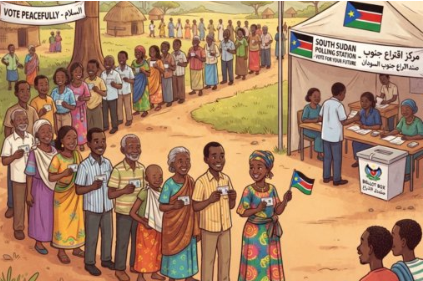
- South Sudan has amended its National Elections Act and dissolved the Revitalized Transitional Government of National Unity, sparking debate over the country's future.
- The 2018 R-ARCSS, designed to lead to constitutional governance and elections, has faced repeated implementation delays, with key reforms remaining incomplete.
- The amended electoral law removed requirements linking elections to a permanent constitution and national census, a move supported by those seeking to avoid further delays but criticized for weakening safeguards.
- Critics, while supporting elections, express significant concerns about security, human rights, and overall preparedness, citing warnings from the UN Commission on Human Rights.
- Voter registration had not begun when the electoral amendments were adopted and the transitional government dissolved, raising further questions about election readiness.
A New Chapter for South Sudan's Governance
The question is not simply whether elections can be held, but whether they can be conducted in a manner that commands broad public trust.
South Sudan finds itself at a critical juncture following recent significant shifts in its political landscape. The country has seen amendments to the **South Sudan National Elections Act** and the subsequent **Revitalized Transitional Government of National Unity dissolution**, actions that have ignited an intense national debate about the nation's future trajectory. These developments are viewed by supporters as essential steps to conclude years of protracted transitional governance, thereby empowering citizens to elect their leaders through democratic processes.
Conversely, critics voice concerns regarding the adequacy of existing political, security, and institutional conditions necessary for conducting credible elections. The fundamental question confronting South Sudan transcends any single legislative change or political decision. It centers on the country's capacity to transition from a governance model largely sustained by negotiated power-sharing arrangements to one founded on democratic accountability and electoral legitimacy.
Unfulfilled Promises of the R-ARCSS
The Revitalized Agreement on the Resolution of the Conflict in the Republic of South Sudan (**R-ARCSS**), signed in September 2018, was initially conceived to chart a course from conflict towards constitutional governance. This agreement established transitional institutions tasked with implementing reforms, maintaining stability, and preparing the nation for democratic elections. However, the implementation of the **R-ARCSS** has been plagued by repeated **R-ARCSS implementation delays South Sudan**.
Key provisions of the peace agreement, including aspects related to security sector reform, **South Sudan constitutional development**, and electoral preparations, have remained incomplete. Consequently, the transitional period has been extended on multiple occasions. While these extensions aimed to preserve peace and foster conditions conducive to a successful transition, they have also prompted legitimate inquiries into when a temporary arrangement ceases to be temporary. Proponents of the recent **South Sudan electoral reforms** contend that continued postponements risk undermining the original intent of the peace agreement, asserting that transitions must ultimately lead to a definitive outcome where citizens confer political legitimacy through elections, rather than through indefinitely renewed political arrangements.
The Contested Path to Elections
At the core of the current national discourse is a distinction between legality and legitimacy. A political decision, while adhering to established constitutional procedures, can still provoke significant concerns regarding its legitimacy, the nation's preparedness, and public confidence. This critical differentiation underpins the ongoing **South Sudan election preparedness debate**.
One of the most impactful changes introduced by the amended electoral law is the removal of prior requirements that linked the holding of elections to the completion of a permanent constitution and a national population census. Supporters argue these modifications are crucial to prevent further delays and keep the country on track towards elections. Critics, however, maintain that eliminating these prerequisites weakens important safeguards originally intended to bolster electoral credibility. Both arguments reflect valid democratic concerns, underscoring that the central question is not merely whether elections can be held, but whether they can be conducted in a manner that commands broad public trust.
Persistent Concerns Over Credibility and Safety
Many critics of the **Revitalized Transitional Government of National Unity dissolution** and the subsequent electoral push, while supporting elections in principle, primarily focus their concerns on the prevailing conditions surrounding such an undertaking. Security remains one of the most frequently cited challenges. The United Nations Commission on Human Rights in South Sudan has issued warnings that crucial political, security, and human rights safeguards necessary for a peaceful and credible election are still insufficient across various regions of the country.
The Commission emphasized that its concern is not about whether South Sudanese citizens should vote, but rather whether they can exercise their right to vote freely, safely, and without fear. Furthermore, questions regarding overall preparedness have also emerged. Reports indicate that voter registration had not yet commenced at the time the electoral amendments were adopted and the transitional government was dissolved, adding another layer to the **South Sudan election preparedness debate**.
Practical Implications
Lawyers and compliance officers advising on South Sudan operations should assess the implications of the amended National Elections Act and the dissolution of the RTGoNU on political stability, regulatory certainty, and the rule of law, given the ongoing debate about election preparedness and legitimacy. This development signals a significant shift in the country's governance framework that could impact business and human rights considerations.
Source
How does this affect you?
Get an AI analysis of this article grounded in your jurisdictions, practice areas, and any policy documents you've uploaded to Wansom.
Finish Reading the Full Story and the Expert Analysis.
Get the latest legal & regulatory intelligence in South Sudan
Wansom is AI and can make mistakes.