
Riek Machar: Nasir Violence Testimony Details Deadly 2021-2024 Clashes
Summary
- Former First Vice President Dr. Riek Machar testified about deadly clashes between SSPDF soldiers and local youth in Nasir County from 2021 to 2024.
- The violence, triggered by disputes over arrests, fishing nets, and firewood, resulted in civilian deaths, property destruction, and mass displacement, including 40,000 people from January to August 2024.
- CTSAMVM Report 2024/06, following a February 2024 incident, recommended redeploying SSPDF and deploying Necessary Unified Forces (NUF).
- CTSAMVM observed that SSPDF soldiers lacked training to comply with the Revitalised Agreement on the Resolution of the Conflict in South Sudan (R-ARCSS) and international laws.
- A Joint Defence Board investigation committee also recommended replacing SSPDF forces outside Nasir with the NUF.
Machar's Testimony on Persistent Nasir Violence
The observed lack of proper training among SSPDF soldiers to operate within legal frameworks further exacerbates the fragility of the security situation.
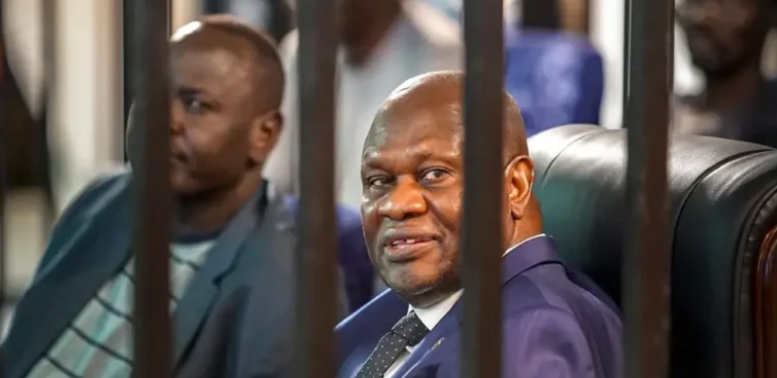
Dr. Riek Machar, the suspended First Vice President and fifth accused in the ongoing Nasir case, recently provided extensive testimony during the 127th session of his trial, detailing a series of deadly clashes that have plagued Nasir County, Upper Nile State, between 2021 and 2024. His account highlighted recurring confrontations between soldiers from the South Sudan Peoples Defence Forces (SSPDF) and local youth, which have resulted in civilian fatalities, widespread property destruction, and significant population displacement.
Machar described how these violent outbreaks were often triggered by seemingly minor disputes, including disagreements over arrests, the theft of fishing nets, the collection of firewood, and even a child custody issue. One early wave of violence occurred between February and March 2021, sparked by the SSPDF's arrest of two youth leaders following an altercation with government forces in Nasir town. This incident led to a significant standoff between the police, traditional chiefs, and the county commissioner on one side, and the SSPDF on the other, regarding the custody of the detained individuals.
A more recent and particularly intense period of fighting unfolded between February 10 and 12, 2024, ignited by the theft of fishing nets. This three-day conflict began on the night of February 10 when SSPDF forces attacked youth near a fishing camp, resulting in two youth killed and two wounded, alongside one injured SSPDF member. The following morning, a confrontation near Nasir town, reportedly involving soldiers collecting firewood, led to one youth's death, four civilians wounded, and two children drowning. The violence escalated further on the afternoon of February 12, claiming the lives of six soldiers and injuring two others. This episode forced civilians to flee Nasir town and surrounding villages, with homes and property looted, destroyed, and some houses set ablaze, while a helicopter gunship was deployed over Nasir as a show of force.
Further testimony from Machar outlined another protracted period of instability from January 20 to August 17, 2024, encompassing 12 distinct incidents across Nasir town and its environs. These clashes involved mutual killings and the shelling of civilian residential areas, specifically Dhour-ding, Nordeng, Koat, and Ketbek, ultimately displacing an estimated 40,000 people from their homes.
Regulatory Findings and Calls for Compliance
The Ceasefire and Transitional Security Arrangements Monitoring and Verification Mechanism (CTSAMVM) conducted an investigation into the February 2024 incidents, subsequently issuing report 2024/06. This report critically recommended the redeployment of SSPDF forces from the affected area and emphasized the urgent need for the deployment of the Necessary Unified Forces (NUF). CTSAMVM also observed that SSPDF soldiers lacked the requisite training to operate in adherence to the Revitalised Agreement on the Resolution of the Conflict in South Sudan (R-ARCSS), as well as recognized national and international laws.
In parallel, an investigation committee established by the Joint Defence Board (JDB) and the SSPDF itself reached similar conclusions. This committee recommended the redeployment of government forces stationed at Wec-Yar-Adiw, located outside Nasir, advocating for their replacement by the Necessary Unified Forces. These findings underscore a significant gap in the implementation of security sector reforms mandated by the R-ARCSS, highlighting a persistent challenge to achieving lasting peace and stability in the region.
Implications for Peace and Security Sector Reform
The detailed account of violence in Nasir, as presented by Dr. Riek Machar and corroborated by CTSAMVM's findings, reveals a concerning pattern of persistent insecurity and human rights violations that directly undermine the Revitalised Agreement on the Resolution of the Conflict in South Sudan. The recurring clashes, civilian casualties, and mass displacement underscore the critical failures in security sector reform and the urgent need for effective oversight and compliance with peace agreement provisions. The observed lack of proper training among SSPDF soldiers to operate within legal frameworks further exacerbates the fragility of the security situation.
The repeated recommendations for the deployment of the Necessary Unified Forces by both CTSAMVM and the Joint Defence Board's own investigation committee highlight a consensus on the path forward to stabilize Nasir County. The continued delay in deploying these unified forces, intended to provide a neutral and professional security presence, leaves civilians vulnerable and perpetuates cycles of violence. This situation serves as a stark reminder of the challenges in transitioning from conflict to sustainable peace, particularly when core security institutions struggle to adhere to agreed-upon standards and legal obligations.
Ultimately, the events in Nasir, as brought to light through Machar's testimony and the CTSAMVM report 2024/06, represent a significant test for the R-ARCSS and its signatories. Addressing these documented instances of SSPDF non-compliance and ensuring the timely deployment of the Necessary Unified Forces are crucial steps not only for the protection of civilians in Nasir but also for the broader credibility and success of the peace agreement across South Sudan.
Practical Implications
Lawyers monitoring the Revitalised Agreement on the Resolution of the Conflict in South Sudan (R-ARCSS) should note the detailed allegations of SSPDF non-compliance and human rights violations in Nasir, as testified by Riek Machar and corroborated by CTSAMVM report 2024/06. This highlights ongoing security sector reform failures and the critical need for Necessary Unified Forces deployment to prevent further civilian harm and uphold peace agreement provisions.
Source
How does this affect you?
Get an AI analysis of this article grounded in your jurisdictions, practice areas, and any policy documents you've uploaded to Wansom.
Wansom is AI and can make mistakes.