
South Sudan: Amended Elections Act Raises Legal Legitimacy Concerns
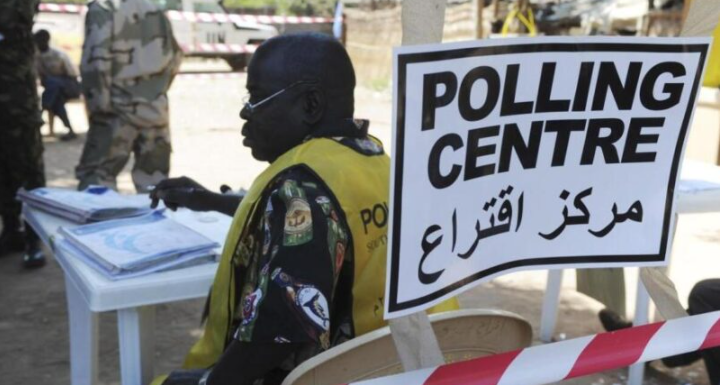
South Sudan is approaching 22 December 2026 with a question that extends far beyond whether ballot boxes will arrive at polling centers. The core issue is whether the nation is organizing an election capable of producing institutions that citizens recognize as representative, accessible, and legally legitimate. The amended National Elections Act was assented to on 21 September 2026. According to the government, the amendment harmonizes electoral law with the Transitional Constitution, operationalizes the decision to delink elections from the permanent constitution-making process and national census, and empowers the National Elections Commission (NEC) to conduct elections across all tiers of government. Under the enacted framework, the National Legislative Assembly is set at 270 members, State Legislative Assemblies at 58 members each, and Administrative Area Councils at 20 councilors each. These are consequential structural shifts. However, a smaller parliament does not automatically produce a better parliament. A new electoral law does not automatically deliver a more representative society. An election date, on its own, cannot manufacture democratic legitimacy. Policymakers must confront a fundamental question before nominations and voting solidify the outcomes: Who exactly will be represented in the 270-member Parliament, and where do persons with disabilities fit into that architecture? That question demands a clear, unambiguous answer. The Numbers Are Changing; The Principle Should Not South Sudan’s electoral framework has shifted dramatically over the past decade: The 2012 Elections Act established a 250-member National Legislative Assembly structured around 60% geographical representation, 25% womens representation, and 15% party lists. The 2023 Amendment expanded the Assembly to 332 members, reduced geographical representation to 50%, raised women’s representation to 35%, and retained the 15% party-list allocation, the 2026 Framework now compresses the national legislature to 270 members. This is not routine political bookkeeping. Every seat represents power, every percentage reflects a deliberate policy choice, and every constituency determines whose voice reaches the floor of Parliament. For this reason, the allocation of these 270 seats cannot remain a puzzle that voters, candidates, political parties, and civil society must decipher through rumors, leaked drafts, and conflicting public statements. During the legislative process in September, official parliamentary updates cited a 332-member Assembly. Following presidential assent, government reporting shifted to the 270-member figure. While the post-assent figure is the operational law, this discrepancy demonstrates why the authenticated legislation and its implementing schedules must be published immediately. An election law should not force citizens to become constitutional detectives. Women’s Representation Is Not a Footnote The 35% affirmative-action provision for women introduced in the 2023 law was a landmark commitment. It must be implemented with mathematical precision under the new framework. However, the 270-seat Parliament introduces a clear arithmetic dilemma: 35% of 270 is 94.5. Because there is no such thing as half a parliamentary seat, the NECs implementing rules must explicitly state how this fraction is converted into whole seats. This is no mere administrative detail. A single seat determines whether a candidate crosses the threshold, whether a constituency gains representation, and whether an affirmative-action mandate is truly fulfilled. Electoral mathematics becomes constitutional law the moment the ballots are counted. The Unresolved Disability Representation Question This brings South Sudans electoral debate to a particularly uncomfortable truth. During the 2023 legislative process, a proposal circulated advocating a 2% seat allocation for persons with disabilities—alongside 50% geographical representation, 35% women, 10% political parties,
How does this affect you?
Get an AI analysis of this article grounded in your jurisdictions, practice areas, and any policy documents you've uploaded to Wansom.
Finish Reading the Full Story and the Expert Analysis.
Get the latest legal & regulatory intelligence in South Sudan
Wansom is AI and can make mistakes.