
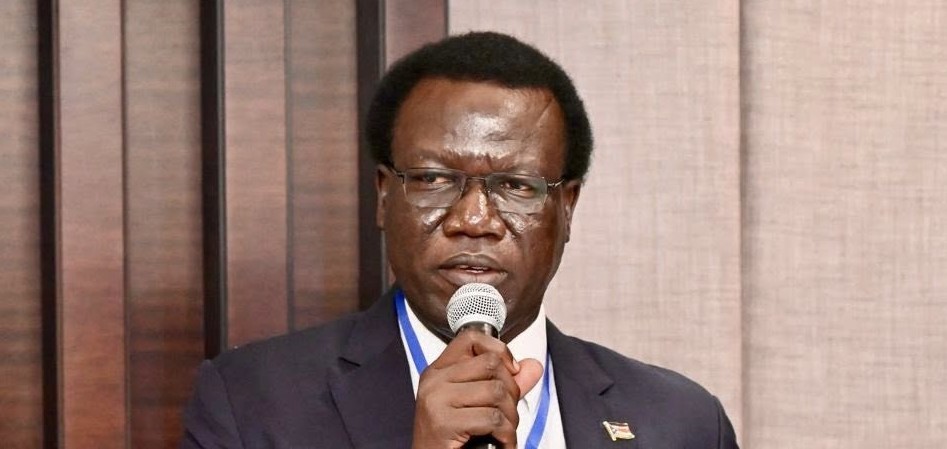
South Sudan Finance Minister: SSP 11.34T 2026/27 Budget Tabled Parliament
Summary
- South Sudan's Finance Minister Kuol Daniel Ayulo tabled a 11.34 trillion SSP budget for the 2026/27 fiscal year before parliament.
- The budget projects 79.5% of its revenue from oil, totaling SSP 9.01 trillion, with non-oil sources contributing SSP 2.32 trillion.
- Key spending includes SSP 1.43 trillion for wages, SSP 2.71 trillion for capital expenditure, and SSP 183 billion for the December 2026 elections.
- The government aims to broaden the tax base through digital collection and stronger administration, seeking to reduce its dependence on oil revenue.
- Parliamentary committees, including the Finance and Planning Committee and the Committee on Legislation and Legal Affairs, will review the budget and associated bills within 21 days.
What Happened
The parliamentary review of South Sudan's 2026/27 budget, particularly the Financial Bill 2026/27 and Appropriation Bill 2026/27, carries significant implications for various stakeholders.
South Sudan's Finance Minister, Kuol Daniel Ayulo, recently brought before parliament a proposed national budget totaling 11.34 trillion South Sudanese pounds (SSP) for the 2026/27 fiscal year. This significant financial plan, which projects nearly 80% of its income from oil revenues, was introduced more than two months after the fiscal year officially commenced in July. The presentation of the budget, themed 'Building Resilience and Economic Prosperity for Sustainable Peace,' occurs amidst ongoing economic challenges and in anticipation of general elections scheduled for December 22.
Minister Ayulo informed lawmakers that the total proposed resource envelope for the upcoming fiscal year stands at SSP 11.34 trillion. Of this, oil revenue is anticipated to contribute SSP 9.01 trillion, representing approximately 79.5% of the total, while non-oil sources are expected to generate SSP 2.32 trillion, or 20.5%.
Budgetary Details and Economic Context
The government's fiscal strategy for the 2026/27 budget aims to address current economic difficulties, bolster recovery efforts, strengthen state institutions, and enhance public services. To achieve these objectives, the proposed spending includes substantial allocations across various sectors. For instance, SSP 1.43 trillion is earmarked for wages and salaries, while SSP 1.33 trillion will cover goods and services, and SSP 2.71 trillion is designated for capital expenditure.
Crucially, SSP 183 billion has been allocated to facilitate the general elections slated for December 22, 2026. Significant funds are also directed towards transfers and grants, totaling SSP 933.4 billion, which includes disbursements to states, administrative areas, and counties. Furthermore, the budget accounts for payments related to oil production, with SSP 1 trillion allocated to Sudan, SSP 156 billion to oil-producing communities, and SSP 234 billion to the Ministry of Petroleum.
Key sectors receiving allocations include education with SSP 513 billion, health with SSP 371.1 billion, and infrastructure with a substantial SSP 1.187 trillion. Natural resources are allocated SSP 406 billion, public administration SSP 927.4 billion, and rule of law SSP 721.1 billion. Security services are set to receive SSP 710.89 billion, and social and humanitarian affairs SSP 17.74 billion. Accountability institutions, such as the Audit Chamber, National Bureau of Statistics, and Anti-Corruption Commission, are collectively allocated SSP 244.3 billion. A significant portion, SSP 5.728 trillion, falls under 'other payments,' reflecting a broad category of expenditures.
Minister Ayulo emphasized that the budget will be financed through domestic revenues, encompassing both oil and non-oil sources. The government intends to broaden its tax base through digital tax collection initiatives and more robust revenue administration, signaling a commitment to reducing its reliance on oil revenues and improving overall domestic revenue collection.
Legal and Parliamentary Scrutiny
Following its presentation, the draft budget was immediately referred to parliamentary committees for thorough scrutiny by Speaker Joseph Ngere Paciko. The crucial Finance and Planning Committee has been tasked with undertaking a comprehensive review of the overall budget document. Concurrently, the associated legislative instruments, specifically the Financial Bill 2026/27 and the Appropriation Bill 2026/27, have been directed to the Committee on Legislation and Legal Affairs for their detailed examination.
These committees are expected to report their findings back to parliament within a 21-day timeframe. Additionally, Speaker Paciko mandated that each committee must scrutinize the budgets of their respective spending agencies and present their reports to their designated clusters within one week, underscoring the urgency and depth of the parliamentary review process.
Why It Matters
The parliamentary review of South Sudan's 2026/27 budget, particularly the Financial Bill 2026/27 and Appropriation Bill 2026/27, carries significant implications for various stakeholders. The government's stated aim to broaden the tax base through digital collection and stronger administration suggests potential shifts in tax policy and revenue generation mechanisms that could directly impact businesses operating within the country. The detailed allocations across sectors, from infrastructure to public administration and security, will dictate the operational environment and priorities for the coming fiscal year.
Given the backdrop of an economic crisis and upcoming general elections, the budget's approval process will be closely watched for its potential to stabilize the economy and fund critical national priorities. The emphasis on reducing dependence on oil revenue, while still relying heavily on it, highlights the ongoing challenge of fiscal diversification. Lawyers and compliance officers should monitor the outcomes of the committee reviews for any changes in regulatory frameworks or spending priorities that could necessitate adjustments to business strategies or compliance obligations.
Practical Implications
Lawyers and compliance officers should monitor the parliamentary review of South Sudan's 2026/27 budget, particularly the Financial and Appropriation Bills, for potential changes in tax policy, revenue generation, and sector-specific spending that could impact business operations or compliance obligations.
Source
How does this affect you?
Get an AI analysis of this article grounded in your jurisdictions, practice areas, and any policy documents you've uploaded to Wansom.
Finish Reading the Full Story and the Expert Analysis.
Wansom is AI and can make mistakes.