
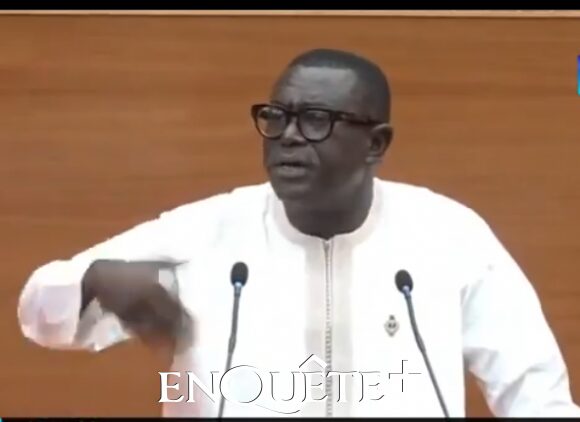
Seydou Diouf: Dénonce le « Chantage » Contre les Hauts Fonctionnaires sur la LFR
Summary
- Seydou Diouf has denounced "blackmail" against high-ranking officials implementing the revised finance law (LFR).
- He urged President Bassirou Diomaye Faye to intervene and stop these threats.
- Diouf insists state agents must follow the LFR decree, which he considers legally binding unless challenged by a court.
- He believes a parliamentary resolution lacks binding legal force and defends the President's use of Article 42 for state continuity.
- Diouf warned that Pastef's criticisms could disrupt ongoing negotiations with the International Monetary Fund (FMI).
What Happened
He emphasizes that state agents must strictly adhere to the decree that formally enacted the LFR, asserting that this decree remains the definitive legal reference unless it is legally challenged and overturned by a competent court.
Seydou Diouf, a prominent figure and former president of the National Assembly's Finance Committee, has publicly condemned what he describes as "blackmail" targeting high-ranking government officials. These officials are currently tasked with the crucial responsibility of implementing the revised finance law (LFR). Diouf has directly appealed to the President of the Republic, Bassirou Diomaye Faye, urging immediate intervention to halt these coercive tactics. He emphasizes that state agents must strictly adhere to the decree that formally enacted the LFR, asserting that this decree remains the definitive legal reference unless it is legally challenged and overturned by a competent court.
Diouf's strong remarks come amidst significant contention surrounding the LFR's enforcement through a presidential decree. This method of implementation has drawn criticism, notably from executives within the Pastef party, who voiced their objections to President Faye's decision on November 19, 2026. Diouf, however, maintains that these officials should resist any external pressures and continue to uphold their duties as prescribed by the existing legal framework. His intervention highlights a growing tension between political factions regarding the proper execution of national financial legislation.
Legal Context
Central to Seydou Diouf's argument is the legal standing of the decree that brought the revised finance law into effect. He firmly states that this decree holds legal authority and should be followed by all state agents until such a time as a judicial body might invalidate it. Furthermore, Diouf has addressed the role of parliamentary actions in this dispute, asserting that any resolution passed by the National Assembly does not possess binding legal force. This distinction is crucial in his view, separating legislative expressions of concern from actual legal mandates.
Diouf also defended President Bassirou Diomaye Faye's decision to invoke Article 42 of the constitution, a measure intended to ensure the continuity of state functions. He challenged members of parliament who disagree with the legality of this presidential action to pursue their concerns through the appropriate legal channels, specifically by taking the matter to court. In response to the ongoing debate, the National Assembly has indicated its intention to seek detailed justifications concerning the legal foundations, financial amounts, and overall compliance of the involved financial operations with existing authorizations.
Why It Matters
The ongoing dispute, as highlighted by Seydou Diouf, carries significant implications for Senegal's international financial relationships. Diouf has specifically called upon Senegal's international partners and the International Monetary Fund (FMI) to honor the agreements previously established with the government. He expressed concern that the criticisms emanating from the Pastef party could potentially jeopardize the sensitive negotiations currently underway with the FMI. According to Diouf, these international partners should not be swayed by the opinions of individuals whom he believes do not genuinely represent the will of the Senegalese populace.
This situation underscores a delicate balance between domestic political dissent and the nation's economic stability on the global stage. Diouf's plea to international bodies suggests an effort to safeguard Senegal's credibility and financial standing, particularly in the context of ongoing discussions with key financial institutions. The controversy surrounding the LFR and the alleged "blackmail" against officials could, if unresolved, create an environment of uncertainty that might deter foreign investment or complicate future financial aid agreements, thereby impacting the country's broader economic trajectory.
Source
Source: Original reporting via EnQuête+
How does this affect you?
Get an AI analysis of this article grounded in your jurisdictions, practice areas, and any policy documents you've uploaded to Wansom.
Finish Reading the Full Story and the Expert Analysis.
Get the latest legal & regulatory intelligence in Senegal
Wansom is AI and can make mistakes.