
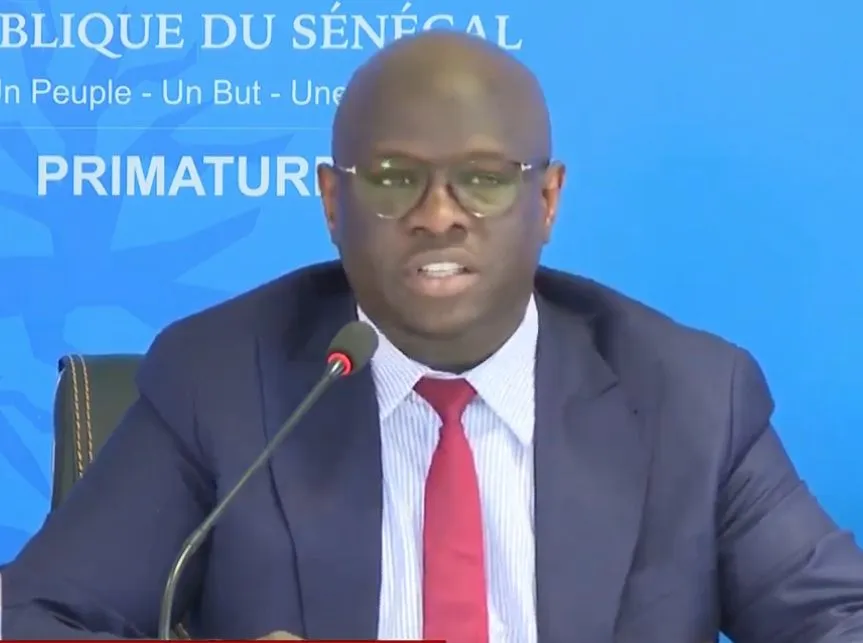
Senegal Ministry: Senelec 320 Billion Arrears Threaten Power
Summary
- The Senegal Ministry of Energy and Petroleum has issued a warning about 320 billion CFA francs in arrears linked to Senelec.
- The Fonds spécial de soutien à l’énergie has fully depleted its 250 billion CFA francs in credits.
- The ministry cautioned about an impending risk of fuel shortages.
- A significant threat of widespread power cuts, or délestages Sénégal, has also been highlighted.
What Happened
The Senegal Ministry of Energy and Petroleum has recently issued a stark warning regarding the nation's energy sector, highlighting significant financial challenges that could lead to widespread disruptions.
The Senegal Ministry of Energy and Petroleum has recently issued a stark warning regarding the nation's energy sector, highlighting significant financial challenges that could lead to widespread disruptions. Central to this alert is the revelation of 320 billion CFA francs in arrears directly associated with Senelec, the national electricity company. This substantial debt poses a critical threat to the stability of the country's power supply.
Further exacerbating the situation, the Fonds spécial de soutien à l’énergie, a crucial mechanism designed to bolster the energy sector, has completely depleted its allocated 250 billion CFA francs in credits. The exhaustion of these funds removes a vital financial buffer, leaving the system more vulnerable to external shocks and operational strains.
Consequently, the ministry's communication explicitly cautioned the public about an impending risk of fuel shortages across the country. This warning was coupled with a serious alert regarding the potential for extensive power cuts, known locally as délestages Sénégal, indicating a looming Senelec electricity shortage risk that could impact households and industries alike.
Context of the Crisis
The financial strain on Senelec, evidenced by the 320 billion CFA francs in arrears, points to underlying systemic issues within Senegal's energy infrastructure. As the primary provider of electricity, Senelec's financial health is intrinsically linked to the nation's energy security. These outstanding debts likely stem from various factors, including operational costs, subsidies, or uncollected revenues, all of which impede the company's ability to invest in maintenance and expansion.
The role of the Fonds spécial de soutien à l’énergie is typically to provide financial stability, often by subsidizing fuel costs for power generation or supporting critical infrastructure projects. Its current state of depletion, having exhausted its 250 billion CFA francs, signifies that a key financial safety net is no longer available. This absence makes the energy sector particularly susceptible to price fluctuations in global markets or unforeseen operational challenges.
The combined effect of Senelec's significant arrears and the empty energy support fund creates a precarious environment. Without these financial resources, the ability to procure necessary fuel for power plants or to manage peak demand becomes severely constrained, directly contributing to the Senegal power cuts warning and the broader risk of energy instability.
Why It Matters
The Senegal Ministry of Energy and Petroleum's alert carries profound implications for the nation's economy and its citizens. A potential Senelec electricity shortage risk, manifested through widespread délestages Sénégal, would severely disrupt daily life, impacting everything from household activities to essential public services. Businesses, particularly those reliant on consistent power, face significant operational challenges, potential production losses, and increased costs if they must resort to alternative power sources.
Moreover, the warning of fuel shortages adds another layer of complexity to the crisis. Such shortages could cripple transportation, affect agricultural output, and impede industrial operations, creating a ripple effect across various economic sectors. The cumulative impact of both electricity and fuel scarcity could slow economic growth and deter foreign investment in Senegal.
The current situation underscores the urgent need for robust financial management and strategic planning within the energy sector. Addressing the 320 billion CFA francs in arrears linked to Senelec and replenishing the Fonds spécial de soutien à l’énergie are critical steps to avert a deeper energy crisis and ensure the long-term stability and development of Senegal.
Practical Implications
Lawyers should advise clients operating in Senegal, particularly those with energy-intensive operations or critical supply chains, to assess their exposure to potential energy shortages and load shedding (délestages). This situation could lead to force majeure claims, contractual breaches, or significant operational disruptions, necessitating a review of business continuity plans and supply agreements.
Source
How does this affect you?
Get an AI analysis of this article grounded in your jurisdictions, practice areas, and any policy documents you've uploaded to Wansom.
Finish Reading the Full Story and the Expert Analysis.
Wansom is AI and can make mistakes.