
Sénégal: LFR 2026 Rejeté Deux Fois, Programme FMI en Jeu
Summary
- Senegal's Assemblée nationale twice rejected the Loi de finances rectificative (LFR) 2026 in late October.
- This legislative deadlock threatens Senegal's financial credibility and its ongoing $2.2 billion financing program with the International Monetary Fund (IMF).
- The country's public debt stands at nearly 130% of GDP, and a previous IMF program was frozen due to undeclared debt.
- Former deputies Cheikhou Oumar Sy and Théodore Chérif Monteil warn of delayed disbursements and reduced funding for social sectors if the LFR is not approved.
- They propose promptly providing requested documents and separating the LFR vote from other political disputes to resolve the impasse.
Legislative Stalemate
The authors specifically highlight the risk that limited access to concessional financing and an increase in borrowing costs could lead to a reduction in available resources for vital sectors such as education, healthcare, and youth employment.
The Commission des finances et du contrôle budgétaire within Senegal's Assemblée nationale recently rejected the proposed Loi de finances rectificative (LFR) 2026 for a second time, signaling a significant legislative impasse. This critical budget adjustment bill, designated as project n° 40/2026, initially faced rejection on October 23, along with several governmental amendments. Following this initial setback, Minister of Economy, Finance and Planning Cheikh Diba requested on October 27 that the text be returned to the commission to facilitate institutional dialogue, but it was subsequently rejected again on October 30.
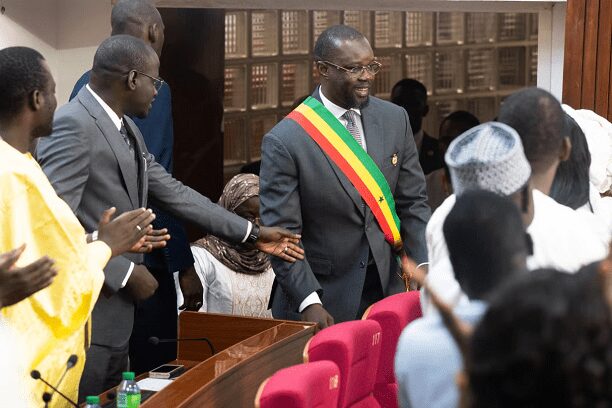
This repeated rejection of the LFR 2026 has prompted concerns from Cheikhou Oumar Sy and Théodore Chérif Monteil, two former members of parliament, who have publicly warned about the potential repercussions of this deadlock. The political landscape surrounding this issue is further complicated by the stance of Ousmane Sonko, President of the National Assembly and leader of the opposition party PASTEF, who declared on October 19 that his party, PASTEF, would not support either the LFR 2026 or the initial finance bill for 2027, asserting that the government's proposals were inconsistent with their political agenda. The former deputies emphasize the need for the government and the parliamentary majority to prioritize national interests amidst this disagreement.
Economic Pressures and IMF Engagement
The ongoing legislative difficulties surrounding the Sénégal LFR 2026 rejet FMI are unfolding against a backdrop of considerable economic strain and active negotiations with the International Monetary Fund (IMF). Senegal is currently engaged in discussions with the IMF regarding a new financing program, making the approval of the LFR 2026 a crucial element of the country's agreed budgetary trajectory with the institution. An agreement for a $2.2 billion program over 36 months was reached with IMF services on September 1, 2026, though it still awaits approval from the Fund's board of directors.
This situation is exacerbated by Senegal's challenging financial indicators. A recent reevaluation of public accounts revealed that the national debt has escalated to nearly 130% of the Gross Domestic Product. Furthermore, a previous $1.8 billion IMF program was frozen after the disclosure of undeclared debt, and Moody's has downgraded Senegal's sovereign rating to Ca, reflecting increased risk. The nation is also facing substantial debt service obligations for 2026, estimated at approximately $9.6 billion, with $4.3 billion allocated to principal repayments.
Consequences and Proposed Path Forward
The former deputies, Cheikhou Oumar Sy and Théodore Chérif Monteil, have articulated serious concerns that the current blocage budgétaire could severely undermine Senegal's financial credibility, strain its relationships with international partners, and impede its capacity to fund essential public services. They caution that a delay in securing approval for the IMF program could postpone anticipated financial disbursements, diminish support from other financial partners, and complicate ongoing discussions regarding debt restructuring. The authors specifically highlight the risk that limited access to concessional financing and an increase in borrowing costs could lead to a reduction in available resources for vital sectors such as education, healthcare, and youth employment.
While acknowledging the legitimacy of the parliamentary majority's requests for specific documents—including the Forvis Mazars report, the Inspectorate General of Finance's report on non-financial debt, and the September budget execution report—the former parliamentarians suggest alternative methods for parliamentary oversight. They propose that control could be effectively exercised through hearings, written inquiries, or investigative commissions, rather than making the adoption of the rectifying budget conditional on these demands. To resolve the current impasse, Sy and Monteil advocate for the prompt submission of the requested documents, a separation of the LFR vote from other political disagreements, and the pursuit of budgetary adjustments that align with IMF commitments while safeguarding priority investments and social spending.
Practical Implications
The repeated rejection of the LFR 2026 and its potential impact on Senegal's IMF program signals increased financial instability and potential delays in public funding. Lawyers advising clients with government contracts, investments, or financial interests in Senegal should closely monitor these developments, as they could affect project viability, payment schedules, and the overall economic and regulatory environment, potentially necessitating contract renegotiations or reassessments of financial commitments.
Source
Source: Reporting based on Lactuacho.
How does this affect you?
Get an AI analysis of this article grounded in your jurisdictions, practice areas, and any policy documents you've uploaded to Wansom.
Finish Reading the Full Story and the Expert Analysis.
Wansom is AI and can make mistakes.