
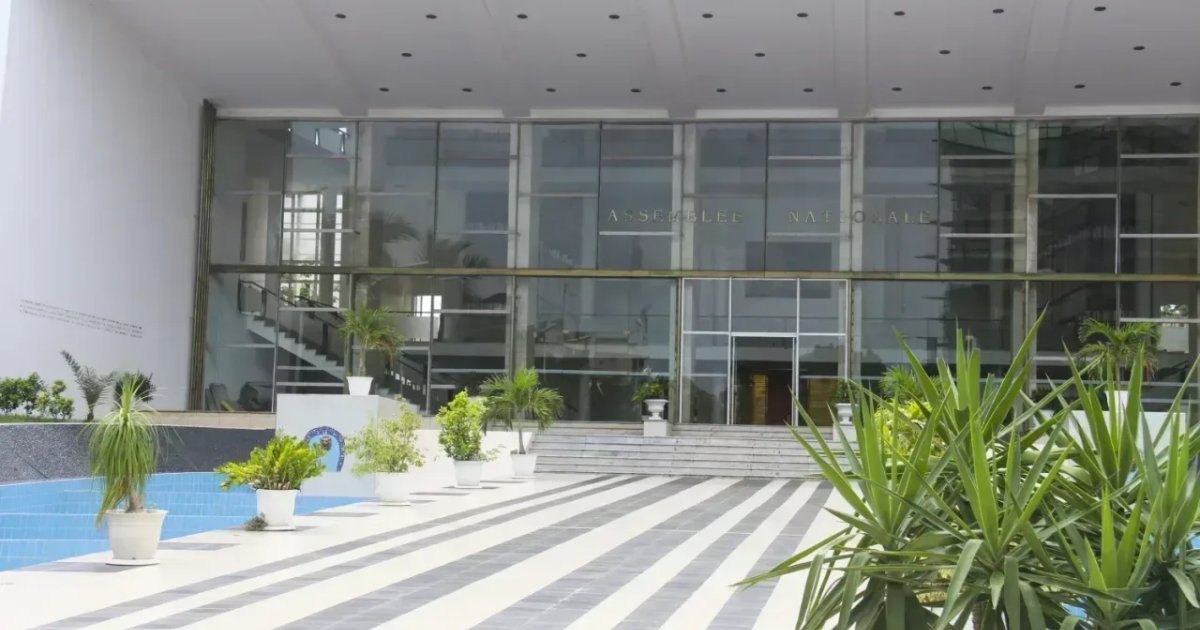
Sénégal Budget Rectificatif 2026 Plénière: Lawmakers to Vote on Revised Bill
Summary
- Senegalese deputies are scheduled to convene on November 3 to review the 2026 rectifying budget.
- The proposed rectifying finance bill, loi n° 40/2026, has already faced two rejections in commission.
- The revised budget projects revenues of 5,848.7 billion CFA francs and a deficit of 1,735.2 billion CFA francs, representing 7.6% of GDP.
- The ruling Pastef party, holding 130 of 165 parliamentary seats, has five demands and opposes certain budget choices and financing methods.
- The Ministry of Economy, Finance, and Plan warns that continued budgetary uncertainty could hinder 2026 financing and strain the state treasury.
Crucial Budget Vote Looms
The Ministry of Economy, Finance, and Plan has warned that prolonged budgetary uncertainty could complicate the mobilization of necessary financing for 2026 and intensify existing pressures on the state's treasury.
Senegalese lawmakers are set to convene on November 3 at 10 AM for a plenary session dedicated to reviewing the 2026 rectifying budget. This crucial meeting follows two prior rejections of the rectifying finance bill in commission, a situation fueled by ongoing political disagreements and deep-seated tensions over proposed budgetary allocations. The convocation for this session, signed by Ousmane Sonko, who presides over the Assemblée nationale, was issued on October 30, placing the projet de loi n° 40/2026 firmly on the legislative agenda.
This proposed legislation significantly alters the nation's financial outlook for 2026. Under the revised plan, projected revenues are scaled back to 5,848.7 billion CFA francs, a notable decrease from the initial budget's 6,188.8 billion CFA francs. Concurrently, the anticipated deficit is projected to swell to 1,735.2 billion CFA francs, which translates to 7.6% of the country's Gross Domestic Product. The stakes involved in this vote extend far beyond mere accounting adjustments, touching upon the fundamental financial stability of Sénégal.
Political Stalemate and Financial Implications
Prime Minister Ahmadou Al Aminou Mohamed Lô has publicly urged the Pastef party to endorse the revised budget, emphasizing its critical importance, particularly in the context of the International Monetary Fund's (IMF) interests. Despite Pastef holding a substantial majority with 130 out of 165 seats in the Assemblée nationale, the party does not dispute the necessity of a budget revision in principle. However, it maintains strong opposition to specific budgetary choices, the proposed methods of financing, and the guarantees extended to the Parliament.
Warnings and Way Forward
The Ministry of Economy, Finance, and Plan confirmed that it had provided detailed responses to the deputies on October 30, addressing their concerns. The Ministry has issued a stark warning, indicating that prolonged budgetary uncertainty could significantly complicate the mobilization of necessary financing for 2026 and intensify existing pressures on the state's treasury. This underscores the urgency of resolving the current impasse surrounding the projet de loi de finances rectificative Sénégal.
Prior to the upcoming plenary, on October 27, Cheikh Diba, the Minister charged with Finances, had requested that the budget project be returned to commission to allow for further discussions and negotiations. The impending plenary session is therefore poised to be a decisive moment, tasked with bridging the divide between the government and the parliamentary majority. Their collective agreement is essential for the successful adoption of the new budgetary trajectory and to mitigate the potential financial instability facing Sénégal.
Practical Implications
Lawyers advising clients on public procurement or state contracts in Senegal should closely monitor the final adoption of the 2026 rectifying budget, as its rejection and ongoing political disagreements signal potential instability in state finances and could impact payment schedules or project viability. Compliance officers should be aware of possible future legislative changes related to revenue generation or expenditure adjustments.
Source
How does this affect you?
Get an AI analysis of this article grounded in your jurisdictions, practice areas, and any policy documents you've uploaded to Wansom.
Finish Reading the Full Story and the Expert Analysis.
Wansom is AI and can make mistakes.