
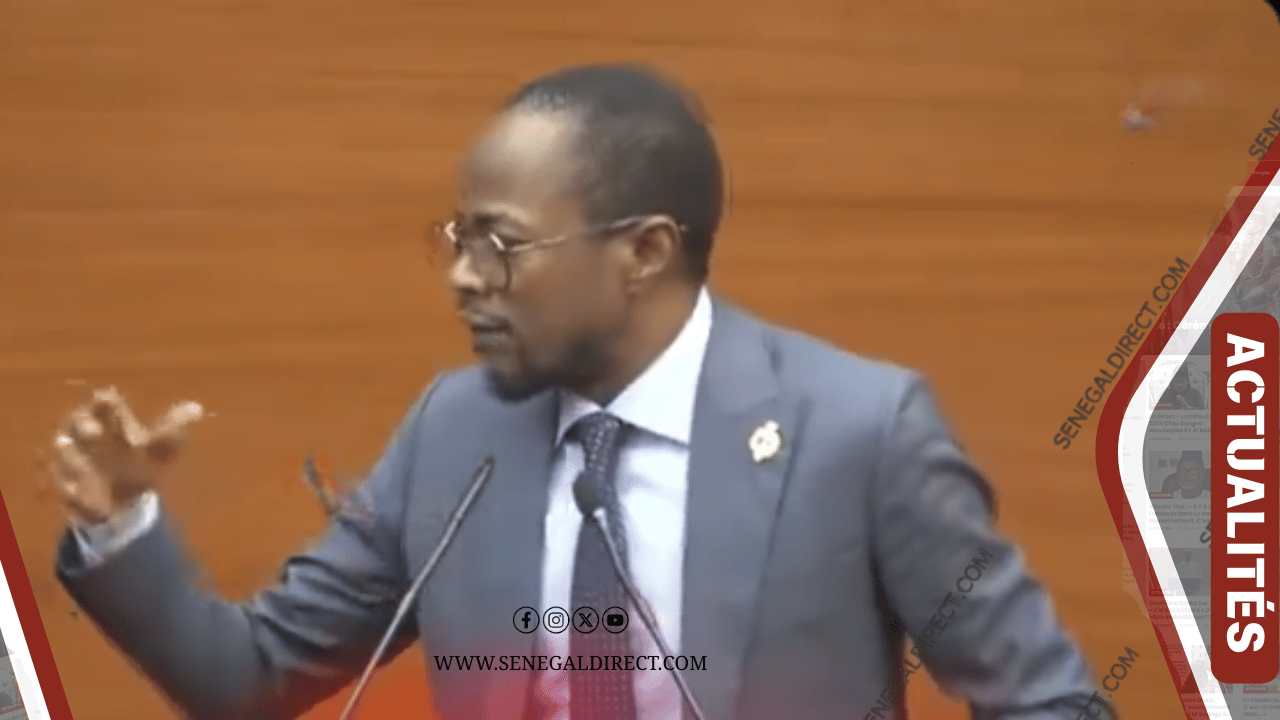
Sénégal: Abdou Mbow Challenges Pastef's Rapport Constitutionnel on Article 37
Summary
- Opposition deputy Abdou Mbow contested the constitutional report on Article 37, alleging it failed to accurately reflect reservations and divergences during its examination.
- Mbow accused Pastef deputies of accepting governmental amendments without sufficiently detailing internal debates, but his motion to halt proceedings was rejected.
- The `proposition de loi n°33/2026` initially focused on the President's asset declaration but was expanded to include the Prime Minister and National Assembly President.
- Tensions also surfaced within the presidential camp, with the Coalition Diomaye Président, through Aminata “Mimi” Touré, accusing Pastef of diverting the President's initial project.
- Mbow characterized the revision as 'theatre,' accusing the President and National Assembly President of using institutions for political rivalries, raising concerns about transparency and the legitimacy of the process.
Parliamentary Clash Over Constitutional Report
The procedural disputes, particularly those concerning the accurate representation of divergences in the Abdou Mbow Pastef rapport constitutionnel Sénégal, raise significant questions about the legitimacy of the process and could potentially form grounds for future legal challenges or impact the interpretation of the adopted constitutional provisions.
A significant parliamentary dispute erupted during discussions concerning the `modification article 37 Constitution Sénégal`, pitting opposition deputy Abdou Mbow against the ruling Pastef group. In a plenary session held on Monday, Mbow vociferously challenged the constitutional report presented to lawmakers, alleging that the document failed to accurately represent the reservations and differing viewpoints expressed during the text's committee examination. He specifically accused Pastef deputies of accepting governmental amendments without adequately detailing the divergences that arose during internal deliberations.
Abdou Mbow contended that the report should have provided a more precise account of the discussions and the various positions articulated within the commission. His preliminary question, aimed at halting the ongoing examination of the constitutional text, was ultimately rejected during the plenary session. Ousmane Sonko, serving as the President of the National Assembly, addressed Mbow from the podium, reiterating the established rules governing parliamentary debates and affirming the majority's decision to proceed with the legislative process.
Evolution of the Asset Declaration Reform
The constitutional reform at the heart of these debates originated from `proposition de loi n°33/2026`, which initially focused on a specific aspect of the `déclaration patrimoine président Premier ministre Sénégal` for the President of the Republic. However, during its review in commission, the Government introduced an amendment that broadened this obligation, extending it to include the Prime Minister and the President of the National Assembly. Consequently, the scope of the reform now encompasses the three principal authorities across both the executive and legislative branches.
These expanded provisions, particularly the inclusion of additional officials, were the subject of considerable internal debate within the parliamentary majority before their eventual acceptance. It is precisely these unacknowledged internal discussions and the conditions under which the amendment was approved that form the core of Abdou Mbow's criticism, as he argues the report submitted to the plenary session does not sufficiently describe these crucial details.
Deepening Political Fissures and Accusations
Beyond the procedural disagreements, the constitutional reform has also exposed underlying tensions within the presidential camp itself. The Coalition Diomaye Président, through Aminata “Mimi” Touré, who currently serves as High Representative of the Senegalese President and a member of the United Nations Advisors Committee, has accused Pastef deputies of deviating from the initial project championed by the President. This suggests that the discord extends beyond the technical content of the text, encompassing concerns about how the parliamentary majority is steering the reform in the name of the head of state.
Abdou Mbow further escalated his criticism, characterizing the entire constitutional revision as a “theatre” orchestrated at the highest levels of the state. He directly accused both the President of the Republic and the President of the National Assembly of leveraging institutional processes to advance their own political rivalries, thereby questioning the integrity and purpose of the legislative exercise.
Stakes for Transparency and Democratic Process
As the examination of the law proposal continues within the National Assembly, ongoing discussions are centered on critical issues such as `transparence révision constitutionnelle Sénégal`, the specifics of asset declaration, and the practical modalities for implementing the proposed new provisions. The current sequence of events highlights more than just the new obligations imposed on three key public officials.
It also brings into sharp focus the control over the parliamentary calendar and the fidelity of the final adopted text to the President's original legislative intent. The procedural disputes, particularly those concerning the accurate representation of divergences in the `Abdou Mbow Pastef rapport constitutionnel Sénégal`, raise significant questions about the legitimacy of the process and could potentially form grounds for future legal challenges or impact the interpretation of the adopted constitutional provisions.
Practical Implications
Lawyers advising on Senegalese constitutional law or legislative affairs should closely monitor the ongoing parliamentary debates and the final report on the Article 37 amendment, as procedural disputes over transparency and accurate representation of divergences could form grounds for future legal challenges or impact the legitimacy and interpretation of the adopted constitutional provisions.
Source
How does this affect you?
Get an AI analysis of this article grounded in your jurisdictions, practice areas, and any policy documents you've uploaded to Wansom.
Wansom is AI and can make mistakes.