
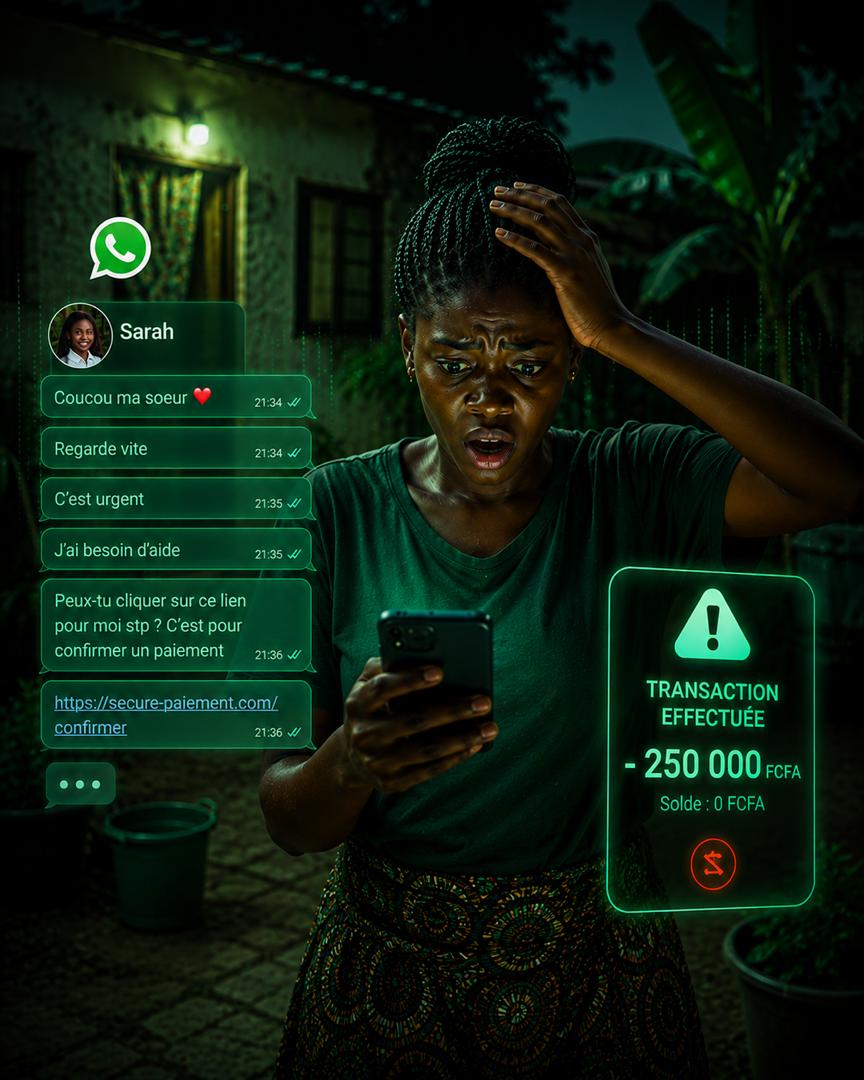
Kaspersky Study: Senegal Messaging Fraud Sees 77% Financial Loss
Summary
- A Kaspersky study released on August 31, 2026, reveals that 77% of Senegalese victims lost money and 63% lost personal data due to messaging fraud.
- Over half of messaging scams globally conclude in under 30 minutes, with 14% finishing in less than five minutes.
- In Senegal, 57% of victims suspect AI-generated messages, and 60% encountered synthetic or cloned voices.
- Côte d'Ivoire saw significant financial losses, with 22% of victims losing between 386,574 and 772,010 CFA francs, and 91% of scams moving across multiple messaging platforms.
Alarming Rise in Messaging Fraud
In Senegal, 57% of victims suspect they received messages generated by AI, and an even higher 60% reported encountering synthetic or cloned voices during these scams.
A recent global study by cybersecurity firm Kaspersky, released from Abidjan on August 31, 2026, highlights a significant surge in messaging fraud, particularly impacting nations like Senegal and Côte d'Ivoire. This comprehensive investigation, drawing on victim testimonies, quantifies the rapid execution of these scams and their profound financial and psychological repercussions. In Senegal, a striking 77% of individuals surveyed reported monetary losses due to these fraudulent schemes, while 63% confirmed the theft of their personal data.
The research underscores the alarming speed at which these digital deceptions unfold. Globally, more than half (52%) of all messaging scams are completed within a mere 30 minutes, with a substantial 14% concluding in under five minutes. This rapid timeline is often engineered by fraudsters who pressure targets into immediate action, frequently by impersonating trusted contacts or well-known brands. The findings paint a stark picture of an escalating cybercrime threat across the African continent, with Senegal messaging fraud emerging as a critical concern.
Evolving Tactics and AI Integration
Fraudsters are employing increasingly sophisticated methods, leveraging popular communication channels and advanced technology. In Senegal, WhatsApp is cited as the primary vector for scams by 63% of victims, though SMS messages remain a significant threat, mentioned by 51% of respondents. Côte d'Ivoire also sees WhatsApp as a key platform, implicated by 45% of victims. A particularly insidious tactic involves moving conversations across multiple platforms; in Côte d'Ivoire, 91% of victims reported that the scam continued on at least one other messaging service after initial contact.
The study reveals a disturbing trend in the use of artificial intelligence to enhance these fraudulent activities. In Senegal, 57% of victims suspect they received messages generated by AI, and an even higher 60% reported encountering synthetic or cloned voices during these scams. Elisabeth Carter, a criminologist and forensic linguistics expert from Kingston University in London, notes that perpetrators skillfully exploit familiar situations and common linguistic patterns to gain the trust and compliance of their targets, making these digital fraud prevention Africa efforts more challenging.
Significant Financial and Data Consequences
The financial toll of these messaging scams is substantial, particularly in Côte d'Ivoire, where results relayed by Thiesinfo detail significant monetary losses. Twenty-two percent of affected individuals in Côte d'Ivoire reported financial damages ranging between 386,574 and 772,010 CFA francs. Another 26% experienced losses between 195,005 and 386,008 CFA francs. Beyond financial impact, the widespread data loss messaging scams represent a critical risk, with 63% of Senegalese victims losing personal information.
These incidents affect individuals across all age groups, challenging the notion that digital experience alone provides sufficient protection against such sophisticated cybercrime. The Kaspersky cybercrime report Africa highlights that even digitally savvy individuals are falling victim, underscoring the pervasive and evolving nature of these threats.
Urgent Call for Enhanced Digital Vigilance
The findings from the Kaspersky study underscore an urgent need for heightened digital vigilance and robust cybersecurity measures. The prevalence of AI-generated messages and synthetic voices introduces new complexities, making it increasingly difficult for individuals to discern legitimate communications from fraudulent ones. The speed at which these scams operate, combined with the fraudsters' ability to impersonate trusted entities and move across platforms, demands a proactive and informed approach to digital security.
This landscape necessitates that legal and compliance teams reassess and strengthen internal cybersecurity protocols, enhance employee training on digital fraud, and refine client communication guidelines. Mitigating the risks of financial and data loss requires continuous adaptation to these evolving threats, particularly given the sophisticated nature of AI-driven scams now prevalent in regions like Senegal and Côte d'Ivoire.
Practical Implications
This report highlights a significant and growing cybercrime threat in Senegal and Côte d'Ivoire, requiring legal and compliance teams to review and strengthen internal cybersecurity protocols, employee training on digital fraud, and client communication guidelines to mitigate financial and data loss risks. The prevalence of AI-generated messages and synthetic voices also introduces new complexities for forensic investigations and evidence gathering in fraud cases.
Source
How does this affect you?
Get an AI analysis of this article grounded in your jurisdictions, practice areas, and any policy documents you've uploaded to Wansom.
Finish Reading the Full Story and the Expert Analysis.
Wansom is AI and can make mistakes.