
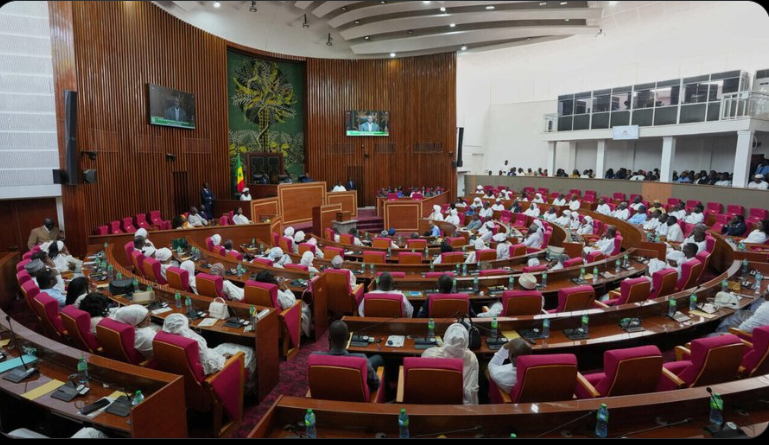
Sénégal Propositions Loi: Assemblée Nationale Validates Special Funds, Carceral Health
Summary
- On September 2, 2026, the Bureau of Senegal's National Assembly validated the admissibility of two draft laws.
- One proposal is an organic law modifying existing legislation on special funds.
- The second proposal addresses health provisions within correctional facilities.
- Following validation, both draft laws were referred to the President of the Republic for an opinion.
Recent Legislative Developments
The advancement of these two Sénégal propositions loi carries substantial implications for both public administration and social welfare.
The Bureau of the National Assembly in Senegal recently advanced two significant legislative proposals, signaling potential shifts in the nation's governance and social policy. On Wednesday, September 2, 2026, this parliamentary body formally validated the admissibility of two distinct draft laws following a dedicated session focused on their initial review. This procedural step marks a crucial stage in the legislative journey for these Sénégal propositions loi, moving them closer to potential enactment.
One of the proposals under consideration is an organic law, specifically designed to introduce modifications to existing legislation pertaining to special funds. This législation fonds spéciaux Sénégal aims to refine or redefine the framework governing these financial instruments, which often play a critical role in public finance and specific governmental initiatives. The precise nature of the amendments was not detailed in the initial report, but the designation as an "organic law" suggests it will address fundamental aspects of the legal structure it seeks to alter.
The second draft law addresses the vital area of health within correctional facilities. This santé en milieu carcéral Sénégal loi seeks to establish or update legal provisions concerning healthcare services provided to individuals incarcerated across the country. The focus on santé en milieu carcéral Sénégal underscores a growing emphasis on human rights and welfare within the penal system, potentially leading to enhanced standards or new obligations for the administration of prisons. The Bureau Assemblée nationale Sénégal validation of these texts indicates their readiness for further parliamentary scrutiny.
The Legislative Process Unfolds
The validation of admissibility by the Bureau of the National Assembly represents a pivotal procedural milestone in droit parlementaire Sénégal. This action confirms that the proposed texts meet the formal requirements for legislative consideration, including proper drafting, adherence to constitutional principles, and alignment with the legislative agenda. It is not an endorsement of the content itself, but rather a green light for the proposals to proceed through the subsequent stages of parliamentary review.
Following this crucial Bureau Assemblée nationale Sénégal validation, the Bureau took the next step by formally referring both Sénégal propositions loi to the President of the Republic. This referral is made for the purpose of obtaining the President's opinion on the drafts. The presidential review is an integral part of the legislative process in Senegal, allowing the head of state to provide input before the bills potentially move to a full debate and vote within the Assemblée nationale Sénégal propositions loi framework. This consultative step ensures executive awareness and feedback on significant legislative initiatives.
The referral to the President underscores the collaborative, albeit distinct, roles of the legislative and executive branches in shaping national law. While the Assemblée nationale Sénégal holds the power to legislate, the President's opinion can influence the trajectory and final form of proposed laws, particularly those of significant national import like the ones concerning fonds spéciaux and santé en milieu carcéral. This interaction is a standard practice designed to foster a comprehensive approach to lawmaking.
Implications for Governance and Society
The advancement of these two Sénégal propositions loi carries substantial implications for both public administration and social welfare. The proposed organic law concerning législation fonds spéciaux Sénégal could lead to more transparent, accountable, or efficient management of public funds earmarked for specific purposes. Any modification to an organic law typically has far-reaching effects, as such laws often define the fundamental organization and functioning of public institutions or the exercise of constitutional rights. Enhanced oversight or new operational guidelines for these funds could impact various sectors reliant on government allocations.
Similarly, the draft law focused on santé en milieu carcéral Sénégal loi addresses a critical area of human rights and public health. Improved legal provisions for healthcare in prisons could lead to better medical services, sanitation, and overall living conditions for inmates, aligning Senegal with international standards for correctional facilities. This legislative initiative reflects a commitment to addressing the often-overlooked health needs of incarcerated populations, potentially reducing the spread of diseases and ensuring more humane treatment. The eventual enactment of such a law would represent a significant step forward in social justice and public health policy within the country.
The combined movement of these Assemblée nationale Sénégal propositions loi through the legislative pipeline highlights the National Assembly's active role in addressing key national challenges. From financial governance to human welfare, these proposals, once fully deliberated and potentially enacted, could reshape important aspects of Senegalese law and policy. The ongoing process, from Bureau Assemblée nationale Sénégal validation to presidential review and eventual parliamentary debate, exemplifies the dynamic nature of droit parlementaire Sénégal in responding to evolving societal needs.
Practical Implications
Lawyers and compliance officers in Senegal should monitor the legislative progress of these two draft laws, as their eventual enactment could introduce new regulations or obligations concerning special funds management or healthcare provisions within the correctional system, impacting relevant clients or operations.
Source
How does this affect you?
Get an AI analysis of this article grounded in your jurisdictions, practice areas, and any policy documents you've uploaded to Wansom.
Finish Reading the Full Story and the Expert Analysis.
Wansom is AI and can make mistakes.