
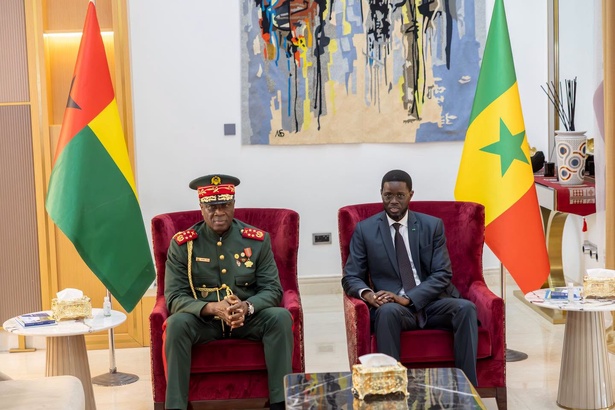
Horta N'Tam Guinée-Bissau: Election Report Signals Delay, Senegal Mediates
Summary
- Guinea-Bissau's National Electoral Commission has declared December's legislative and presidential elections technically impossible.
- General Horta N’Tam is negotiating with Senegalese authorities for an electoral postponement to avoid ECOWAS sanctions.
- Senegal demands a precise, consensual timeline for constitutional order and the lifting of restrictions on opposition parties, including the PAIGC.
- Discussions also address border security, with Senegal requesting that Guinea-Bissau's territory not be used by the Casamance independence movement (MFDC).
- Joint trans-border patrols were approved in August, and the PAIGC submitted a manifesto denouncing the political situation and detention of opponents.
Diplomatic Maneuvers Amidst Electoral Uncertainty
Senegal, acting as a mediator under an ECOWAS mandate, has indicated a willingness to consider a technical postponement.
Guinea-Bissau faces a potential delay in its upcoming legislative and presidential elections, originally slated for December, as the Bissau-Guinean National Electoral Commission (CNE) has declared their technical impossibility. This electoral uncertainty has prompted high-level discussions between General Horta N’Tam, the head of Guinea-Bissau's transitional government, and Senegalese authorities. These negotiations aim to secure Senegal's endorsement for a revised electoral timeline, a crucial step for the junta to avert potential sanctions from the Economic Community of West African States (ECOWAS).
General Horta N’Tam traveled to Dakar on October 31, 2026, coinciding with the Youth Olympic Games, to engage in these critical talks. Senegal, acting as a mediator under an ECOWAS mandate, has indicated a willingness to consider a technical postponement. However, Dakar insists on a clear and consensual roadmap for returning to constitutional order. Additionally, Senegalese President Bassirou Diomaye Faye has called for the immediate removal of restrictions imposed on opposition political parties, including the African Party for the Independence of Guinea and Cape Verde (PAIGC).
Regional Mediation and Constitutional Demands
The ongoing dialogue between Guinea-Bissau and Senegal is part of a broader regional effort to stabilize the political situation in Bissau. Prior to General Horta N’Tam's visit, Senegalese officials undertook preparatory missions to Bissau. On October 22, Major General Philippe Dia, who serves as the Inspector General of the Senegalese Armed Forces, visited the capital. This was followed by a visit on October 26 by Minister Cheikh Niang, who engaged with both transitional authorities and civil society representatives, fulfilling Senegal's role as an ECOWAS-appointed mediator.
A key condition for Senegal's acceptance of an electoral delay is the establishment of a precise and mutually agreed-upon schedule for the country's return to democratic governance. This emphasis on constitutional order aligns with ECOWAS's regional stability objectives and its stance against unconstitutional changes of government. The demand to lift restrictions on opposition groups, particularly the PAIGC, underscores the regional body's push for inclusive political processes and respect for democratic freedoms.
Cross-Border Security Concerns
Beyond electoral matters, the discussions between Guinea-Bissau and Senegal also encompass significant cross-border security issues. Senegal has explicitly requested assurances that Bissau-Guinean territory will not be utilized as a sanctuary or rear base by the Movement of Democratic Forces of Casamance (MFDC), an independence movement active in Senegal's southern Casamance region. This demand follows recent actions by the Senegalese army, which dismantled the headquarters of the MFDC's internal and local political wing in Ziguinchor.
To enhance regional security cooperation, a plan for joint trans-border patrols, spanning a duration of twelve months, was endorsed by the general staffs of both Senegal and Guinea-Bissau in August. This initiative highlights the shared commitment to addressing security challenges along their common border. Furthermore, the Senegalese contingent within the ECOWAS stabilization force in Guinea-Bissau is reportedly providing substantial support to the transitional authorities, as noted by the publication Exclusif.
Political Opposition and Regional Support
The political landscape in Guinea-Bissau remains complex, with opposition voices actively seeking regional intervention. On October 23, the PAIGC, alongside several other organizations, submitted a manifesto to Senegalese diplomatic representatives. This document critically denounced the prevailing political situation within Guinea-Bissau and highlighted the detention of political opponents, urging international attention to these concerns.
The multifaceted negotiations, encompassing electoral delays, constitutional reforms, and security cooperation, underscore the intricate relationship between domestic political stability in Guinea-Bissau and broader regional dynamics. Senegal's role, both as a neighboring state with its own security interests and as an ECOWAS mediator, is pivotal in shaping the trajectory of Guinea-Bissau's transition and its path towards democratic elections.
Practical Implications
Lawyers advising clients in Guinea-Bissau should closely monitor the political negotiations surrounding the election postponement and CEDEAO's potential response, as these developments could impact the constitutional order and lead to regional sanctions. Compliance officers should also assess the implications of the Casamance security discussions on regional stability and cross-border operations.
Source
Source: Original reporting via Exclusif.
How does this affect you?
Get an AI analysis of this article grounded in your jurisdictions, practice areas, and any policy documents you've uploaded to Wansom.
Finish Reading the Full Story and the Expert Analysis.
Wansom is AI and can make mistakes.