
Senegal CRSE: Law 2021-32 Bolsters Electricity Regulatory Reforms
Summary
- An October 2026 workshop in Dakar detailed significant Senegal electricity regulatory reforms, including an enhanced CRSE and a new Electricity Code.
- Law n° 2021-32 of July 9, 2021, strengthens the CRSE's independence, expands its powers, and establishes a CRSE dispute resolution committee.
- The MCA-Senegal II electricity sector program, valued at $650 million, is nearing completion, focusing on network modernization, access, and sectoral reforms.
- New measures include the Senegal Electricity Code implementation, third-party access to the transmission network, and the Guichet unique SIGTEN energy operators platform for administrative streamlining.
- Public concern over recent power outages underscores the urgency for transparent governance and clear timelines for major energy projects like Yaakaar-Teranga.
Overview of Key Energy Reforms in Senegal
The forthcoming Electricity Code, alongside provisions for third-party access to the transmission network, is set to fundamentally reshape market dynamics and foster greater competition within the sector.
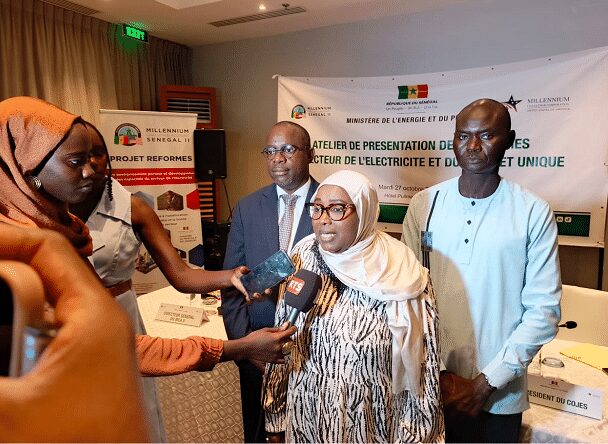
A significant workshop held in Dakar on Tuesday, October 27, 2026, brought together the Ministry of Energy and Petroleum, MCA-Senegal II, and the Collectif des journalistes économiques du Sénégal (COJES) to discuss pivotal reforms within the nation's electricity sector. The discussions centered on comprehensive electrical reforms, sector governance, investment strategies, and critical consumer protection measures. This gathering occurred amidst widespread public concern over recent power outages, which have prompted questions regarding energy sector planning and the execution of ongoing projects.
Journalists were specifically invited to play a role in explaining and monitoring these evolving developments. Oumar Diop, the Director General of MCA-Senegal II, characterized the workshop as a forum dedicated to fostering transparency, accountability, and enhancing capabilities within the MCA-Senegal II electricity sector. The COJES coordinator, Dialigué Faye, acknowledged MCA-Senegal II's role in organizing the event, emphasizing electricity's pervasive impact across the economy and highlighting the Senegal Power Compact's focus on institutional and regulatory evolution.
Strengthening Regulatory Frameworks and Consumer Protection
Central to the Senegal electricity regulatory reforms CRSE is Law n° 2021-32, enacted on July 9, 2021. This legislation meticulously defines the creation, organization, and powers of the Commission de régulation du secteur de l’énergie (CRSE). Mamy Ramata Ba outlined several key changes introduced by this law, including a significant reinforcement of the regulator's independence, an expansion of its competencies to encompass new market segments, and the establishment of a dedicated CRSE dispute resolution committee.
Mme Lakh, the Executive Secretary of the CRSE, underscored the vital role of an independent regulator in ensuring transparent tariff structures, upholding public service obligations, and guaranteeing the quality of electricity supply. Consumer protection is also being modernized through improved complaint handling processes and defined response times, with particular attention directed towards vulnerable households and rural communities. The new tariff policy aims to strike a delicate balance between ensuring the financial viability of a modernizing electrical system and safeguarding the interests of the most vulnerable consumers, giving concrete effect to the regulatory rules presented at the workshop.
Modernizing Market Access and Administrative Processes
Further reforms include the forthcoming Senegal Electricity Code implementation and its associated application texts, alongside provisions for third-party access to the transmission network. This initiative, known as Third-party access electricity network Senegal, is designed to open the market to new participants. A dedicated Transmission Network Access Office has been established to facilitate the entry of new operators, particularly independent power producers, into the grid.
To streamline administrative procedures for energy sector participants, the Guichet unique SIGTEN energy operators platform is being introduced. This digital tool is designed to centralize all requests for operating licenses, thereby simplifying the administrative burden for operators. Mouhamadou Sow from the Permanent Secretariat for Energy provided a presentation on this innovative digital solution, which is expected to significantly enhance efficiency.
Investment and Public Expectations for the Energy Sector
The broader MCA-Senegal II program, a critical component of the Senegal electricity regulatory reforms, is slated for completion within the next five months. This initiative, known as the Senegal Power Compact, represents a substantial investment of $650 million, with $600 million contributed by American cooperation and $50 million by the Senegalese State. Mme Oumou Khaïry Diao Diop, the Permanent Secretary for Energy, confirmed that the program encompasses the modernization of the transmission network, expanding access to electricity, and implementing comprehensive sectoral reforms.
Significant progress has been reported, with the transmission component of the program achieving 99% completion. The access project specifically targets the electrification of 3,000 villages across the country. Despite these advancements, public sentiment, as voiced by the Noo Lank collective, calls for more predictable and transparent energy governance beyond technical explanations from SENELEC. The collective has urged the State to provide a clear timeline for major structural projects, such as Yaakaar-Teranga, which is envisioned as a cornerstone of the nation's "gas-to-power" strategy. Currently, the West African Energy plant operates on diesel while awaiting the availability of natural gas.
Practical Implications
Lawyers should advise clients in Senegal's energy sector on the expanded regulatory powers and independence of the CRSE, including new compliance requirements and the implications of the forthcoming Electricity Code. They should also familiarize themselves with the new Dispute Resolution Committee and the streamlined administrative processes offered by the Guichet unique SIGTEN for operators.
Source
Source: Original reporting via lactuacho
How does this affect you?
Get an AI analysis of this article grounded in your jurisdictions, practice areas, and any policy documents you've uploaded to Wansom.
Finish Reading the Full Story and the Expert Analysis.
Wansom is AI and can make mistakes.