
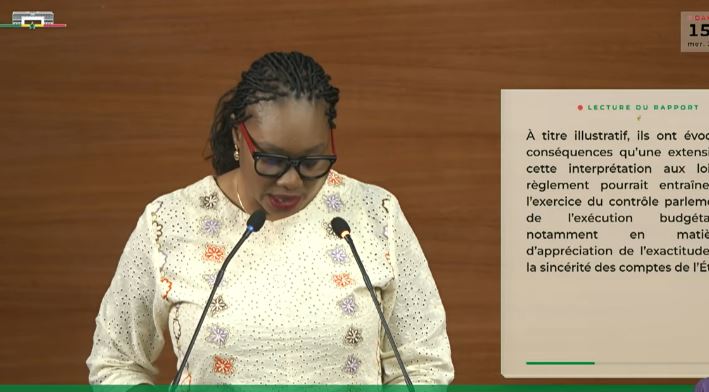
Senegal Assembly Rejects LFR 2026 Decree Execution Resolution
Summary
- The Senegalese National Assembly rejected a resolution concerning the execution of a decree related to the Loi de Finances Rectificative 2026 (LFR 2026).
- This parliamentary decision impacts the operational framework for implementing a key budgetary adjustment law.
- The rejection indicates a lack of legislative consensus on the proposed method for executing the `décret exécution LFR 2026`.
- Further legislative action or a revised executive proposal may be required to ensure the LFR 2026's provisions can be enacted.
What Happened
The rejection of this resolution means the proposed method for executing the `décret exécution LFR 2026` has not received the necessary parliamentary endorsement, potentially requiring a re-evaluation of the implementation strategy.
The Senegalese National Assembly recently voted to reject a resolution pertaining to the execution of a decree associated with the Loi de Finances Rectificative 2026 (LFR 2026). This decision by the Assemblée Nationale Sénégal marks a significant development in the legislative process surrounding the nation's budgetary framework for the upcoming fiscal period. The parliamentary body's vote effectively halted the proposed resolution aimed at guiding the implementation of the specific decree, indicating a clear legislative stance against the proposed operational framework.
The rejection occurred following an examination of the resolution, which sought to establish the operational guidelines for the `décret exécution LFR 2026`. While the precise reasons for the Assembly's decision were not immediately detailed, the outcome indicates a lack of consensus or approval for the proposed execution framework among the legislative members. This `parliamentary resolution Senegal` rejection underscores the Assembly's critical role in scrutinizing and approving measures related to national financial management, ensuring that executive actions align with legislative intent and public interest.
Legal Context
The Loi de Finances Rectificative 2026, or LFR 2026, represents an amendment or adjustment to the initial annual finance law, typically introduced to account for unforeseen economic changes or revised governmental priorities. Such rectified budget laws are critical instruments for managing the state's financial resources and expenditures, often reflecting updated revenue projections or expenditure needs. The decree in question would have provided specific legal directives for implementing certain aspects of this revised budget law, translating its broad provisions into actionable governmental mandates.
A decree, in the Senegalese legal system, is an executive act that carries legal force, often issued by the President or Prime Minister, to implement laws passed by the legislature. For such a decree to be effectively put into practice, particularly one concerning a complex financial instrument like the LFR 2026, a resolution from the National Assembly outlining its execution framework is often sought or required to ensure parliamentary oversight and approval of the implementation methodology. The rejection of this resolution means the proposed method for executing the `décret exécution LFR 2026` has not received the necessary parliamentary endorsement, potentially requiring a re-evaluation of the implementation strategy.
Why It Matters
The `Sénégal budget law rejection` of this resolution carries important implications for the timely and effective implementation of the LFR 2026. Without an approved resolution detailing the execution of the relevant decree, there could be delays or a need for alternative approaches to operationalize the provisions of the rectified finance law. This legislative setback could necessitate further deliberation within the Assembly or a revised proposal from the executive branch to ensure the budget's components can be properly enacted, potentially impacting various sectors reliant on the LFR 2026's provisions.
This development highlights the robust oversight function of the `Assemblée Nationale Sénégal` in financial governance. The Assembly's decision signals that the proposed execution mechanism for the `Loi de Finances Rectificative 2026` decree did not meet its approval, potentially leading to a re-evaluation of how the government intends to implement key budgetary measures. Stakeholders, including legal and financial professionals, will need to closely monitor subsequent legislative actions to understand the revised path for the LFR 2026's execution and its potential effects on regulatory compliance and economic planning. The rejection underscores the dynamic interplay between the executive and legislative branches in shaping national financial policy.
Practical Implications
The rejection of this resolution by the Senegalese Assembly indicates potential delays or changes in the execution of the LFR 2026 decree, requiring lawyers and compliance officers to closely monitor subsequent legislative actions for impacts on financial regulations and budgetary compliance.
Source
How does this affect you?
Get an AI analysis of this article grounded in your jurisdictions, practice areas, and any policy documents you've uploaded to Wansom.
Finish Reading the Full Story and the Expert Analysis.
Get the latest legal & regulatory intelligence in Senegal
Wansom is AI and can make mistakes.