
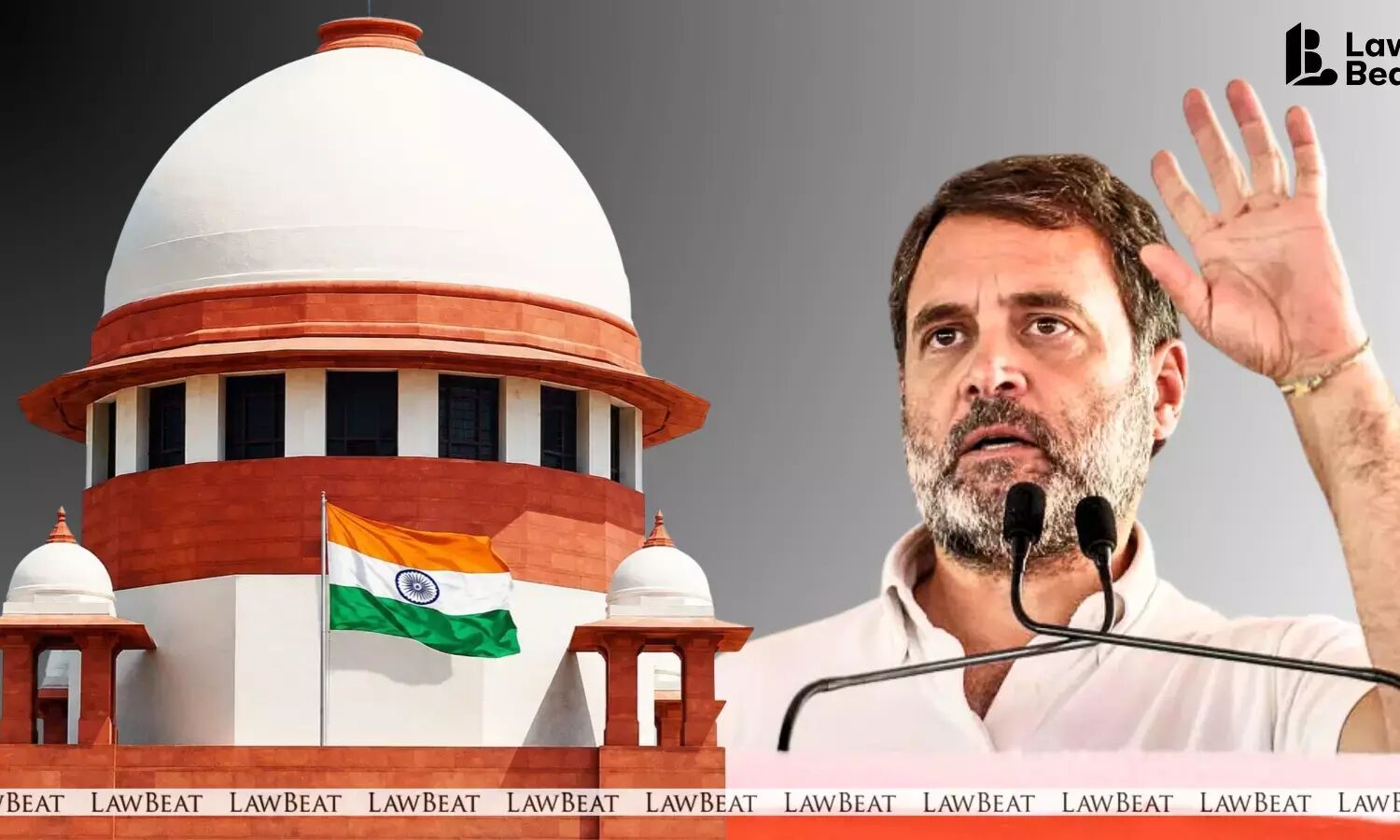
SC: No Early Hearing for Rahul Gandhi Defamation
Summary
- The Supreme Court recently instructed a complainant to follow standard procedure for an early hearing in a criminal defamation case against Rahul Gandhi.
- The case originates from Mr. Gandhi's 2022 Bharat Jodo Yatra remarks, where he allegedly defamed the Indian Army by claiming Chinese troops assaulted Indian soldiers.
- The Court had previously granted and extended interim protection to Mr. Gandhi, staying trial court proceedings until a final hearing scheduled for April 2026.
- Earlier, a Supreme Court bench had sharply criticized Mr. Gandhi's statements, questioning their factual basis and appropriateness for a public figure.
- The complainant's counsel argued Mr. Gandhi should not receive special treatment as a "VVIP," prompting the Court to affirm that "everyone is equal before us."
Recent Developments at the Supreme Court
The Supreme Court emphasized that all individuals are treated equally before the bench, instructing the complainant to adhere to established procedural norms for listing the matter.
A recent application before the Supreme Court sought an expedited hearing in the criminal defamation case against Congress leader Rahul Gandhi. Senior Advocate Gaurav Bhatia, representing the complainant, argued that Mr. Gandhi should not be considered a "VVIP" and expressed concern that Mr. Gandhi's appeal, challenging the Magistrate's cognizance of the matter, had not been listed despite being mentioned five months prior. Bhatia suggested this delay reflected poorly on the judicial institution.
Responding to the plea, a Supreme Court bench comprising Chief Justice of India Surya Kant, Justice Joymalya Bagchi, and Justice V Mohana, firmly stated that "everyone is equal before us." The bench instructed the complainant to follow established procedural norms for listing the matter, underscoring the Court's adherence to due process rather than granting preferential treatment for high-profile litigants. This interaction highlights the judiciary's commitment to maintaining impartiality and ensuring all parties, regardless of their public standing, navigate the legal system through standard channels.
Origins of the Defamation Allegations
The defamation proceedings against Rahul Gandhi stem from comments he made during his 2022 Bharat Jodo Yatra. He is accused of defaming the Indian Army by alleging that Chinese troops had assaulted Indian soldiers. These remarks were made in the context of the 2020 Galwan Valley clash between India and China, and the complaint asserts they amounted to a defamation of the nation's armed forces.
The criminal defamation case was initiated by Advocate Harishankar Pandey. While Mr. Pandey's complaint also included an allegation that Mr. Gandhi's remarks hurt religious sentiments, this specific plea was subsequently rejected by Additional Chief Judicial Magistrate Neeraj Kumar Tripathi. The Magistrate deemed the religious sentiments aspect "non-maintainable" under the provisions of the Bharatiya Nagarik Suraksha Sanhita (BNSS), 2023, narrowing the scope of the ongoing legal challenge to the defamation of the Indian Army.
Judicial Scrutiny and Interim Relief
The Supreme Court has previously intervened in this matter, granting interim protection to Rahul Gandhi and subsequently extending it in December of the previous year. A bench comprising Justices MM Sundresh and Satish Chandra Sharma noted the ongoing proceedings at the trial court level and directed that the stay on those proceedings would continue, ensuring no coercive steps could be taken against Mr. Gandhi in the interim. The Court has scheduled the final hearing for this particular case in April 2026.
Earlier, on August 4, the Supreme Court had stayed further proceedings in the case and issued notices to both the Uttar Pradesh government and the complainant. During that session, the bench had critically questioned Mr. Gandhi's alleged remarks against the Indian Army, with Justice Dipankar Datta sharply observing, "If you were a true Indian, you would not say all these things." Justice Datta further challenged the basis of Mr. Gandhi's claims, asking for credible material to substantiate allegations like 2,000 km of Indian territory being occupied by China, and emphasizing that a responsible opposition leader should not make such statements without evidence.
Political Reactions and Other Legal Challenges
The Supreme Court's pointed observations regarding Mr. Gandhi's statements during the August 4 hearing drew significant backlash from various political factions. Leaders from the Congress party and other constituents of the INDIA bloc issued a joint statement, expressing their "respectful disagreement" with the Court's remarks. They characterized the judicial comments as "extraordinary and unwarranted," viewing them as "an attack on the democratic right of political leaders to question the government on matters of national interest."
Beyond the Indian Army defamation case, Rahul Gandhi faces other legal challenges. In a separate instance, the Supreme Court, on April 24, 2025, issued notice and stayed the operation of an Allahabad High Court order. That High Court order had previously refused to quash summons issued to Mr. Gandhi in another defamation case, this one concerning his remarks against freedom fighter Vinayak Damodar Savarkar, indicating a broader pattern of legal scrutiny over his public statements.
Practical Implications
This case underscores the Supreme Court's strict adherence to procedural norms and the principle of equality before the law, even for high-profile litigants seeking expedited hearings. Lawyers should note the Court's consistent approach to granting interim protection in defamation cases and its expectation for public figures to substantiate serious allegations, which can influence strategy in similar matters.
Source
Source: Original reporting via LawBeat
How does this affect you?
Get an AI analysis of this article grounded in your jurisdictions, practice areas, and any policy documents you've uploaded to Wansom.
Finish Reading the Full Story and the Expert Analysis.
Get the latest legal & regulatory intelligence in India
Wansom is AI and can make mistakes.