
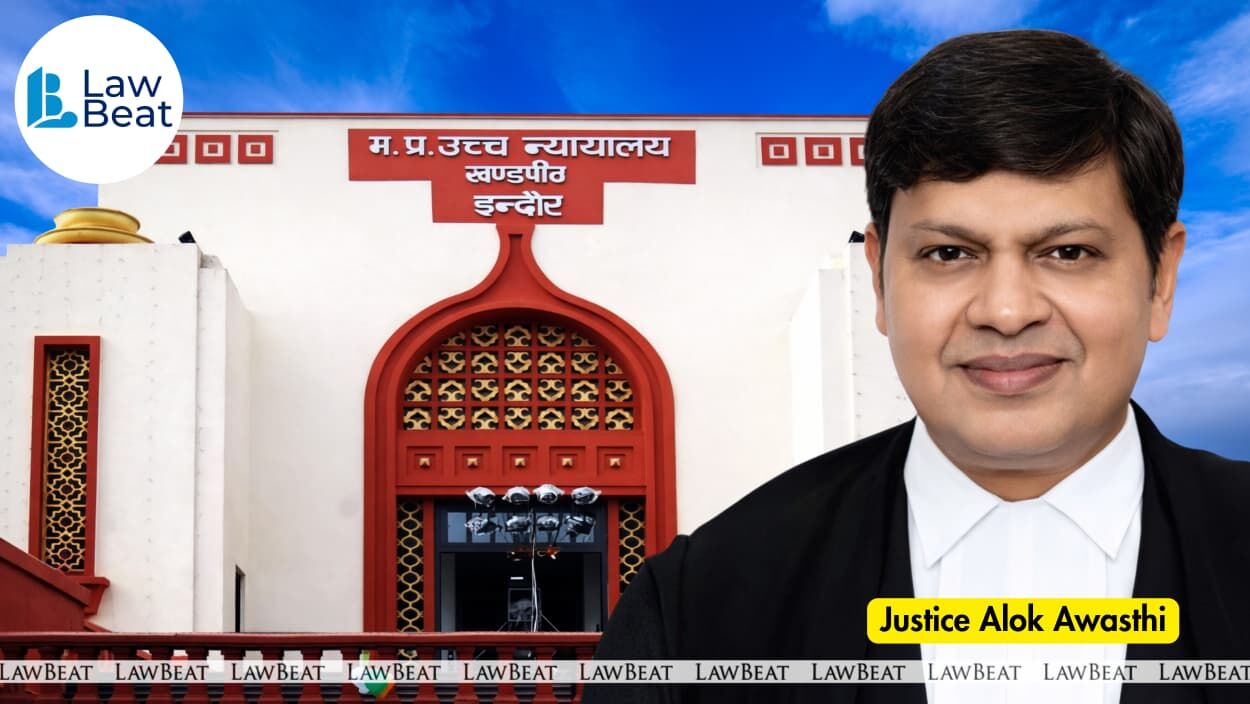
MP High Court: Post-Marriage Dowry Demand Is Punishable Offense
Summary
- The Madhya Pradesh High Court ruled that a dowry demand made after marriage is punishable, even without a pre-marriage agreement.
- The court restored a husband's conviction under Section 85 of the Bharatiya Nyaya Sanhita (BNS), 2023 (formerly Section 498-A of the Indian Penal Code) and Section 4 of the Dowry Prohibition Act.
- It clarified that 'cruelty' under Section 85 of the Bharatiya Nyaya Sanhita (BNS), 2023 (formerly Section 498-A of the Indian Penal Code) does not require proof of grave injury or suicidal attempts.
- Oral evidence is deemed sufficient to prove a dowry demand, rejecting the need for documentary evidence.
- The ruling also mandated the return of the wife's jewelry, affirming her sole ownership despite being kept in a joint locker.
High Court Reinstates Dowry Conviction
The Madhya Pradesh High Court has unequivocally stated that a demand for dowry made after marriage constitutes an offense, even in the absence of any prior agreement before the wedding.
The Madhya Pradesh High Court, sitting at Indore, has delivered a significant ruling affirming that a demand for dowry made subsequent to a marriage constitutes a punishable offense, irrespective of whether any prior agreement existed before the wedding. This decision effectively overturned a Sessions Court's acquittal, thereby reinstating the conviction of a husband in a 2007 dowry harassment case. The High Court also issued a directive for the return of the wife's jewelry.
Justice Alok Awasthi presided over the case, setting aside the Sessions Court's judgment that had previously acquitted Akhilesh Daga and his father, Ramkumar Daga. The High Court upheld the initial trial court's conviction of Akhilesh Daga under both Section 85 of the Bharatiya Nyaya Sanhita (BNS), 2023 (formerly Section 498-A of the Indian Penal Code) and Section 4 of the Dowry Prohibition Act. For these offenses, Akhilesh was sentenced to one year of rigorous imprisonment and a fine of Rs 1,000 under each provision. The appeal was brought forward by Deepti Beesani, represented by her father and power of attorney holder, Rajendra Beesani.
Defining Post-Marriage Dowry Demands
According to the prosecution's account, Deepti's parents had provided jewelry, household items, and a sum of Rs 17 lakh in cash at the time of the marriage. Deepti alleged that she faced harassment and physical abuse because she had brought Rs 17 lakh instead of the expected Rs 25 lakh, and was subsequently expelled from the marital home when the remaining Rs 8 lakh was not paid. An FIR was officially lodged on August 6, 2007. While the trial court had convicted both men in 2017, it had acquitted them of charges related to criminal intimidation and criminal breach of trust. However, the Sessions Court in 2019 reversed the conviction, citing the absence of a pre-marriage dowry agreement, along with perceived inconsistencies in the description of the Rs 17 lakh and the family's financial standing.
The High Court, however, deemed the Sessions Court's reasoning to be legally flawed. It clarified that the term 'dowry' encompasses property given or agreed to be given at, before, or at any point after the marriage. The court emphasized that the mere 'demand' itself constitutes the material act under Section 4 of the Dowry Prohibition Act, negating the requirement for a specific amount to have been formally agreed upon prior to the marriage. Senior Advocate Vivek Singh, assisted by Advocate Piyush Parashar, argued for Deepti that the absence of a prior bargain could not invalidate a subsequent demand, asserting that 'greed has no limits, no matter how rich someone is.'
Clarifying 'Cruelty' and Evidentiary Standards
On the matter of proof, the High Court determined that oral evidence is entirely sufficient. It explicitly stated that there is no legal requirement for a dowry demand to be substantiated solely through documentary evidence. Deepti's testimony was corroborated by her mother, brother, father, and her father's friend, Manoj Goel, who confirmed his presence when the demand was made in Indore on April 18, 2007. The court concluded that minor discrepancies in statements recorded years later could not undermine this consistent testimony, especially given that the initial FIR itself contained the allegation regarding the Rs 25 lakh demand.
Crucially, the High Court also rejected the Sessions Court's narrow interpretation that 'cruelty' must be severe enough to compel a woman to attempt suicide. It clarified that the two distinct components of the Explanation to Section 85 of the Bharatiya Nyaya Sanhita (BNS), 2023 (formerly Section 498-A of the Indian Penal Code) operate independently, meaning that harassment aimed at coercing an unlawful demand for property is sufficient to establish cruelty. The court further noted that the law does not obligate a woman alleging matrimonial cruelty to file a separate complaint for every individual act of harassment. Regarding the seized jewelry, which was recovered from a joint bank locker in Mumbai based on the accused's own disclosure, the court referenced the precedent set in *Smt. Rashmi Kumar v. Mahesh Kumar Bhada*, ruling that ownership of such ornaments does not become joint merely because they are kept in the husband's custody or in a shared locker, and ordered their return to Deepti.
Broader Implications of the Ruling
The Madhya Pradesh High Court has unequivocally stated that a demand for dowry made after marriage constitutes an offense, even in the absence of any prior agreement before the wedding. This ruling significantly broadens the scope of actionable dowry harassment claims, offering greater protection to victims by clarifying that the legal definition of dowry is not restricted to pre-nuptial agreements and that 'cruelty' under Section 85 of the Bharatiya Nyaya Sanhita (BNS), 2023 (formerly Section 498-A of the Indian Penal Code) does not necessitate proof of grave injury or suicidal attempts. The emphasis on oral evidence also streamlines the process of proving such demands.
This judgment reinforces the legal framework against dowry-related offenses, making it clear that the timing of the demand does not diminish its illegality and that the threshold for proving cruelty is not as high as some lower courts might have interpreted. It provides a clearer pathway for victims to seek justice in cases where dowry demands persist or emerge post-marriage. It is important to note that the appeal against Ramkumar Daga abated as he passed away on March 19, 2024, as criminal liability does not survive death.
Practical Implications
Lawyers advising clients on matrimonial disputes in India must be aware of this ruling, which clarifies that dowry demands made after marriage are punishable even without a prior agreement, and that 'cruelty' under Section 498-A IPC does not require proof of grave injury or suicidal attempts, thus broadening the scope of actionable dowry harassment claims.
Source
How does this affect you?
Get an AI analysis of this article grounded in your jurisdictions, practice areas, and any policy documents you've uploaded to Wansom.
Finish Reading the Full Story and the Expert Analysis.
Get the latest legal & regulatory intelligence in India
Wansom is AI and can make mistakes.