
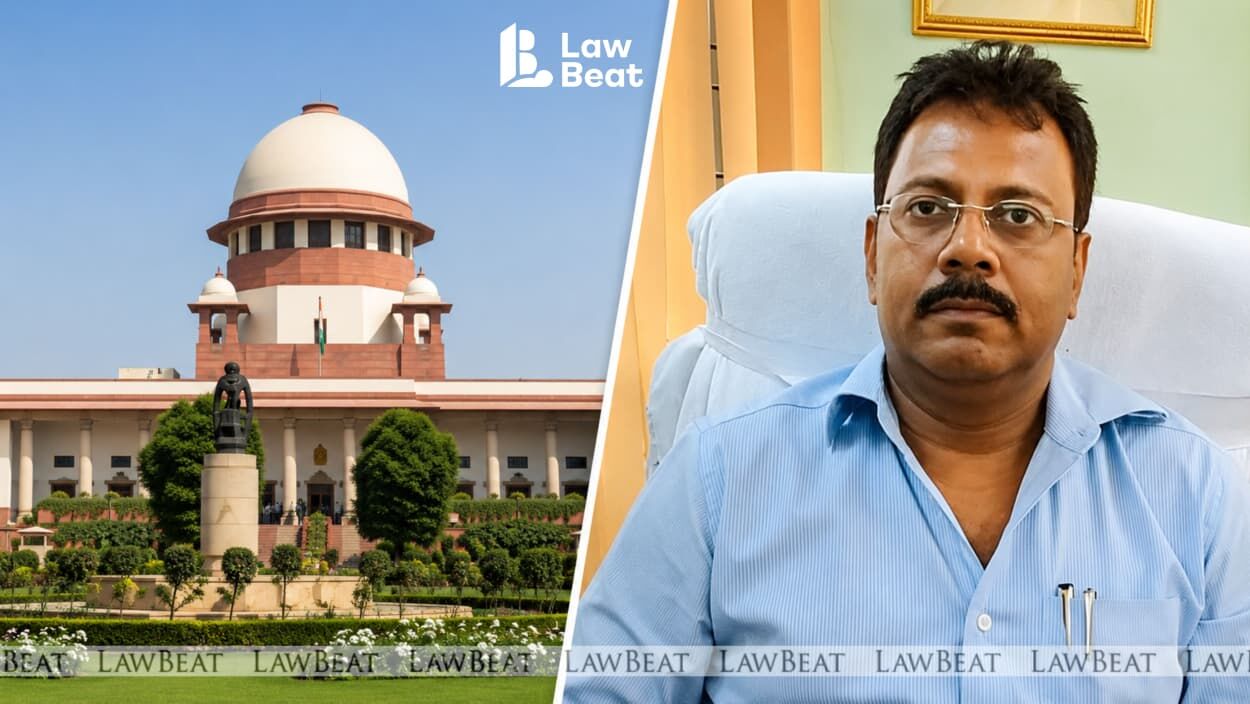
Sandip Ghosh Bail Plea: Supreme Court Issues Notice to CBI
Summary
- The Supreme Court has issued a notice to the CBI regarding the bail application of Sandip Ghosh, former principal of RG Kar Hospital.
- Ghosh faces accusations of financial irregularities and corruption and has been in custody for nearly two years.
- This Supreme Court action follows the Calcutta High Court's dismissal of Ghosh's previous bail plea.
- The investigation into Ghosh's financial misconduct is linked to the broader case of a trainee doctor's death at the hospital, which prompted nationwide protests.
- West Bengal Chief Minister Suvendu Adhikari recently ordered a fresh investigation into the doctor's rape and murder, two years after the initial incident.
Supreme Court Intervenes in Bail Matter
The Supreme Court's decision to entertain the bail plea, particularly after its dismissal by the Calcutta High Court, underscores the complex legal scrutiny surrounding high-profile corruption allegations within public institutions.
The Supreme Court of India has issued a notice to the Central Bureau of Investigation (CBI) concerning a bail application filed by Sandip Ghosh, the former principal of RG Kar Hospital. Ghosh, who has been in custody for nearly two years since his arrest, with reports also indicating his detention has extended to over two years, faces serious accusations of financial irregularities and corruption related to his tenure at the hospital. This development marks a significant turn in a high-profile case that has drawn considerable public and judicial attention.
A bench comprising Justices MM Sundresh and PB Varale has directed the investigating agency to submit its response by October 15. Ghosh's appeal to the Supreme Court follows the Calcutta High Court's dismissal of his previous bail plea, prompting him to seek relief from the nation's highest judicial authority. The Supreme Court's decision to entertain the bail plea, particularly after its dismissal by the Calcutta High Court, underscores the complex legal scrutiny surrounding high-profile corruption allegations within public institutions.
Background of Financial Irregularities and CBI Involvement
The investigation into Sandip Ghosh's alleged financial misconduct at RG Kar Hospital commenced after a four-member Special Investigation Team (SIT) was formed to examine irregularities at the state-run health facility. These allegations of financial irregularities and corruption were initially brought to light through a petition filed by Akhtar Ali, a former Deputy Superintendent of RG Kar Medical College and Hospital, who accused Dr. Ghosh of serious financial impropriety during his time as principal.
Subsequently, a single-judge bench of Justice Rajarshi Bhardwaj of the Calcutta High Court ordered the transfer of the case from the Kolkata Police-constituted SIT to the CBI. In 2024, the Supreme Court further affirmed this transfer, dismissing a plea by Ghosh that challenged the Calcutta High Court's decision to hand over the investigation to the CBI. Notably, Dr. Ghosh resigned from his principal post on August 12, citing "moral responsibility" following an incident on August 9, 2024, but his subsequent appointment as principal of another medical college in Kolkata was cancelled, and he was later arrested and suspended.
Broader Case and Related Investigations
The financial irregularities probe involving Sandip Ghosh is intertwined with a separate, tragic incident: the discovery of a postgraduate trainee doctor's body at the RG Kar Hospital on August 9, 2024. Ghosh has been interrogated by the CBI as part of its investigation into the alleged rape and murder of this doctor, an event that triggered widespread nationwide protests and led the Supreme Court to take suo motu cognizance of the matter.
Earlier this month, West Bengal Chief Minister Suvendu Adhikari ordered a fresh investigation into the doctor's rape and murder, marking the second anniversary of the crime. This decision, announced at a memorial event, came after the victim's mother, Ratna Debnath (now a BJP MLA), formally requested a new probe. Adhikari, who discussed the matter with the chief secretary and experts, announced the fresh investigation under the Commissions of Inquiry Act, 1952, and publicly criticized the police's handling of the initial investigation, which had resulted in a conviction and life sentence. Last year, the Supreme Court transferred its suo motu proceedings related to the doctor's death to the Calcutta High Court, directing it to monitor the implementation of orders, citing the High Court's proximity to the facts and ongoing developments.
Legal and Regulatory Context
The Supreme Court's decision to issue notice on Sandip Ghosh's bail plea highlights the judiciary's ongoing oversight in cases involving alleged corruption and financial irregularities, particularly within public health institutions. The involvement of the CBI, coupled with the Supreme Court's previous affirmation of the case transfer and its current consideration of bail, underscores the gravity and complexity of the charges against Ghosh. This case also exemplifies the multi-layered judicial scrutiny that can arise when high-profile corruption allegations intersect with other significant public incidents.
The outcome of this bail plea could offer crucial insights into the Supreme Court's evolving jurisprudence on granting bail in corruption cases, especially when a High Court has already denied such relief. The ongoing investigations, including the fresh probe into the doctor's death and the Calcutta High Court's monitoring role, ensure continued legal and regulatory attention on the RG Kar Hospital and its former principal, Sandip Ghosh, as the legal proceedings unfold.
Practical Implications
Lawyers advising clients accused of financial irregularities or corruption, particularly in public institutions, should monitor the Supreme Court's proceedings in this case. The outcome of Sandip Ghosh's bail plea could provide insights into the judiciary's approach to granting bail in high-profile corruption cases, especially after a High Court dismissal, and inform strategies for similar defense matters.
Source
How does this affect you?
Get an AI analysis of this article grounded in your jurisdictions, practice areas, and any policy documents you've uploaded to Wansom.
Finish this article free. Just your email for instant unlock.
Wansom is AI and can make mistakes.