
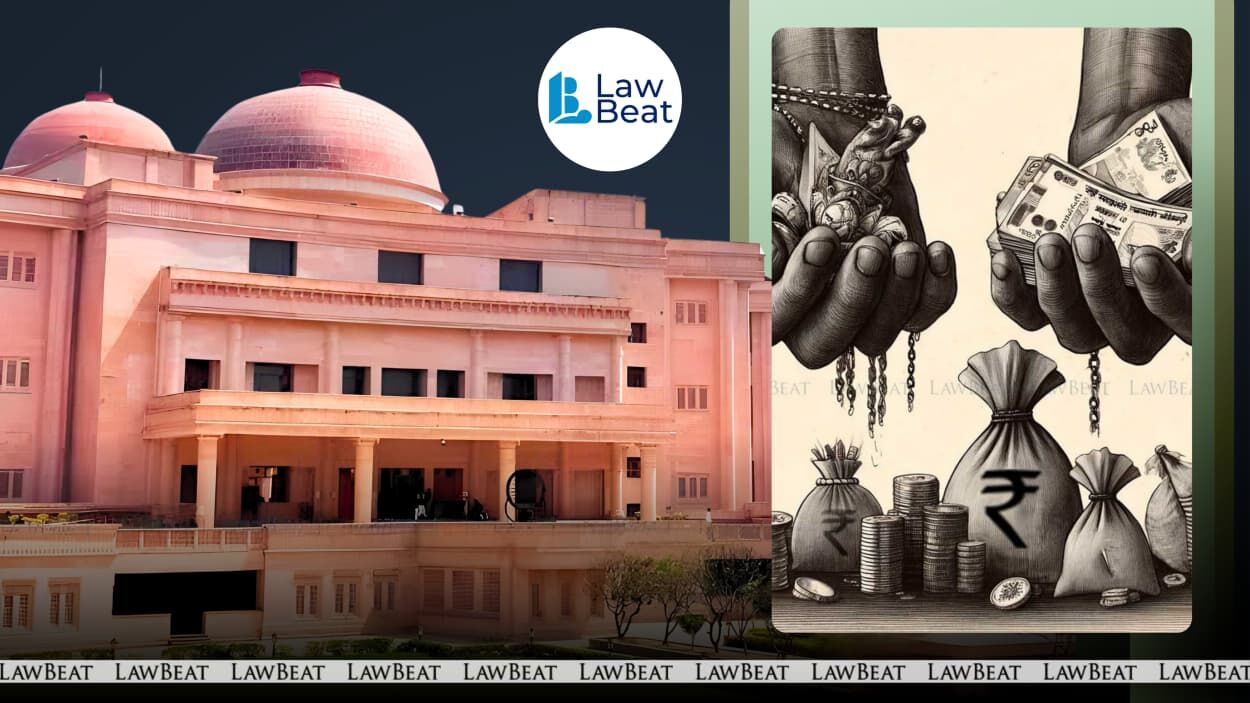
Allahabad HC: Parents Abettor In-Laws in Dowry Deaths
Summary
- The Allahabad High Court upheld dowry death convictions for a mother-in-law and sister-in-law in a 1999 case.
- The court set aside the husband's dowry death conviction but maintained his convictions for cruelty and dowry demand.
- The High Court strongly criticized the victim's parents for repeatedly sending their daughter back despite her complaints of dowry harassment.
- The ruling emphasized that parents who ignore such pleas can become "abettors of the in-laws."
- Evidence included the absence of burn injuries on the victim's palms, supporting allegations her hands were tied when she was set on fire.
Judicial Scrutiny on Parental Conduct
The court underscored that parents who repeatedly return their daughter to her matrimonial home despite her pleas of dowry harassment and warnings of potential harm risk becoming complicit in the actions of the in-laws.
The Allahabad High Court recently delivered a significant ruling, upholding the dowry death convictions of a mother-in-law and sister-in-law while simultaneously criticizing the victim's parents for their conduct. The court observed that parents who repeatedly send their daughter back to her matrimonial home, despite her pleas of dowry harassment and warnings of potential harm, risk becoming "abettors of the in-laws" in such tragic cases. This strong rebuke highlights a critical perspective on parental responsibility in dowry-related violence.
In its order passed on August 25 by Justice Manish Mathur, the High Court partly allowed an appeal filed by Ram Chandra, Hema, and Meena. The court affirmed the convictions of Hema, the mother-in-law, and Meena, the sister-in-law, under Section 80 of the Bharatiya Nyaya Sanhita (BNS), which replaced Section 304-B of the Indian Penal Code (IPC) and deals with dowry death. However, it set aside the dowry death conviction for Ram Chandra, the husband, under the same section (corresponding to Section 80 of the Bharatiya Nyaya Sanhita, BNS).
Despite setting aside the Section 80 BNS conviction for the husband, Ram Chandra's convictions for cruelty under Section 85 BNS, which replaced Section 498-A IPC, and for demanding dowry under Section 4 of the Dowry Prohibition Act were retained. The original convictions for all three individuals had been handed down by a Sitapur sessions court in 2004, covering Sections 498-A and 304-B IPC, as well as Section 4 of the Dowry Prohibition Act.
This ruling from the Allahabad High Court underscores a growing judicial concern regarding the role of family members beyond the immediate in-laws in cases of dowry harassment and death. The court's anguish over the parents' actions, particularly their repeated disregard for their daughter's safety, signals a potential expansion of scrutiny on parental culpability in such matters.
The Tragic Case of Ramdevi
The case revolved around the death of Ramdevi, who had been married to Ram Chandra for approximately two years prior to the incident. According to the prosecution, despite dowry being provided to the best of her family's means, her in-laws began demanding additional items, specifically a buffalo, a television, and a bicycle. When these demands were not met, Ramdevi faced harassment.
The tragic event occurred on June 11, 1999, when Ramdevi sustained severe third-degree burn injuries across most of her body, which ultimately led to her death. Her family alleged that her hands and feet had been tied before her mother-in-law and sister-in-law set her on fire. This grave accusation formed a central part of the prosecution's case.
Initially, the police did not register a First Information Report (FIR) regarding the incident. Ramdevi's father was compelled to approach the Superintendent of Police on September 8, 1999. After receiving no action, he filed an application under Section 175(3) of the Bharatiya Nagarik Suraksha Sanhita (BNSS), which replaced Section 156(3) of the Code of Criminal Procedure (CrPC). Following the Magistrate's directive, the FIR was finally registered on September 27, initiating the legal proceedings that culminated in the High Court's recent judgment.
High Court's Evidentiary Analysis
In its detailed examination of the evidence, the High Court placed significant weight on the medical findings concerning Ramdevi's injuries. Doctors had reported that she suffered from third-degree burns over the majority of her body, but crucially, there were no burn marks on her palms. The court found this absence of palm burns to be highly significant, corroborating the prosecution's assertion that Ramdevi's hands had been tied when she was set on fire.
The court reasoned that it is a natural human instinct for anyone on fire to attempt to douse the flames, and the hands, particularly the palms, would be the primary body parts used for such an action. The lack of burn injuries on her palms, therefore, strongly supported the allegation that her hands were restrained. Furthermore, the deceased's parents had specifically stated in their police statements that Ramdevi's hands were tied, lending additional credence to this aspect of the prosecution's case.
The High Court also relied on a statement Ramdevi made to her mother before her death. Although her vital signs were precarious, the examining doctor confirmed that Ramdevi was capable of understanding. The doctor had even informed the police twice about the necessity of recording her dying declaration, but no police official arrived to do so. The court held that the prosecution could not be faulted for the police's failure to formally record the statement, considering the declaration was otherwise of "sterling quality," thus accepting its evidentiary value.
Legal Framework and Implications
The Allahabad High Court's decision underscores the application of Section 80 BNS, which replaced Section 304-B IPC, commonly known as dowry death. For this section to be applicable, the prosecution must establish several key ingredients: that the woman's death was unnatural, that it occurred within seven years of her marriage, and that she was subjected to cruelty or harassment for dowry "soon before" her death. Once these elements are proven, Section 118 of the Bharatiya Sakshya Adhiniyam (BSA), which replaced Section 113-B of the Indian Evidence Act, comes into play, mandating the court to presume that the accused caused the dowry death, although this presumption can be rebutted.
This ruling serves as a stark reminder of the legal provisions designed to combat dowry-related violence in India. The court's strong observations regarding the parents' role in the Ramdevi dowry death case, labeling them as potential "abettors of the in-laws," could have far-reaching implications. It suggests a broader interpretation of complicity in dowry cases, extending beyond the direct perpetrators to include family members who fail to protect victims despite clear indications of harassment.
The judgment reinforces the judiciary's commitment to addressing the pervasive issue of dowry harassment parents face, and the severe consequences for those involved, directly or indirectly. It highlights the importance of the Allahabad High Court's stance on parental responsibility, potentially influencing future arguments regarding parental culpability or the victim's family's conduct in similar dowry-related litigation.
Practical Implications
This ruling highlights the Allahabad High Court's strong stance on parental responsibility in dowry harassment cases, potentially expanding the scope of scrutiny on parents' actions. Lawyers advising families or involved in dowry-related litigation should be aware of this judicial perspective, as it could influence arguments regarding parental culpability or the victim's family's conduct.
Source
How does this affect you?
Get an AI analysis of this article grounded in your jurisdictions, practice areas, and any policy documents you've uploaded to Wansom.
Finish this article free. Just your email for instant unlock.
Wansom is AI and can make mistakes.