
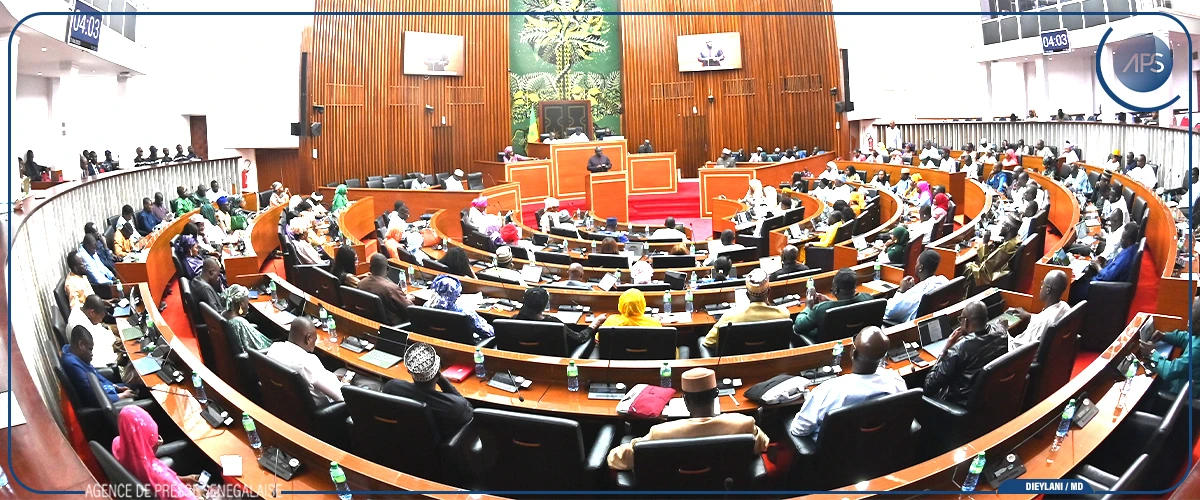
Assemblée Nationale Sénégal: Loi Finances Rectificative 2026 Demande Information
Summary
- Senegal's National Assembly has formally requested additional information from the government.
- This request pertains to the proposed 2026 supplementary finance bill (PLFR 2026).
- The Assembly stated its aim is to find a consensual solution to an existing dispute with the government.
- The legislative body emphasized its commitment to responsibility and openness in this process.
- The outcome of this demand will significantly influence the final provisions of the 2026 fiscal adjustments.
National Assembly Seeks Further Details on 2026 Supplementary Budget
The current demand for information on the Sénégal loi finances rectificative 2026 marks a critical juncture for the nation's fiscal planning for the year 2026.
Senegal's legislative body, the National Assembly, has officially communicated a request for additional information to the government concerning the 2026 supplementary finance bill, which was rejected in committee on October 23, 2026. This significant development in the legislative process was confirmed through an information note that reached the Agence de Presse Sénégalaise (APS) on a Monday, with the dispatch itself dated October 26 from Dakar. The formal demand for complementary details on the Projet de loi de finances rectificative 2026 Sénégal signals a thorough review by parliamentarians after the critical financial legislation was rejected in committee. This action underscores the Assembly's role in scrutinizing executive proposals, particularly those with broad fiscal implications for the nation. The Assemblée nationale Sénégal PLFR 2026 is clearly taking a proactive stance in its oversight duties.
The request specifically targets the Projet de loi de finances rectificative (PLFR) 2026, a crucial document designed to adjust the nation's financial framework for the upcoming fiscal year. Such supplementary bills are typically introduced to account for unforeseen economic shifts, revenue changes, or new spending priorities that emerge after the initial annual budget has been adopted. By seeking further information, the National Assembly aims to ensure a comprehensive understanding of the bill's provisions, its underlying assumptions, and its potential impact on the national economy and public services. This step is a standard, yet vital, part of democratic governance, ensuring transparency and accountability in public finance management.
Legislative-Executive Dialogue Amidst Disagreement
The National Assembly's decision to request more information is rooted in a stated commitment to "an spirit of responsibility, openness, and search for a consensual solution" following the committee's rejection of the bill. This declaration, conveyed in the same information note, highlights a period of negotiation and differing perspectives between the legislative and executive branches regarding the 2026 supplementary finance bill. The legislative body's emphasis on consensus-building suggests a desire to resolve these differences through dialogue and mutual understanding, rather than through outright confrontation. This approach is critical for maintaining stability in governance and ensuring that vital legislation, such as the Loi de finances rectificative Sénégal, can be passed effectively.
The existence of a "dispute" between the Assemblée nationale and the Gouvernement Sénégal PLFR 2026, while not detailed in its specifics, indicates that certain aspects of the proposed PLFR 2026 have raised concerns among parliamentarians, leading to its rejection in committee. These concerns could pertain to budgetary allocations, revenue projections, specific policy measures embedded within the bill, or the overall economic strategy it represents. The request for complementary information serves as a formal mechanism for the legislative branch to seek clarifications, justifications, or alternative proposals from the executive, thereby facilitating a more informed and collaborative decision-making process. This inter-branch dynamic is fundamental to the checks and balances inherent in Senegal's political system.
Critical Juncture for Senegal's 2026 Fiscal Framework
The rejection of the Sénégal loi finances rectificative 2026 by the National Assembly's committee on October 23, 2026, marks a critical juncture for the nation's fiscal planning for the year 2026. The eventual passage of the Projet de loi de finances rectificative 2026 Sénégal is now contingent upon further developments following this rejection. The outcome of these discussions will directly shape the final provisions of the supplementary budget, which could have significant implications for various sectors, public expenditures, and revenue collection mechanisms across the country. This legislative back-and-forth is not merely procedural; it is central to defining the economic direction and priorities for the upcoming period.
The resolution of this information request is paramount for ensuring the timely and effective implementation of the revised fiscal framework. Delays or prolonged disagreements could potentially impact government operations, public project funding, and overall economic stability. Therefore, the collaborative spirit invoked by the National Assembly, coupled with the government's forthcoming response, will be instrumental in forging a consensual path forward. The final version of the Loi de finances rectificative Sénégal will reflect the compromises and agreements reached between these two key branches of government, ultimately affecting all citizens and economic actors within Senegal. The ongoing dialogue underscores the importance of robust legislative oversight in shaping national financial policy.
Practical Implications
Lawyers and compliance officers in Senegal should monitor the progress of the 2026 supplementary finance bill closely, as the National Assembly's request for additional information indicates ongoing negotiations that could alter its final provisions and impact fiscal planning or compliance obligations.
Source
How does this affect you?
Get an AI analysis of this article grounded in your jurisdictions, practice areas, and any policy documents you've uploaded to Wansom.
Finish Reading the Full Story and the Expert Analysis.
Wansom is AI and can make mistakes.