
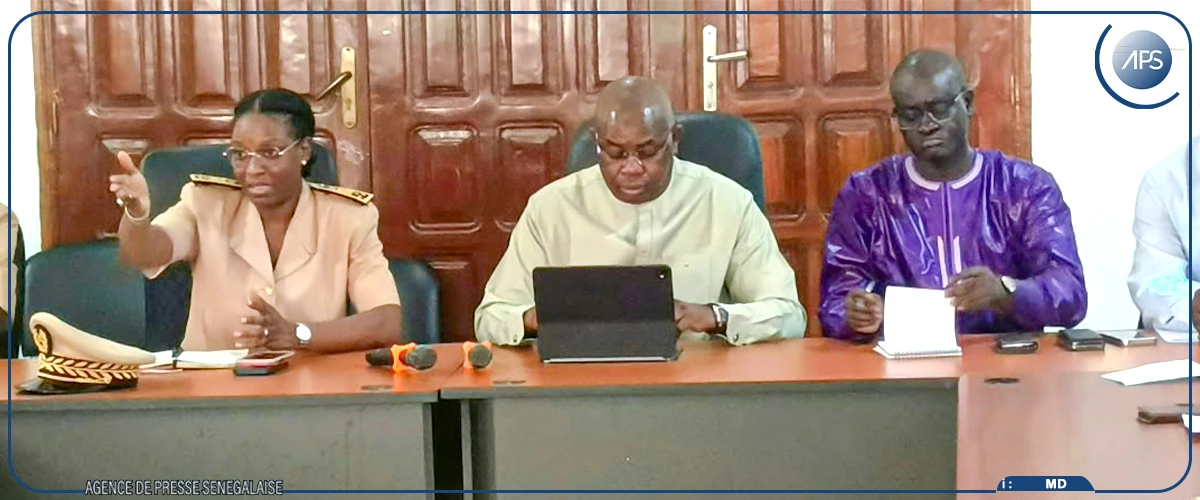
Fatick Governor Cissé: Inspection Régionale du Travail Moyens Inadequate
Summary
- Governor Ngoné Cissé of Fatick stated that the regional labor inspectorate faces a severe lack of resources.
- These resource deficiencies hinder the Inspection régionale du travail et de la protection sociale from effectively carrying out its missions.
- A significant portion of the Fatick region is insular and difficult to access, further complicating the inspectorate's operations.
- The combination of limited resources and geographical challenges impacts the thoroughness and speed of labor oversight and compliance checks.
What Happened
The dual challenge of limited Fatick Inspection régionale du travail moyens and the arduous terrain directly impacts the agency's operational footprint and its ability to perform its core functions comprehensively.
Governor Ngoné Cissé of Fatick, a central region in Senegal, recently drew attention to significant operational impediments confronting the local labor and social protection authority. On Monday, October 26, the governor publicly stated that the Fatick Inspection régionale du travail moyens are currently inadequate, directly hindering its capacity to fulfill its statutory responsibilities. This declaration from a prominent regional official underscores a critical challenge for labor governance and worker welfare within the Fatick area.
The governor's remarks specifically highlighted a pronounced scarcity of essential resources as the primary factor undermining the effectiveness of the Inspection régionale du travail et de la protection sociale. This deficiency extends to various aspects of its operations, impacting the agency's ability to conduct comprehensive inspections, respond promptly to grievances, and ensure consistent adherence to both labor legislation and social welfare provisions throughout its jurisdiction. The public acknowledgment of these difficulties by Governor Cissé brings the operational struggles of the regional labor inspectorate into sharp focus for stakeholders across the region.
Geographical Context and Operational Hurdles
A significant contributing factor exacerbating the difficultés Inspection régionale travail in Fatick is the region's distinctive geographical makeup. Governor Cissé specifically pointed out that a substantial portion of the Fatick region comprises insular territories, which inherently present considerable logistical challenges regarding accessibility. These isolated areas are by their nature arduous to reach, rendering routine oversight activities and swift interventions particularly demanding for the labor inspectorate.
The inherent inaccessibility of these island communities means that the regional body responsible for upholding labor standards and ensuring social protection faces an ongoing struggle to extend its supervisory reach uniformly across the entire territory. This unique geographical reality compounds the existing resource deficits, creating a complex and demanding operational environment where effective and consistent oversight becomes increasingly difficult to achieve. The dual challenge of limited Fatick Inspection régionale du travail moyens and the arduous terrain directly impacts the agency's operational footprint and its ability to perform its core functions comprehensively.
Implications for Labor Oversight and Compliance
The resource limitations and the geographical complexities articulated by Governor Ngoné Cissé Fatick carry direct and significant consequences for labor law enforcement and the provision of social protection within the region. The Inspection du travail Sénégal, through its regional branch in Fatick, is fundamentally tasked with safeguarding workers' rights, mediating disputes, and ensuring compliance with national labor codes. However, the current constraints strongly suggest that the thoroughness, frequency, and speed of these critical functions may be substantially compromised.
For businesses and employers operating within Fatick, particularly those established in its more remote, insular zones, the reduced capacity of the regional labor inspection could foreseeably lead to delays in official oversight, prolonged resolution of labor disputes, or even a reduced presence of compliance checks. This situation implies that the ability of the Inspection régionale du travail et de la protection sociale to conduct timely inspections, enforce regulations, and provide adequate social protection services might be significantly hampered. The governor's statement highlights a systemic issue that could affect the overall efficacy of labor governance in the region, potentially impacting both the rights of employees and the regulatory environment for employers.
Practical Implications
Lawyers advising clients with operations in Fatick, particularly in its insular areas, should be aware that the regional labor inspection's resource constraints may impact the speed and thoroughness of enforcement actions and compliance checks, potentially leading to delays in official oversight or dispute resolution.
Source
Source: Original reporting via APS.
How does this affect you?
Get an AI analysis of this article grounded in your jurisdictions, practice areas, and any policy documents you've uploaded to Wansom.
Finish Reading the Full Story and the Expert Analysis.
Wansom is AI and can make mistakes.