
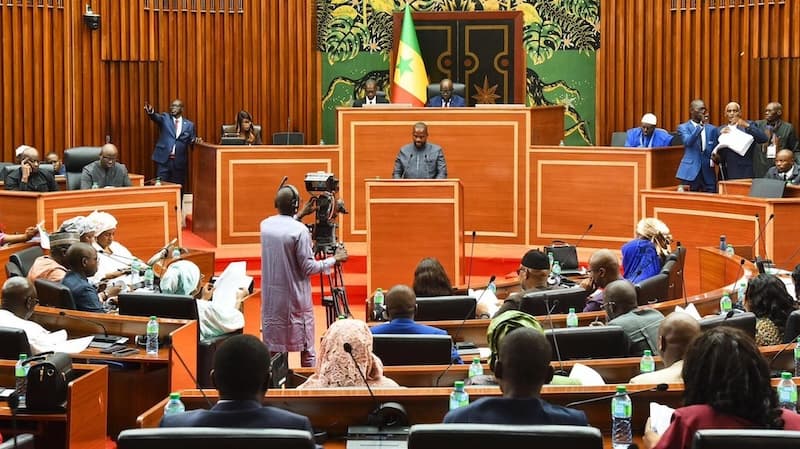
Sénégal: Assemblée Nationale Rejette Projet LFR 2026
Summary
- Senegal's National Assembly Finance and Budget Control Committee rejected the Revised Finance Bill (LFR) 2026.
- The departmental coordination of KIIRAAY – Les Patriotes républicains de Fatick is protesting this rejection, calling it a blockage.
- KIIRAAY Fatick asserts that the rejection of the LFR 2026 could lead to potentially prejudicial consequences for the population.
- The political group also issued a warning to deputies from the Pastef party regarding the legislative decision.
- The rejection means proposed fiscal and regulatory changes within the bill are currently stalled, impacting future financial planning.
Legislative Setback in Senegal
The departmental coordination of KIIRAAY – Les Patriotes républicains from Fatick has voiced its strenuous opposition to the committee's decision.
The proposed Revised Finance Bill for 2026, known as the LFR 2026, has encountered a significant hurdle in Senegal's legislative process. The Finance and Budget Control Committee of the National Assembly officially rejected the draft legislation, marking a notable development in the country's fiscal planning.
This rejection has drawn strong criticism from political groups. Specifically, the departmental coordination of KIIRAAY – Les Patriotes républicains from Fatick has voiced its strenuous opposition to the committee's decision. The group views this legislative action as a detrimental blockage to the nation's financial framework.
In response to the committee's move, KIIRAAY Fatick has not only protested the rejection but also issued a direct warning to deputies affiliated with the Pastef party. This indicates a growing political tension surrounding the LFR 2026 and its implications for the upcoming fiscal year.
Understanding the Legal Context
A Revised Finance Bill, or Loi de Finances Rectificative (LFR), is a crucial legislative instrument in Senegal, typically introduced to adjust the initial annual budget law in response to evolving economic conditions or unforeseen circumstances. The LFR 2026 was intended to modify the financial provisions for the year, making its rejection by a key parliamentary body a substantial event.
The Finance and Budget Control Committee of the National Assembly plays a pivotal role in scrutinizing government spending and revenue proposals. Its mandate includes a thorough review of all financial legislation, such as the LFR 2026, before it can proceed for a full vote by the entire Assembly. A rejection at this committee stage signifies that the proposed bill, in its current form, failed to meet the committee's approval or address its concerns.
This outcome means that any fiscal or regulatory changes anticipated within the rejected projet de loi finances Sénégal are now stalled. The government will likely need to revise the bill or explore alternative legislative avenues to implement its intended budgetary adjustments, potentially impacting various sectors and public services across the nation.
Potential Societal and Political Ramifications
The rejection of the LFR 2026 carries potentially far-reaching consequences, particularly for the Senegalese population. KIIRAAY – Les Patriotes républicains de Fatick has explicitly stated that this legislative blockage could lead to prejudicial outcomes for citizens, suggesting concerns about the impact on public services, development projects, or economic stability that the bill might have addressed.
Such a legislative impasse can disrupt government planning and resource allocation, potentially delaying critical initiatives or adjustments necessary for the country's financial health. The political group's strong denunciation underscores the perceived gravity of the situation and the potential for public discontent if the consequences of the rejection materialize.
The warning issued by Kiiray Fatick to Pastef deputies further highlights the political dimensions of this rejection, indicating a potential for increased friction between political factions regarding fiscal policy and governance. The information regarding this development was initially conveyed via a press release and subsequently reported by Senego, bringing these concerns into the public discourse.
Practical Implications
Lawyers and compliance officers in Senegal should be aware that the Revised Finance Bill (LFR) 2026 has been rejected by the National Assembly's Finance Committee. This legislative setback means that any proposed fiscal or regulatory changes anticipated in this bill are currently stalled, requiring close monitoring for potential resubmission or alternative legislative actions that could impact budgetary allocations, tax frameworks, and financial planning.
Source
Source: Original reporting via Senego
How does this affect you?
Get an AI analysis of this article grounded in your jurisdictions, practice areas, and any policy documents you've uploaded to Wansom.
Finish Reading the Full Story and the Expert Analysis.
Wansom is AI and can make mistakes.