
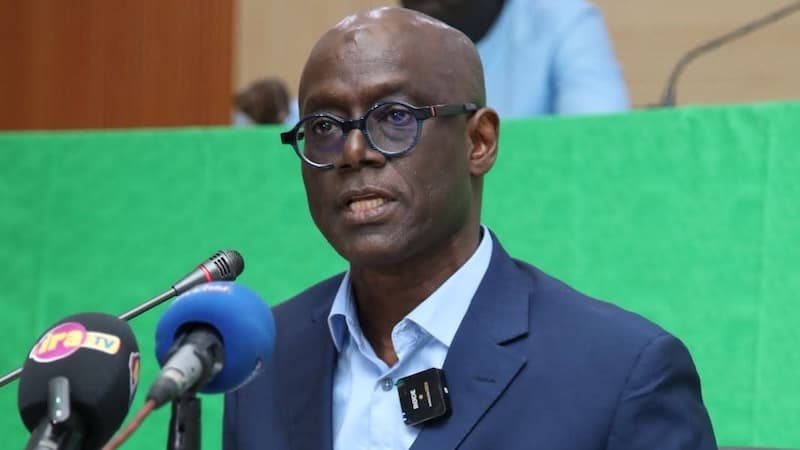
Thierno Alassane Sall: Chantage au Sommet de l'État Accusations in Sénégal
Summary
- Deputy Thierno Alassane Sall accused top Senegalese officials, including President Faye, Ousmane Sonko (now President of the National Assembly), and Prime Minister Lô, of engaging in "chantage au sommet de l'État" instead of accountability.
- Sall's criticism followed Prime Minister Lô's statement about discovering unspecified "faits répréhensibles" at the Primature under his predecessor, Sonko.
- The "loi de finances rectificative 2026" was rejected by the Pastef majority in commission, leading to PM Lô's denunciation of "obstruction."
- Political figures like Amadou Ba and Babacar Ba have challenged PM Lô to provide evidence for his accusations, citing a lack of transparency.
- Internal conflicts within the ruling Pastef party are overshadowing national issues and raising concerns about governance and transparency in Senegal.
Accusations of Blackmail at the State's Summit
The unfolding political drama, characterized by accusations of "chantage au sommet de l'État" and a perceived lack of "reddition des comptes," highlights significant challenges to "gouvernance sénégalaise transparence."
Thierno Alassane Sall, a prominent deputy, has publicly accused the highest echelons of the Senegalese government of operating under a system of "chantage au sommet de l'État," where mutual leverage has supplanted genuine accountability. In a social media post, reported by ndarinfo, Sall specifically implicated President Bassirou Diomaye Faye, Ousmane Sonko, who now serves as the President of the National Assembly, and current Prime Minister Ahmadou Al Aminou Lô, suggesting they possess compromising information about one another. This, he argues, fosters an environment where "reddition des comptes" is neglected.
The deputy's strong condemnation was prompted by recent remarks from Prime Minister Ahmadou Al Aminou Lô. On a Sunday, Lô disclosed that he had uncovered "faits répréhensibles" within the Primature during the tenure of his predecessor, Ousmane Sonko. However, Lô refrained from detailing the nature of these alleged misdeeds. Sall critically questioned this omission, asking why the Prime Minister would not refer such findings to the judicial system if they were indeed serious.
Political Fallout and Internal Strife
Beyond the immediate allegations, Thierno Alassane Sall extended his critique to the broader political class, asserting that leaders prioritize their internal power struggles over addressing the pressing challenges faced by Senegalese households. He specifically pointed to Pastef and Kiiraay, accusing them of engaging in public disputes while covertly protecting each other. Sall urged the Senegalese populace to organize and demand greater transparency and accountability from their elected officials.
This political dispute unfolds amidst growing internal contradictions within Pastef, the ruling party, which assumed power two years and three months prior. These internal rifts have become so pronounced that Pastef is increasingly perceived as its own primary opposition, with debates over its internal dynamics overshadowing critical national issues such as the cost of living, clandestine emigration, public debt, and agricultural uncertainties. The questioning of Ousmane Sonko's management during his time as Prime Minister is also intertwined with the political conflict that preceded his departure from the post. Aminata Touré, the general supervisor of the Diomaye Président coalition, had previously characterized Sonko's governmental tenure as unsuccessful, suggesting his removal stemmed from an inability to effectively manage assigned responsibilities, a perspective that contrasts sharply with the current demands for transparency regarding Prime Minister Lô's recent discoveries.
Legislative Gridlock and Governance Concerns
The Prime Minister's assertions about discovering reprehensible acts have elicited significant reactions from other political figures. Amadou Ba, a Pastef deputy, publicly challenged Prime Minister Lô to produce the documentation he claimed to possess regarding Ousmane Sonko's management. Concurrently, Babacar Ba, who presides over the Forum du Justiciable, expressed concerns that Lô's approach lacked transparency, particularly given his mention of "actes hors norme" without providing specific details.
These tensions have further manifested in the legislative arena, specifically concerning the "loi de finances rectificative 2026." On a Friday, the Pastef majority within the commission rejected this amended finance law. Prime Minister Al Aminou Lô characterized this rejection as "obstruction" and indicated a willingness to employ "tous les outils institutionnels" should the legislative impasse persist. A plenary session to discuss this critical financial text is scheduled for Tuesday, October 27, at 10 AM. Serigne Guèye Diop, a member of the Conférence des leaders of the Diomaye Président coalition, remarked that the ongoing friction between President Diomaye and Ousmane Sonko undermines the hopes that many Senegalese citizens had placed in their political partnership.
Why It Matters
The unfolding political drama, characterized by accusations of "chantage au sommet de l'État" and a perceived lack of "reddition des comptes," highlights significant challenges to "gouvernance sénégalaise transparence." The public exchange between high-ranking officials, including President Bassirou Diomaye Faye, Ousmane Sonko, and Ahmadou Al Aminou Lô, coupled with the legislative deadlock over the "loi de finances rectificative 2026 Sénégal," signals a potential erosion of public trust in state institutions. This environment, where serious allegations are made without immediate judicial referral or detailed disclosure, raises fundamental questions about accountability mechanisms within the Senegalese public administration.
The internal conflicts within the ruling coalition, particularly between key figures who once symbolized a unified political project, divert attention from critical socio-economic issues facing the nation. The call from Thierno Alassane Sall for citizens to demand accountability underscores a broader societal concern regarding the integrity of political processes. The current climate suggests a need for greater clarity and adherence to established legal and ethical frameworks to ensure that the principles of good governance and transparency are upheld, rather than being overshadowed by political maneuvering and mutual recrimination.
Practical Implications
This political dispute signals potential governance and transparency risks within the Senegalese public administration, particularly concerning financial accountability and legislative processes. Lawyers and compliance officers should monitor these developments for their impact on regulatory predictability, public procurement, and the overall investment climate in Senegal.
Source
Source: Original reporting via ndarinfo
How does this affect you?
Get an AI analysis of this article grounded in your jurisdictions, practice areas, and any policy documents you've uploaded to Wansom.
Finish Reading the Full Story and the Expert Analysis.
Wansom is AI and can make mistakes.