
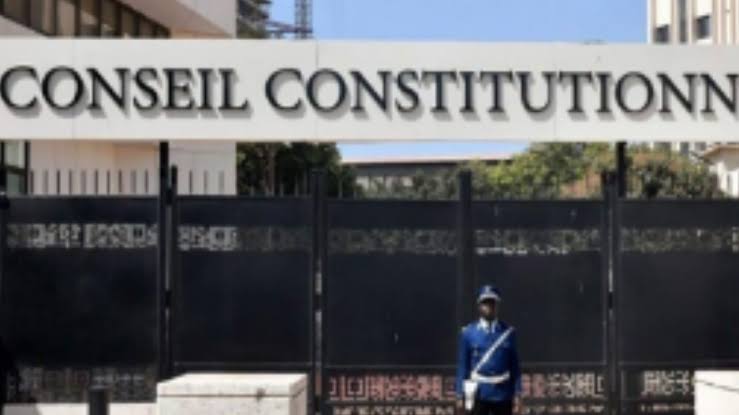
Sénégal Conseil Constitutionnel: Loi Fonds Spéciaux Article 82 Invalidée
Summary
- On July 9, 2026, the Conseil constitutionnel of Sénégal invalidated Law n° 18/2026 on special funds.
- President Diomaye Faye had seized the Conseil constitutionnel on July 6, 2026, citing procedural defects.
- The invalidation, formalized in decision n° 6/C/2026, was based on two violations of Article 82 of the Constitution.
- Violations included the absence of compensatory financial receipts for new public expenses and the National Assembly's failure to respect the government's request for a "vote bloqué" procedure.
- These irregularities were deemed substantial defects, leading to the censure of the loi fonds spéciaux.
What Happened
The ruling underscores the critical importance of strict adherence to constitutional procedural requirements in Sénégal, particularly concerning financial legislation and the delicate balance of power between the legislative and executive branches.
On July 9, 2026, the Constitutional Council of Senegal (Conseil constitutionnel) issued a significant ruling, declaring Law n° 18/2026 on special funds to be unconstitutional. This decision effectively invalidated the legislation, which had been adopted by the National Assembly just ten days prior, on June 29. The high court's pronouncement came after a formal request for review by President Diomaye Faye, who had approached the Conseil constitutionnel on July 6, citing a procedural defect in the law's adoption.
The President's challenge centered on alleged irregularities in the legislative process rather than the substance of the law itself. The Conseil constitutionnel, in its decision n° 6/C/2026, upheld this contention, identifying two distinct violations of Article 82 of the Constitution of Sénégal. These findings led to the complete censure of the loi fonds spéciaux, marking a notable intervention by the judiciary in the legislative domain.
Legal Context and Procedural Breaches
The core of the Conseil constitutionnel's ruling rested on two specific infringements of Article 82 of the Constitution, which governs financial legislation. The first violation pertained to paragraph 2 of Article 82. The invalidated Law n° 18/2026 on special funds introduced new public expenditures, specifically earmarking funds for the organization of elections, the operational costs of the Constitutional Court, and various measures aimed at supporting children and families. Crucially, the high court determined that these proposed new charges were not accompanied by corresponding proposals for compensatory financial receipts, a mandatory requirement under the constitutional provision.
The second procedural breach identified by the Conseil constitutionnel involved paragraph 4 of Article 82, which addresses the "vote bloqué" procedure. The government had formally requested that the National Assembly conduct a single, consolidated vote on the entire text of the law, incorporating only those amendments that the executive had explicitly accepted. However, the legislative body failed to adhere to this specific procedural demand. The Conseil constitutionnel concluded that the National Assembly's disregard for the requested vote bloqué procedure constituted an infringement upon the constitutional prerogatives of the executive branch. Both of these irregularities were deemed "substantial defects," fundamentally compromising the regularity of the law's adoption process.
Implications and Political Response
The immediate consequence of decision n° 6/C/2026 is the complete invalidation of Law n° 18/2026 on special funds. This means that the provisions of the loi fonds spéciaux are not in force, and the legislation cannot be implemented. The ruling underscores the critical importance of strict adherence to constitutional procedural requirements in Sénégal, particularly concerning financial legislation and the delicate balance of power between the legislative and executive branches.
The decision was met with approval from the Diomaye Président coalition, which publicly welcomed the Conseil constitutionnel's stance. For the coalition, the ruling served to confirm the validity of President Diomaye Faye's initial challenge, reinforcing the presidential position regarding the procedural irregularities committed by the deputies during the law's adoption. This outcome sets a significant precedent for future legislative drafting and constitutional challenges, emphasizing that even laws passed by the Assemblée nationale Sénégal can be overturned if fundamental procedural safeguards, such as those enshrined in article 82 Constitution Sénégal, are not meticulously observed.
Practical Implications
Lawyers and compliance officers in Senegal must note that Law n° 18/2026 on special funds has been invalidated, meaning its provisions are not in force. This decision sets a precedent for strict adherence to constitutional procedural requirements, particularly Article 82 regarding financial compensation for new public expenses and the 'vote bloqué' procedure, which must be considered in future legislative drafting and constitutional challenges.
Source
How does this affect you?
Get an AI analysis of this article grounded in your jurisdictions, practice areas, and any policy documents you've uploaded to Wansom.
Wansom is AI and can make mistakes.