
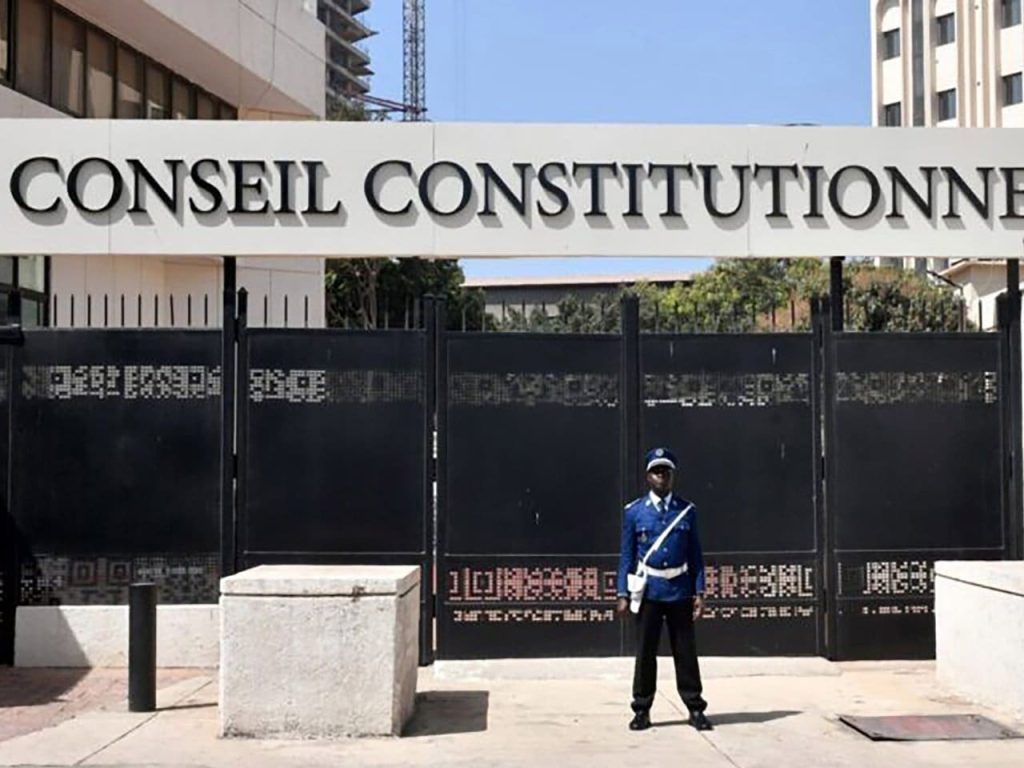
Conseil Constitutionnel Sénégal: Irrecevabilité Crédits Spéciaux Bill Inadmissible
Summary
- On August 25, 2026, the Senegalese Constitutional Council declared Bill n° 36/26, concerning special appropriations, inadmissible.
- The Prime Minister had requested the review of the bill, which was initiated by the parliamentary majority.
- The Council found that certain provisions of the proposed law fell within the domain of organic law, not ordinary law.
- This Decision N° 7/C/2026 highlights the strict constitutional distinction between ordinary and organic legislative competence in Senegal.
- The ruling sets a precedent for future legislative initiatives, particularly those related to public finance and budgetary law.
The Constitutional Council's Ruling
The Council's decision implicitly reinforces the hierarchy of norms, asserting that provisions governing the legal framework for special appropriations must adhere to the requirements of "Sénégal loi organique droit budgétaire" where applicable.
On August 25, 2026, the Senegalese Constitutional Council issued a significant ruling, Decision N° 7/C/2026, declaring a proposed law inadmissible. This decision, which centered on the legal framework for special appropriations, or "crédits spéciaux," was made following a formal request from the Prime Minister. The legislative initiative, identified as Proposition de loi n° 36/26, had been put forth by the parliamentary majority. The Council's determination of irrecevabilité underscores a crucial aspect of Senegalese constitutional law regarding legislative competence.
The core issue revolved around the nature of the provisions contained within the bill, specifically whether they fell under the purview of ordinary legislation or required the more stringent process of an organic law. This ruling by the Conseil constitutionnel Sénégal on the irrecevabilité of the crédits spéciaux bill highlights the judiciary's role in ensuring procedural and substantive adherence to the nation's legal framework. The inadmissibility of Proposition loi 36/26 crédits spéciaux sets a clear precedent for future legislative endeavors concerning public finance.
Legal Framework and Rationale
The Constitutional Council's rejection was not based on the substance of the special appropriations themselves, but rather on a fundamental jurisdictional distinction within Senegalese law. The Council found that certain elements of the proposed legislation, which aimed to establish the "régime juridique des crédits spéciaux," encroached upon matters reserved for organic law. In Senegal, organic laws are a specific category of legislation that complement the Constitution, detailing the organization and functioning of public powers.
They require a more rigorous adoption process than ordinary laws, often involving specific majorities and sometimes mandatory review by the Constitutional Council. The Council's decision implicitly reinforces the hierarchy of norms, asserting that provisions governing the legal framework for special appropriations must adhere to the requirements of "Sénégal loi organique droit budgétaire" where applicable. This strict interpretation of legislative domains is a cornerstone of "Droit constitutionnel Sénégal," ensuring that parliamentary initiatives respect the constitutional division of legislative powers. The ruling emphasizes that even well-intentioned legislative efforts by the parliamentary majority must conform to the precise legal category dictated by the Constitution.
Implications for Legislative Practice
This ruling carries significant implications for legislative drafting and parliamentary procedure in Senegal. The inadmissibility of Proposition de loi n° 36/26 serves as a potent reminder to lawmakers that the distinction between ordinary and organic law is not merely procedural but foundational to the country's legal architecture. Any future legislative attempts to define or modify the "régime juridique des crédits spéciaux" will now face heightened scrutiny to ensure that their provisions are appropriately categorized.
The Conseil constitutionnel Sénégal, through its Decision N° 7/C/2026, has clearly signaled its commitment to upholding the constitutional boundaries of legislative competence, particularly in sensitive areas like public finance. This decision reinforces the principle that the nature of the subject matter dictates the type of law required, preventing ordinary legislation from overstepping into domains constitutionally reserved for organic laws. It underscores the importance for the parliamentary majority and the government to meticulously assess the constitutional classification of legislative proposals before their submission, thereby avoiding similar declarations of irrecevabilité.
Practical Implications
This decision highlights the Senegalese Constitutional Council's strict interpretation of legislative competence, particularly the distinction between ordinary and organic law for financial matters. Lawyers advising on legislative initiatives or challenging statutory instruments must ensure precise adherence to these jurisdictional boundaries to avoid inadmissibility, as this ruling sets a precedent for future public finance legislation.
Source
How does this affect you?
Get an AI analysis of this article grounded in your jurisdictions, practice areas, and any policy documents you've uploaded to Wansom.
Wansom is AI and can make mistakes.