
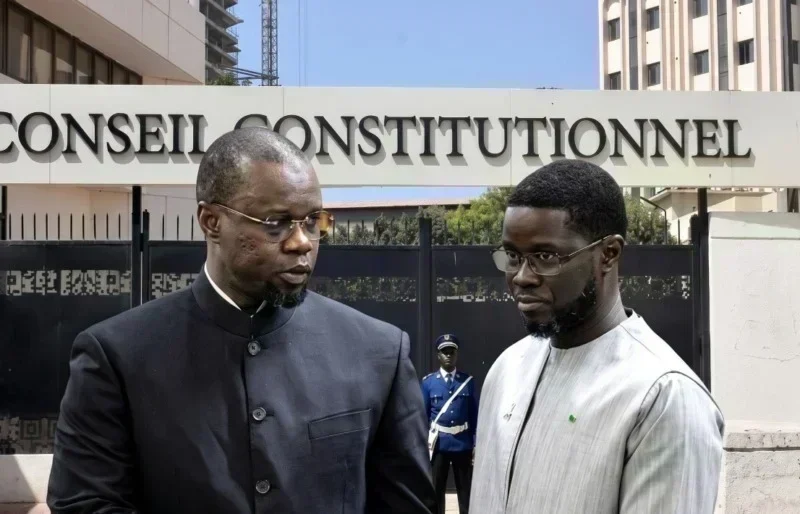
Sénégal Conseil constitutionnel: Examines Crédits Spéciaux Law Admissibility
Summary
- The Senegalese government has referred a new bill proposal concerning special credits to the Constitutional Council, challenging its admissibility.
- The proposed legislation aims to regulate the legal regime of special credits, a subject of contention between the Government and the National Assembly.
- The Executive branch urgently referred the bill to the Constitutional Council for review.
- This high court referral has led to the suspension of the legislative initiative, with the Council's decision currently pending.
- The pending ruling marks a significant development in the ongoing institutional dispute between the Government and the National Assembly.
The Council's Ruling
The immediate consequence of the Constitutional Council's pending ruling is the preservation of the existing Régime juridique crédits spéciaux Sénégal.
The Senegalese government has recently referred a legislative proposal concerning the legal framework for special credits to the Constitutional Council, challenging its admissibility. This referral by the Executive branch has led to the suspension of the legislative initiative by the National Assembly, pending the Council's decision. The high court's intervention marks a critical development in the ongoing institutional dispute between the Government and the National Assembly over legislative authority and financial oversight.
The proposed legislation aimed to establish a new regulatory framework for special credits, a key area of public finance. The Constitutional Council's pending decision on the admissibility of the current bill will determine the immediate future of the legal framework for special credits in Senegal. This outcome underscores the Constitutional Council's role in arbitrating disputes between governmental branches and ensuring adherence to constitutional procedures.
The government's recent referral to the Constitutional Council has led to the suspension of the legislative initiative by the National Assembly, as reported by e-media. The Executive's proactive engagement with the Constitutional Council highlights the intensity of the disagreement surrounding the management and allocation of special credits within the Senegalese financial system. The Council's forthcoming ruling will clarify, at least for now, the boundaries of legislative action in this sensitive domain.
Institutional Tensions and Legal Framework
The current challenge before the Sénégal Conseil constitutionnel crédits spéciaux is the latest chapter in a protracted institutional confrontation between the Senegalese Government and its National Assembly. This power struggle, often characterized by differing interpretations of constitutional prerogatives, has seen both branches assert their authority over critical policy areas, including public finance. The Executive's decision to urgently refer the bill proposal to the Constitutional Council indicates the high stakes involved in defining the Régime juridique crédits spéciaux Sénégal.
Special credits, by their nature, are funds allocated outside the standard budgetary process, often for unforeseen or urgent expenditures. Their legal framework dictates how they are approved, managed, and audited, making any proposed changes a point of contention regarding executive discretion versus parliamentary oversight. The National Assembly's attempt to introduce a bill to regulate these credits suggests an effort to enhance legislative control over such allocations.
The Constitutional Council acts as the ultimate arbiter in such Contentieux Gouvernement Assemblée Sénégal, ensuring that legislative proposals and governmental actions comply with the constitution. Its forthcoming declaration on the Proposition loi crédits spéciaux irrecevable will be a substantive statement on the current legal landscape. It will either reinforce the existing framework or pave the way for a constitutionally sound alternative.
Implications for Public Finance and Future Legislation
The immediate consequence of the Constitutional Council's pending ruling is that the existing Régime juridique crédits spéciaux Sénégal remains in effect until a decision is made. This means that any operations involving special credits will continue to be governed by the current regulations, without the modifications proposed by the challenged bill. For legal practitioners and entities operating within Senegal's financial landscape, this decision provides clarity regarding the applicable rules.
The pending ruling also signals that while the National Assembly may seek to reform the legal regime of special credits, such efforts must align strictly with constitutional requirements and established legal procedures. The suspension of the legislative initiative underscores the judiciary's power to shape the legislative agenda and resolve inter-branch disputes. This outcome could prompt the National Assembly to re-evaluate its approach, potentially leading to revised legislative proposals or alternative strategies to address its concerns regarding special credits.
Moving forward, the Sénégal Conseil constitutionnel crédits spéciaux decision will likely influence future interactions between the Government and the Assembly. Lawyers advising clients on financial matters in Senegal should continue to monitor developments closely, particularly any new attempts to legislate on special credits, and ensure strict adherence to the currently established legal framework. The clarification provided by this ruling, once issued, is crucial for maintaining stability in public financial management.
Practical Implications
This decision clarifies the current legal framework for special credits in Senegal by rejecting a proposed bill, indicating that the existing regime remains in effect. Lawyers should advise clients on adherence to current special credit regulations and monitor for alternative legislative attempts.
Source
Source: Original reporting via e-media.
How does this affect you?
Get an AI analysis of this article grounded in your jurisdictions, practice areas, and any policy documents you've uploaded to Wansom.
Wansom is AI and can make mistakes.