
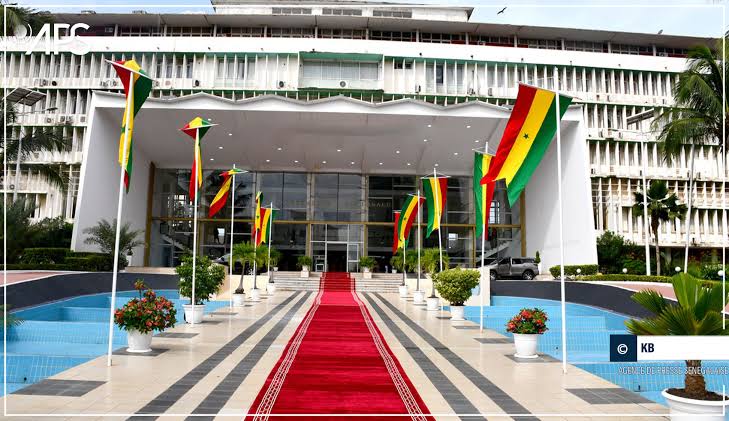
Sénégal: Budgets Ministériels 2027 Rejetés par l'Assemblée Nationale
Summary
- Senegalese parliamentary commissions rejected nine ministerial budget proposals for 2027 on November 11 and 12.
- Key sectors like energy, agriculture, and education are among those whose budgets were rejected, some showing significant cuts in payment credits.
- Deputies are contesting the 2027 budget framework, citing inconsistencies with the 2026 revised finance law and the use of previously rejected budgetary assumptions.
- The 2026 revised finance bill was also rejected on November 3 by a significant parliamentary vote, further complicating fiscal planning.
- The Ministry of Economy, Finance, and Planning disputes the legislative actions, indicating a standoff over national financial policy.
Widespread Rejection of 2027 Ministerial Budgets
The current budgetary impasse extends beyond the 2027 ministerial proposals, with roots in the earlier rejection of the 2026 revised finance bill.
The Senegalese National Assembly's commissions have rejected nine proposed ministerial budgets for 2027 during sessions held on November 11 and 12. These rejections encompass critical sectors such as education, agriculture, energy, employment, and hydraulics, signaling significant parliamentary scrutiny over future government spending. Earlier, on November 11, five additional ministerial budgets had already faced rejection, following an unfavorable vote on revenue forecasts and several institutional budgets on November 7.
Specific budgetary proposals reveal the extent of the cuts and disagreements. The Ministry of Energy and Petroleum's proposed budget of 64.21 billion CFA francs in payment credits represents a substantial decrease of nearly 48% compared to its 2026 allocation. Similarly, the Hydraulics budget is set at 218.42 billion CFA francs, a reduction from 244.9 billion in 2026. The budget for Youth, Sports, and Leisure, totaling 35.33 billion CFA francs, was also among those rejected, while the Agriculture proposal stood at 244.77 billion CFA francs in payment credits.
Legislative Scrutiny and Fiscal Framework Disputes
Parliamentarians have voiced strong objections not only to individual ministerial allocations but also to the overarching framework of the 2027 budgetary forecasts, questioning their consistency with the 2026 revised finance law. Debates within the commissions have centered on the sincerity of the figures presented by the government and the adequacy of the credits allocated to various sectors. Reports indicate that deputies are particularly concerned about perceived discrepancies between the initial 2027 finance bill and the 2026 supplementary budget.
A core point of contention lies in the fundamental basis for calculating the 2027 budget. Alphonse Mané Sambou, who chairs the Finance Committee, asserts that the 2027 projections are founded on assumptions derived from the previously rejected supplementary budget. This perspective contrasts sharply with the Ministry of Economy, Finance, and Planning, which maintains a different interpretation of the budgetary process. It is important to note that these votes occurring within the commission stage do not represent a final decision by the Assemblée nationale Sénégal budget 2027 as a whole.
Broader Implications for National Finances
The current budgetary impasse extends beyond the 2027 ministerial proposals, with roots in the earlier rejection of the 2026 revised finance bill. On November 3, a preliminary question regarding this bill led to its rejection, with 109 votes in favor of rejection, 20 against, and three abstentions. The Ministry of Economy, Finance, and Planning subsequently issued a communiqué on November 4, disputing the request for the finance bill's withdrawal, highlighting the deep division between the executive and legislative branches.
Deputies have also raised specific concerns regarding the Energy and Petroleum budget, particularly questioning the financing mechanisms for energy subsidies and the feasibility of achieving universal electrification by 2029. This legislative pushback underscores a broader demand for greater transparency and accountability in government spending. The ongoing disagreements over the Sénégal budgets ministériels 2027 rejetés and the rejet cadrage budgétaire 2027 Sénégal indicate a challenging path forward for the nation's fiscal planning and policy implementation.
Practical Implications
Lawyers and compliance officers in Senegal should closely monitor the legislative developments surrounding the 2027 ministerial budgets and the 2026 revised finance law. The current rejections and disputes indicate significant uncertainty in government spending and policy direction for key sectors like energy and agriculture, potentially impacting public contracts, project financing, and regulatory stability for businesses operating in these areas.
Source
Source: Original reporting via Xalima
How does this affect you?
Get an AI analysis of this article grounded in your jurisdictions, practice areas, and any policy documents you've uploaded to Wansom.
Finish Reading the Full Story and the Expert Analysis.
Get the latest legal & regulatory intelligence in Senegal
Wansom is AI and can make mistakes.