
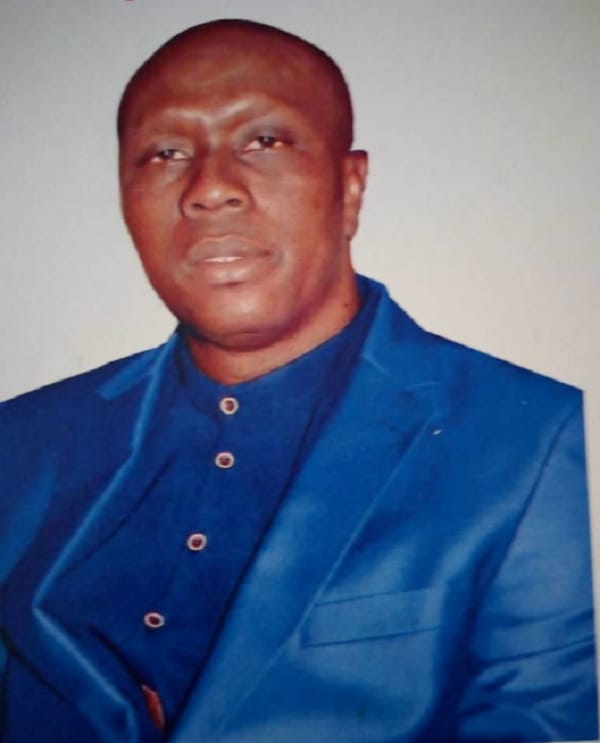
Moulaye Camara: Sénégal Crise Institutionnelle Démontre Résilience Démocratique
Summary
- Moulaye Camara offers a unique perspective on Senegal's institutional crisis between its executive and legislative branches.
- He views the tension not merely as a blockage but as an illustration of democratic mechanisms and the principle of separation of powers.
- Camara, president of the "J'aime le Sénégal" movement, shared these insights in an op-ed titled "Quand le pouvoir arrête le pouvoir."
- Despite the difficulties, he finds satisfaction in the continued respect for laws and the distinct prerogatives of each institution.
The Institutional Standoff in Senegal
His contentment stems from the observation that, even amidst the intense political friction, there remains a fundamental respect for the rule of law and the established prerogatives of each governmental institution.
The current political landscape in Senegal is marked by a significant institutional crisis, characterized by palpable tension between the executive and legislative branches of government. This ongoing friction has led many observers to view the situation primarily as a source of governmental paralysis and an impediment to effective governance. However, Moulaye Camara, a prominent voice in Senegalese civil society, offers a nuanced and perhaps more optimistic interpretation of this complex dynamic. He suggests that the current Moulaye Camara Sénégal crise institutionnelle, while undoubtedly challenging, also serves as a critical demonstration of the nation's democratic resilience.
Camara articulated his perspective in a widely circulated op-ed titled "Quand le pouvoir arrête le pouvoir," which translates to "When Power Stops Power." In this piece, he delves into the underlying mechanisms at play, arguing against a purely negative assessment of the situation. As the president of the "J'aime le Sénégal" movement, his insights carry weight, particularly as they encourage a deeper examination of the constitutional framework rather than simply lamenting the political deadlock. His analysis invites a re-evaluation of how such inter-branch conflicts, despite their immediate difficulties, can ultimately reinforce the foundational principles of a democratic state.
Upholding Democratic Principles
Far from being a mere institutional blockage, Moulaye Camara posits that the current discord between the executive and legislative powers in Senegal is, in fact, a vivid illustration of how democratic mechanisms are designed to function. He emphasizes that this tension underscores the vital principle of the separation of powers, a cornerstone of any robust democratic system. This perspective suggests that the very existence of a check on executive authority by the legislative body, even if it leads to friction, is a sign of a healthy, rather than failing, democracy. The Moulaye Camara séparation pouvoirs argument highlights that when one branch of government can effectively challenge another, it prevents the concentration of power and safeguards against potential abuses.
Camara's analysis encourages a shift from viewing the current Sénégal crise pouvoir exécutif législatif as solely detrimental to recognizing its potential to strengthen democratic institutions over time. He argues that the inherent difficulties arising from this disagreement, while inconvenient for immediate policy implementation, are part and parcel of a system where different branches are empowered to assert their distinct constitutional prerogatives. This active interplay, he contends, is precisely what ensures accountability and prevents any single entity from dominating the political landscape, thereby reinforcing the foundational checks and balances essential for long-term stability.
Navigating Legal and Political Dynamics
Despite the obvious challenges and potential for gridlock that such a significant disagreement between the executive and legislative branches presents, Moulaye Camara expresses a degree of satisfaction. His contentment stems from the observation that, even amidst the intense political friction, there remains a fundamental respect for the rule of law and the established prerogatives of each governmental institution. This adherence to legal boundaries, even when institutions are at odds, is a crucial indicator of institutional maturity and a commitment to constitutional governance within the ongoing conflit exécutif législatif Sénégal.
For legal professionals and compliance officers operating within Senegal, this evolving institutional crisis, as interpreted by figures like Camara, carries significant implications. The dynamic interplay between executive and legislative powers directly impacts regulatory stability and the predictability of policy, which are critical factors for businesses and citizens alike. Understanding the constitutional dynamics and the commitment to legal frameworks, even during periods of intense political disagreement, is paramount for advising clients on political risk, ensuring legal compliance, and navigating the broader legal framework in Senegal. The "J'aime le Sénégal" movement's president underscores that the very act of power checking power, while disruptive, ultimately reinforces the legal structures that underpin the nation.
Practical Implications
Lawyers and compliance officers in Senegal should closely monitor the evolving institutional crisis and the interplay between executive and legislative powers, as it can impact regulatory stability, policy predictability, and the overall legal framework for businesses and citizens. Understanding the constitutional dynamics is crucial for advising clients on political risk and legal compliance.
Source
How does this affect you?
Get an AI analysis of this article grounded in your jurisdictions, practice areas, and any policy documents you've uploaded to Wansom.
Finish Reading the Full Story and the Expert Analysis.
Get the latest legal & regulatory intelligence in Senegal
Wansom is AI and can make mistakes.