
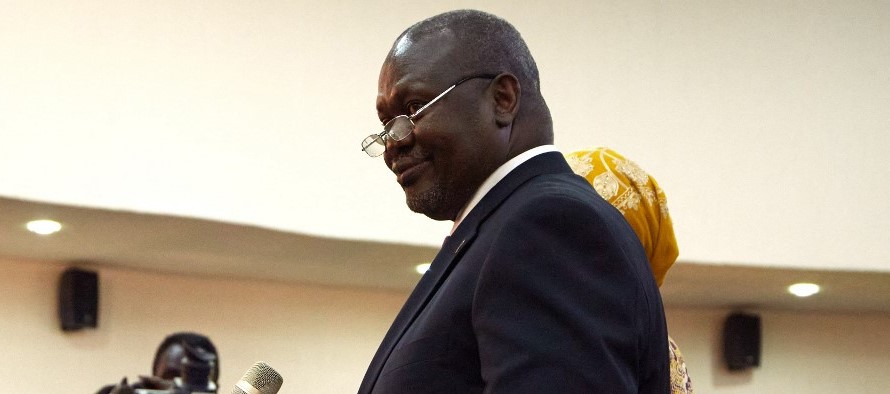
Riek Machar: Juba Political Trial Is Politically Motivated
Summary
- Former South Sudan First Vice President Riek Machar claimed his ongoing trial in Juba is politically motivated, intended to settle political differences.
- Machar and seven co-accused face charges including treason and murder related to a March 2025 attack in Nasir, which they deny.
- He expressed concern that private advocates, potentially linked to the National Security Service, have taken a leading role in the prosecution over government lawyers.
- Machar challenged several court rulings, including the denial of audio-visual recording and decisions on jurisdiction and presidential immunity.
- He argued it is inappropriate for a private advocate from the SPLM-IG to lead the prosecution against him, as chairman of the SPLM-IO, and his co-accused.
Machar Alleges Political Motivation in Juba Trial
The former First Vice President expressed profound disappointment with a series of court rulings, asserting that the proceedings had become overtly political, designed to resolve political disagreements rather than administer impartial justice.
Former South Sudan First Vice President Riek Machar recently asserted that his ongoing trial in Juba is a politically motivated process aimed at settling political differences. Speaking during the 120th session of the Special Court, Machar, who is 74 years old and is the Chairman of the SPLM-IO, a role for which Oyet Nathaniel Pierino is currently serving as Acting Chairman due to Machar's ongoing trial, continued to present his defense in a case involving him and seven co-accused individuals. The proceedings center on charges including treason, murder, conspiracy, terrorism, destruction of public property, and crimes against humanity, stemming from an incident of violence in Nasir, Upper Nile State, in March 2025.
Prosecutors have alleged that forces affiliated with Machar's Sudan Peoples Liberation Movement/Army in Opposition (SPLM/A-IO), in conjunction with the White Army militia, launched an attack on a government military garrison in Nasir. This alleged assault reportedly resulted in the deaths of 257 South Sudan Peoples Defence Forces (SSPDF) soldiers, including General David Majur Dak, a commander. Furthermore, the prosecution claims that military equipment valued at approximately $58 million was either destroyed or seized during the fighting. Machar and his co-defendants have consistently denied all charges brought against them.
Concerns Over Prosecution's Independence
A central point of contention for Machar is not his legal defense team, but rather a series of court rulings that he believes undermine the fairness and independence of the proceedings. He specifically questioned the prominent role of private advocates in the prosecution, noting that government prosecutors from the Ministry of Justice and Constitutional Affairs appeared to have taken a secondary role, while these 'co-opted advocates' assumed a leading position in the case before the Special Court in Juba.
Machar queried whether these co-opted advocates might be personnel from the National Security Service (NSS) assigned to prosecute the case on behalf of the NSS, which he suggested could be the complainant. Alternatively, he questioned if the case had effectively devolved into a private prosecution. He recalled that the then-First Vice President, Dr. Riek Machar Teny, was initially involved in facilitating the prosecution and other parties. Machar emphasized his desire for the case to remain a state-led prosecution against him and his co-accused, rather than becoming a matter driven by private advocates.
Challenges to Procedural Fairness
The former First Vice President expressed profound disappointment with a series of court rulings, asserting that the proceedings had become overtly political, designed to resolve political disagreements rather than administer impartial justice. He specifically highlighted the involvement of a private advocate who is a member of the SPLM-IG political party, leading the government prosecution team against members of another political party, namely himself as chairman of the SPLM-IO, and his co-accused. This situation, he argued, was unfortunate and indicative of the trial's political nature.
Machar also challenged several other previous court decisions. These included a ruling from Wednesday, 19 August 2026, during Session 108, where the court denied a defense request for audio-visual recording of the proceedings. He viewed this particular ruling as politically motivated, believing the request was made to ensure parity and equality in the trial. Other contested rulings pertained to defense access to accused persons, media coverage, the court's jurisdiction, presidential immunity, and his designation as the fifth accused in the case, all contributing to his overall concerns about Machar trial fairness.
Implications for Judicial Integrity
The accusations made by Riek Machar regarding the politicization of his trial and the unusual involvement of private advocates in the prosecution raise significant questions about judicial independence and due process within South Sudan's legal system. The concerns about 'co-opted advocates' taking the lead from state prosecutors, and the potential for a political party member to spearhead a government prosecution against an opposition leader, underscore the challenges to the rule of law in high-profile cases.
These developments in the Machar Special Court Juba trial highlight the critical need for transparency and adherence to established legal protocols to ensure public confidence in the judiciary. The ongoing scrutiny of the proceedings, particularly regarding the fairness of court rulings and the composition of the prosecution team, will be crucial in assessing the integrity of the legal process in South Sudan.
Practical Implications
This case highlights significant concerns for lawyers regarding judicial independence and due process in South Sudan, particularly the potential for political influence on prosecution through the involvement of private advocates. Practitioners should scrutinize the fairness of proceedings in high-profile cases and advise clients on the implications of such challenges to the rule of law.
Source
How does this affect you?
Get an AI analysis of this article grounded in your jurisdictions, practice areas, and any policy documents you've uploaded to Wansom.
Finish Reading the Full Story and the Expert Analysis.
Get the latest legal & regulatory intelligence in South Sudan
Wansom is AI and can make mistakes.