
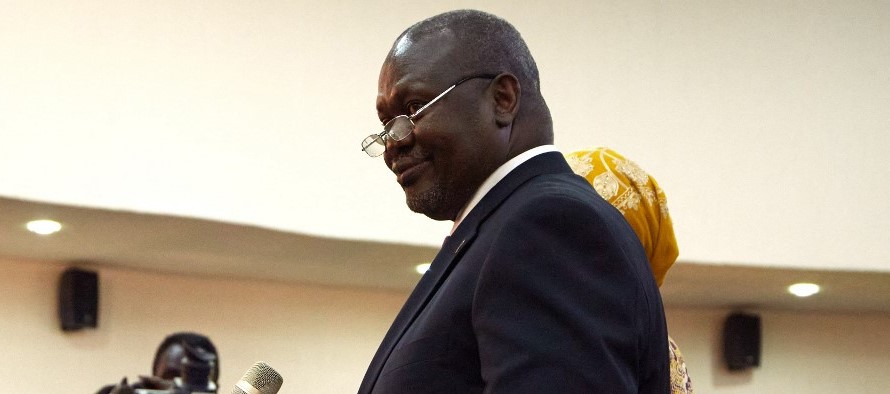
SS Special Court: Riek Machar Trial Police Threats Order Issued
Summary
- The Special Court trying Riek Machar and seven co-accused ordered police personnel under investigation for alleged threats to stop attending sessions.
- This directive followed an application by Machar's defence team, led by Geri Raimondo Legge, citing serious threats to the accused and their lawyers.
- Judge James Alala Deng also mandated all security forces to ensure the safe escort and passage of defendants and their legal counsel.
- Machar and his co-accused face charges including treason and murder related to March 2025 violence in Nasir, which they deny.
- A ruling on defence and prosecution applications is expected on October 2, 2026.
What Happened
By proactively removing police personnel under investigation and implementing stringent security protocols, the South Sudan Special Court is setting a clear precedent for judicial intervention to protect high-profile defendants and their legal teams from alleged threats.
The Special Court overseeing the trial of former First Vice-President Riek Machar and seven co-accused recently issued a significant directive aimed at bolstering the safety of the defendants and their legal representatives. During its 118th session, presided over by Judge James Alala Deng, the court mandated that any police personnel implicated in an ongoing investigation into alleged threats against the accused and their defence team must immediately cease attending court proceedings. This decisive action underscores the court's commitment to addressing serious security concerns raised by the defence.
This judicial intervention follows an application lodged by Dr. Machar's defence team, which brought to light grave concerns regarding the alleged endangerment of the lives and overall safety of Dr. Machar, his co-accused, and the legal professionals representing them. While the defence was not permitted to publicly disclose the specific details of these alleged threats in court, lead defence lawyer Geri Raimondo Legge had previously informed the tribunal of a severe risk to the eight defendants, particularly highlighting the vulnerability of Dr. Machar, who is identified as the fifth accused in the proceedings.
In response to these pressing safety issues, Judge Deng's security directive extended beyond merely barring implicated officers. He further instructed all security forces deployed at the court premises to guarantee the protection of the accused individuals and their lawyers during transit to and from their respective locations. This included an explicit order for security personnel to clear roads, ensuring unobstructed and safe passage for the defendants and their legal counsel. These comprehensive measures form an integral part of the court's broader directives concerning both the ongoing investigation and the paramount need to safeguard all parties involved in the high-profile Riek Machar trial.
Legal Context
The proceedings before the South Sudan Special Court involve Dr. Machar and seven other individuals who stand accused in connection with a violent incident that occurred in Nasir, Upper Nile State, in March 2025. This event reportedly resulted in substantial casualties among government forces. The defendants face a range of serious charges, including treason, murder, conspiracy, terrorism, destruction of public property, and crimes against humanity, all of which they have consistently denied.
Prosecutors in the case allege that forces affiliated with Dr. Machar's Sudan Peoples Liberation Army in Opposition (SPLA-IO), operating in conjunction with the White Army militia, were responsible for the deaths of 257 soldiers belonging to the South Sudan Peoples Defence Forces (SSPDF). Among those reportedly killed during an assault on a military garrison in Nasir was military commander General David Majur Dak. Furthermore, the prosecution contends that military equipment valued at approximately $58 million was either destroyed or seized during the hostilities.
The court is currently awaiting a crucial juncture in these proceedings, with a ruling anticipated on October 2, 2026. This future decision will address both an application filed by the defence and a counter-application submitted by the prosecution, indicating the complex legal landscape surrounding the Machar trial.
Why It Matters
The recent Riek Machar trial police threats order issued by Judge James Alala Deng represents a significant development in South Sudanese jurisprudence, particularly concerning defendant safety and the integrity of judicial processes. By proactively removing police personnel under investigation and implementing stringent security protocols, the South Sudan Special Court is setting a clear precedent for judicial intervention to protect high-profile defendants and their legal teams from alleged threats. This action directly addresses critical fair trial considerations and upholds due process, ensuring that the legal environment remains secure for all participants.
This directive highlights the court's recognition of the serious challenges that can arise in politically sensitive cases, where the safety of those involved, including the defence, may be compromised. The explicit instructions for security forces to ensure safe passage and clear roads for the accused and their lawyers underscore a commitment to maintaining an environment free from intimidation. Such measures are vital for enabling defence teams, like that led by Geri Raimondo Legge, to perform their duties without fear, thereby contributing to a more equitable legal process.
The ongoing investigation into the alleged threats, coupled with the court's immediate response, signals a robust stance against any attempts to undermine the judicial process through coercion or intimidation. This proactive approach to Machar security and the broader safety of all parties involved in the Nasir violence charges trial could serve as an important reference point for future cases where similar concerns about defendant and legal team security arise, reinforcing the judiciary's role in safeguarding fundamental rights.
Practical Implications
This directive sets a precedent for judicial intervention to protect defendants and their legal teams from alleged threats, directly impacting fair trial considerations and due process in high-profile South Sudanese cases. Lawyers should note the court's proactive measures to ensure safety, which could be cited in future applications regarding courtroom security.
Source
How does this affect you?
Get an AI analysis of this article grounded in your jurisdictions, practice areas, and any policy documents you've uploaded to Wansom.
Finish Reading the Full Story and the Expert Analysis.
Get the latest legal & regulatory intelligence in South Sudan
Wansom is AI and can make mistakes.