
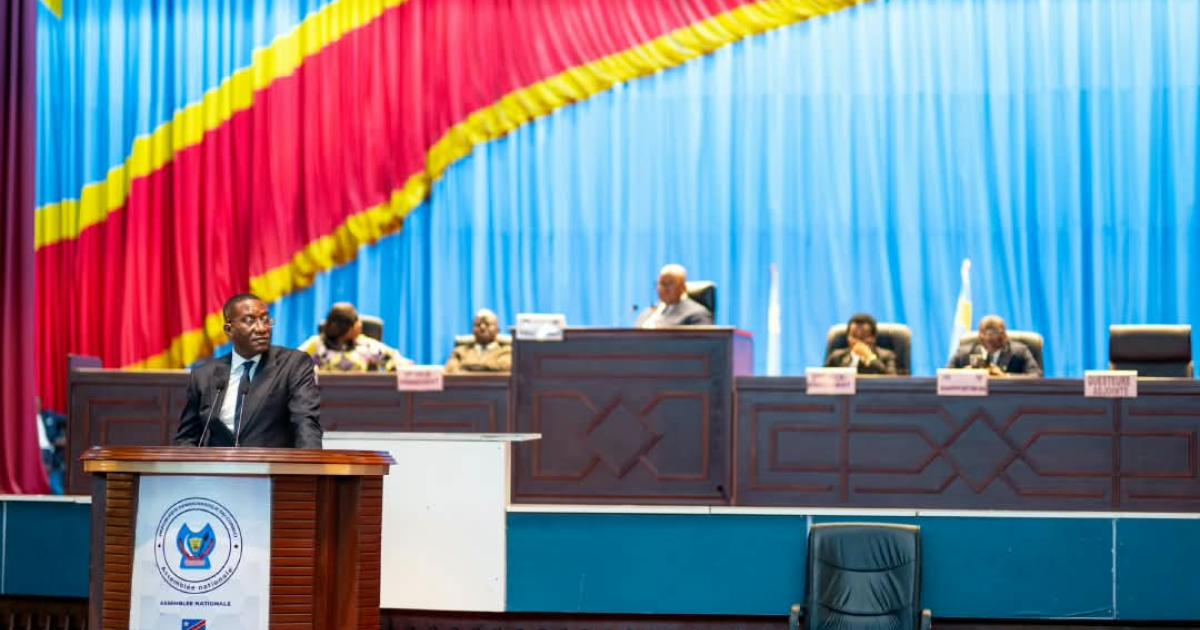
Assemblée Nationale RDC: RDC Projet Loi PPP Déclaré Recevable
Summary
- The Democratic Republic of Congo's National Assembly declared a public-private partnership (PPP) bill admissible.
- The RDC projet loi PPP was presented by Guylain Nyembo, the Minister of State for Planning and Coordination of Development Aid.
- The bill was formally introduced to the Assemblée nationale on Monday, November 16, 2026.
- This admissibility ruling moves the proposed Loi partenariat public-privé Congo closer to becoming law.
- The legislation aims to establish a clear framework for public-private collaboration in the DRC.
Legislative Progress in Kinshasa
The recent declaration of admissibility for the RDC projet loi PPP recevable carries substantial implications for the future of investment and infrastructure development within the Democratic Republic of Congo.
The Democratic Republic of Congo's legislative body, the Assemblée nationale, recently marked a significant step in its legal reform efforts by declaring the proposed public-private partnership (PPP) bill admissible. This decision, which deems the RDC projet loi PPP recevable, indicates that the legislative text has met the initial procedural requirements to proceed through the parliamentary process. The bill, a crucial piece of legislation for the nation's economic development, was formally introduced and defended by Guylain Nyembo, the Minister of State for Planning and Coordination of Development Aid.
Minister Nyembo presented the comprehensive Projet de loi PPP RDC to the National Assembly on Monday, November 16, 2026. His presentation outlined the objectives and provisions of the proposed framework, which aims to regulate and facilitate collaborative projects between the public and private sectors. The admissibility ruling by the Assemblée nationale RDC PPP signifies that the bill is now poised for further debate, potential amendments, and eventual voting, moving it closer to becoming an enacted Loi partenariat public-privé Congo. This procedural advancement is a key indicator for stakeholders monitoring the regulatory landscape in the DRC.
Establishing a Clear Framework for Collaboration
The establishment of a dedicated legal framework for public-private partnerships is a strategic move for any nation seeking to leverage private capital and expertise for public infrastructure and services. A robust DRC public-private partnership bill, once enacted, would provide clarity and predictability for both governmental entities and private investors. Such legislation typically addresses critical aspects like project identification, procurement processes, contractual terms, risk allocation mechanisms, and dispute resolution, all of which are vital for successful long-term collaborations.
For the Democratic Republic of Congo, a comprehensive Loi partenariat public-privé Congo is particularly important given the country's vast infrastructure needs and its potential for economic growth. By formalizing the rules governing PPPs, the government aims to attract greater foreign and domestic investment into key sectors such as transportation, energy, and social services. The current legislative initiative, championed by Guylain Nyembo, seeks to create an environment where private sector efficiency and innovation can be effectively harnessed to complement public sector objectives, ensuring transparency and accountability in these complex undertakings. This structured approach is essential for fostering investor confidence and promoting sustainable development across the nation.
Implications for Investment and Development
The recent declaration of admissibility for the RDC projet loi PPP recevable carries substantial implications for the future of investment and infrastructure development within the Democratic Republic of Congo. As this PPP bill progresses through the legislative pipeline, it signals the government's commitment to creating a more predictable and secure environment for public-private ventures. For legal professionals and their clients engaged in or considering projects in the DRC, closely monitoring the evolution of this legislative proposal is paramount.
A new legal framework for public-private partnerships could significantly alter the landscape for contractual agreements, risk distribution between public and private entities, and the regulatory compliance requirements for future projects. Businesses involved in infrastructure development, public works, or broader investment in the DRC will need to understand the nuances of the forthcoming Loi partenariat public-privé Congo to adapt their strategies and ensure adherence to the updated legal provisions. The successful implementation of this Guylain Nyembo PPP law has the potential to unlock substantial capital and expertise, driving forward critical development initiatives across the country.
Practical Implications
The admissibility of the PPP bill signals its progression towards becoming law in the DRC. Lawyers advising clients on infrastructure development, public works, or investment in the DRC should closely track this legislative process, as it will introduce a new legal framework for public-private partnerships, potentially altering contractual terms, risk allocation, and regulatory compliance for future projects.
Source
How does this affect you?
Get an AI analysis of this article grounded in your jurisdictions, practice areas, and any policy documents you've uploaded to Wansom.
Finish Reading the Full Story and the Expert Analysis.
Get the latest legal & regulatory intelligence in DR Congo
Wansom is AI and can make mistakes.