
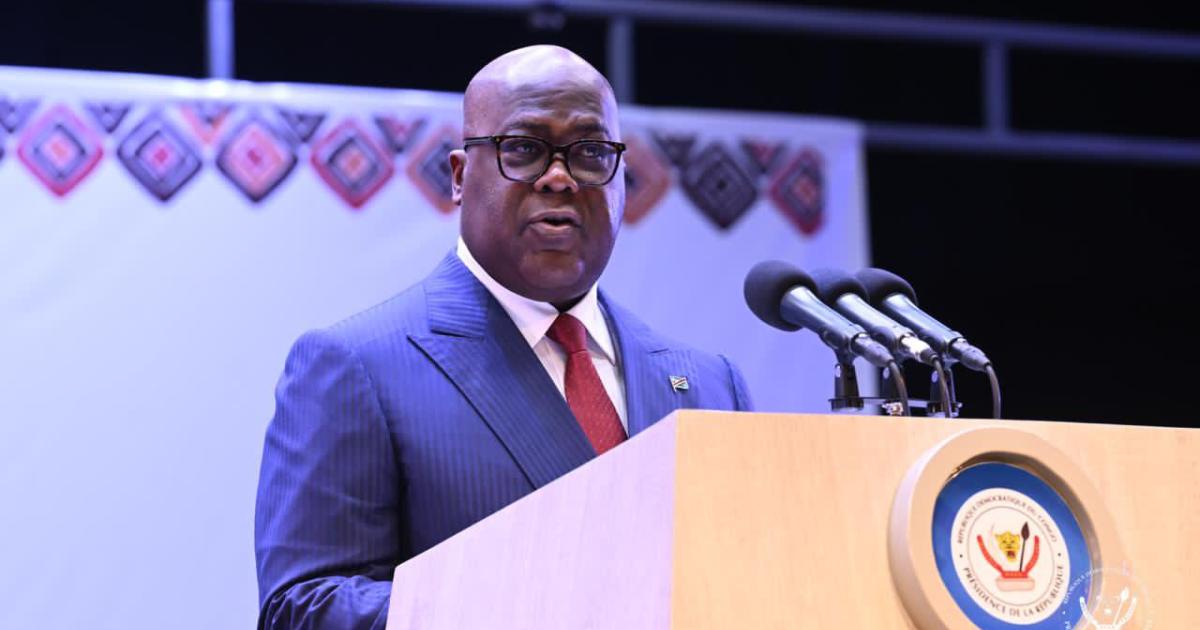
RDC President Tshisekedi: Signs RDC Ordonnance Comité Dialogue National
Summary
- President Félix Tshisekedi of the Democratic Republic of Congo has signed an ordinance establishing a committee.
- This committee is tasked with preparing for a national dialogue across the RDC.
- The presidential decision has been met with varied reactions from different stakeholders.
- Deputy Joseph Nkoy questioned how the Head of State, who embodies the nation and is an institution, can be a party to the conflict.
What Happened
His inquiry suggests that if the Head of State is seen as an involved party rather than a neutral arbiter, it could impact the perceived impartiality and effectiveness of the national dialogue committee.
President Félix Tshisekedi of the Democratic Republic of Congo recently took a significant step towards fostering national unity and addressing internal challenges. He formally signed an ordinance that establishes a specialized committee. This newly formed body is specifically tasked with the crucial preparatory work for the implementation of a comprehensive national dialogue across the RDC. The ordonnance instituant comité dialogue Congo signals a direct effort from the highest office to initiate broad-based discussions aimed at resolving national issues.
This presidential directive, aimed at setting the stage for a dialogue national RDC, has not been met with universal acclaim. Reports indicate that the decision has elicited a range of responses from various stakeholders within the country's political and social landscape. While some may view it as a necessary move for reconciliation and progress, others have expressed reservations or raised critical questions regarding its implications and the framework under which it will operate. The establishment of this RDC ordonnance comité dialogue national therefore immediately became a subject of public discourse.
Constitutional Questions Arise
Among the voices expressing concern is Deputy Joseph Nkoy, who has publicly questioned the fundamental premise of the Head of State's involvement in such a process. Nkoy's critique centers on the perceived paradox of President Félix Tshisekedi dialogue national RDC. He specifically pondered how the nation's leader, who is constitutionally recognized as embodying the nation itself and representing a foundational institution of the state, could simultaneously be considered a party to any existing conflict that the dialogue aims to resolve.
This line of questioning delves into core principles of droit constitutionnel RDC dialogue and the role of the presidency. Deputy Joseph Nkoy chef d'État conflit highlights a potential tension between the President's unifying, supra-partisan role and the practical realities of political disagreements. His inquiry suggests that if the Head of State is seen as an involved party rather than a neutral arbiter, it could impact the perceived impartiality and effectiveness of the national dialogue committee. Such a perspective underscores the complex constitutional considerations inherent in high-level political initiatives within the gouvernance RDC comité.
Implications for Governance and Stability
The formation of this committee and the subsequent constitutional debate surrounding it carry significant weight for the future of gouvernance RDC comité. The mandate of the committee to prepare for a national dialogue implies an intention to address deep-seated issues that require broad consensus. The manner in which this dialogue is structured, and critically, how the President's role within it is perceived, could either bolster or undermine its legitimacy and potential for success. The ordonnance instituant comité dialogue Congo is thus more than just an administrative act; it is a political statement with far-reaching implications.
The diverse reactions to the ordinance, particularly the pointed questions from figures like Deputy Nkoy, suggest that the path to a successful national dialogue will require careful navigation of both political and legal sensitivities. For the RDC ordonnance comité dialogue national to achieve its objectives, it will need to foster an environment of trust and inclusivity, addressing concerns about impartiality and constitutional propriety. The outcomes of this preparatory phase and the subsequent dialogue could significantly influence legislative reforms, the structure of governance, and the interpretation of presidential powers in the Democratic Republic of Congo for years to come.
Practical Implications
Lawyers advising on constitutional law, public administration, or political risk in the DRC should monitor the mandate and proceedings of this newly formed national dialogue committee, as its outcomes could influence future legislative reforms, governance structures, and the interpretation of presidential powers, potentially leading to new legal frameworks or challenges.
Source
How does this affect you?
Get an AI analysis of this article grounded in your jurisdictions, practice areas, and any policy documents you've uploaded to Wansom.
Finish Reading the Full Story and the Expert Analysis.
Get the latest legal & regulatory intelligence in DR Congo
Wansom is AI and can make mistakes.